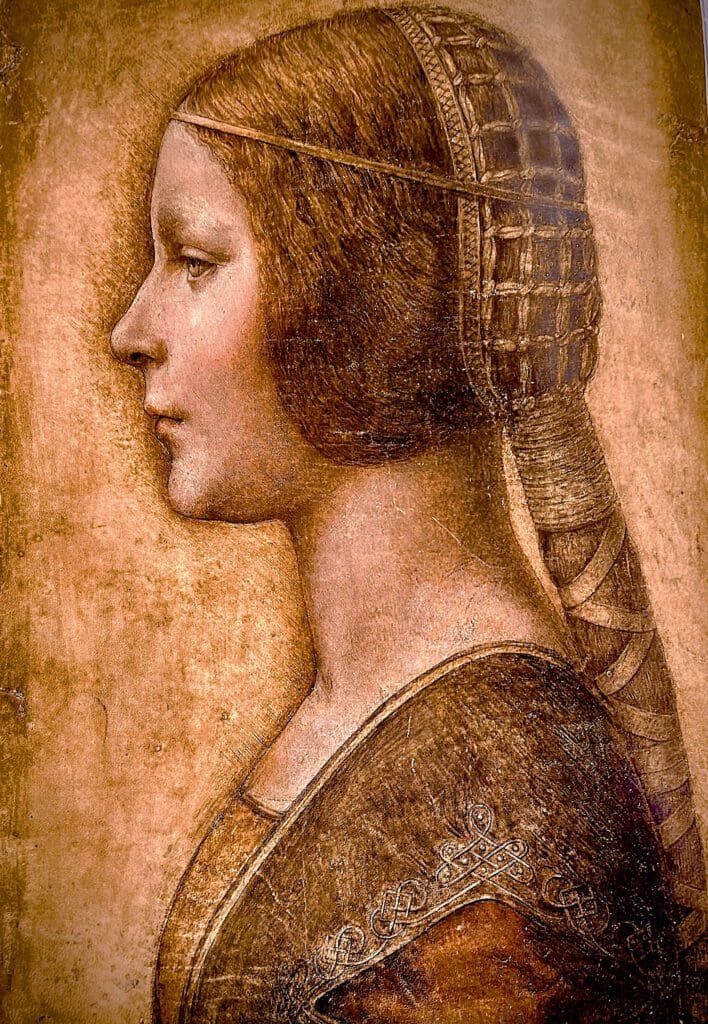
July 5 - July 12
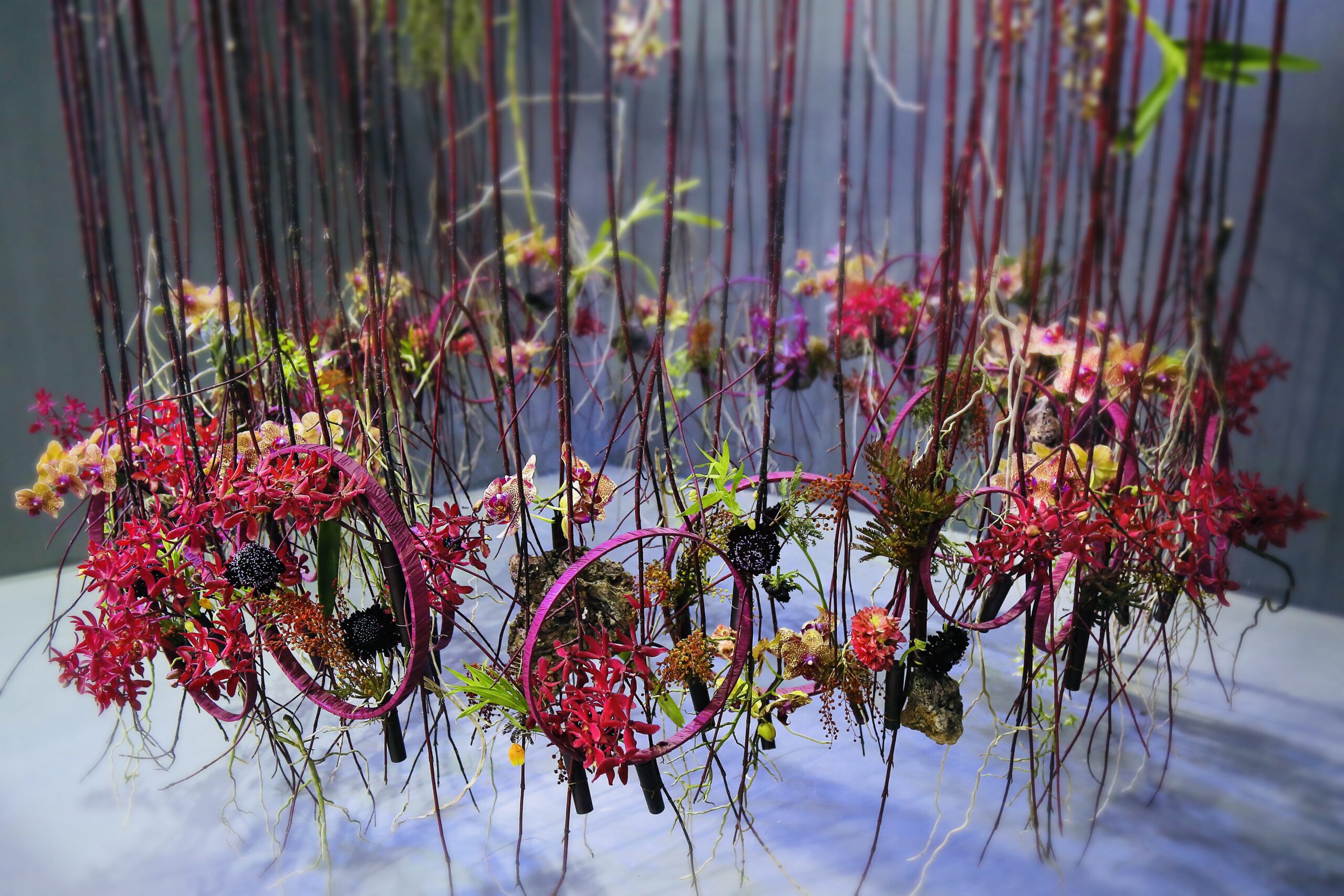
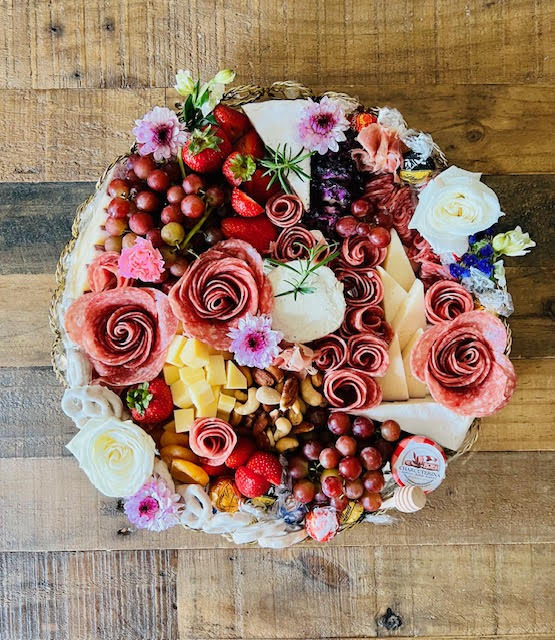
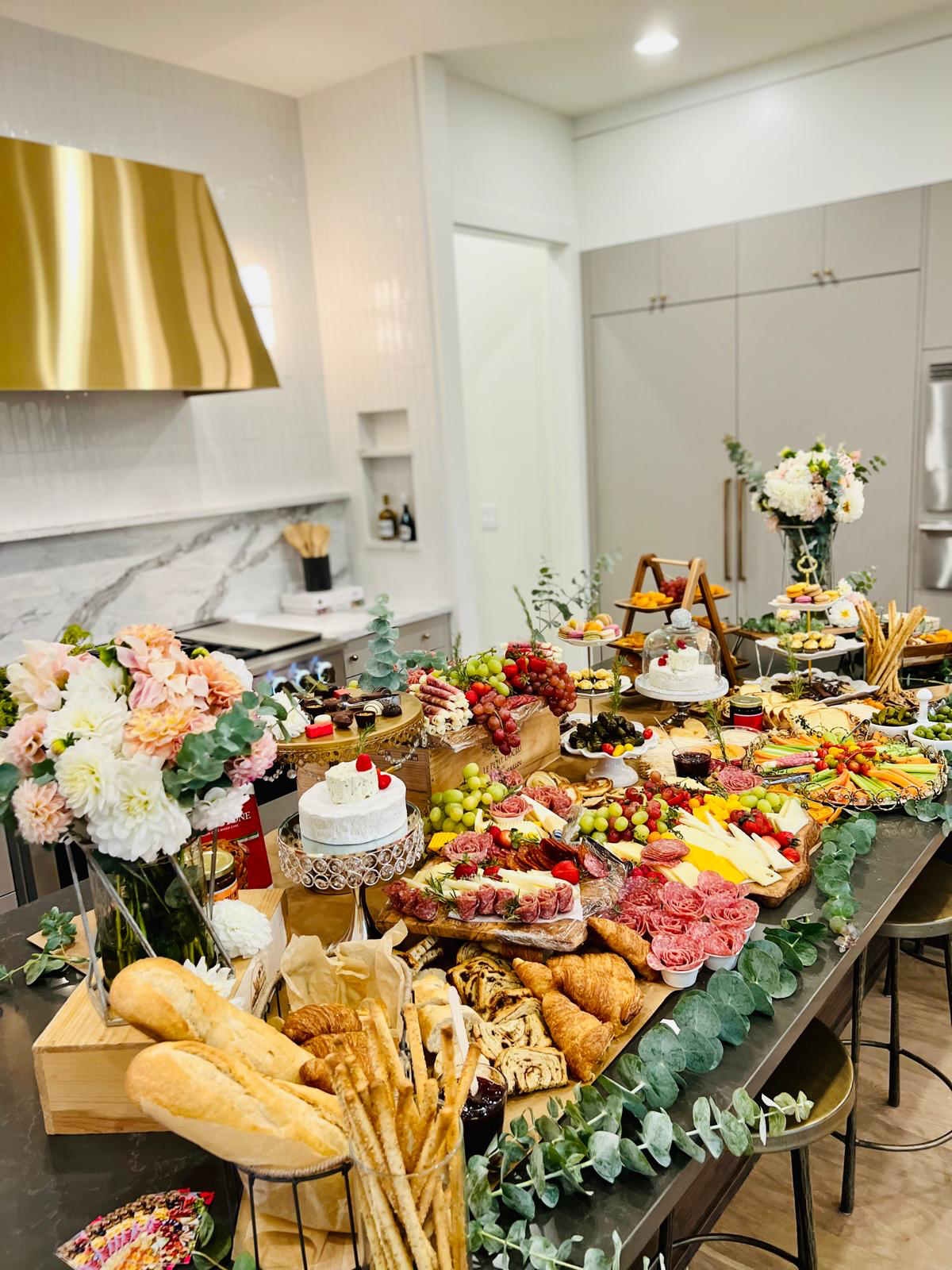
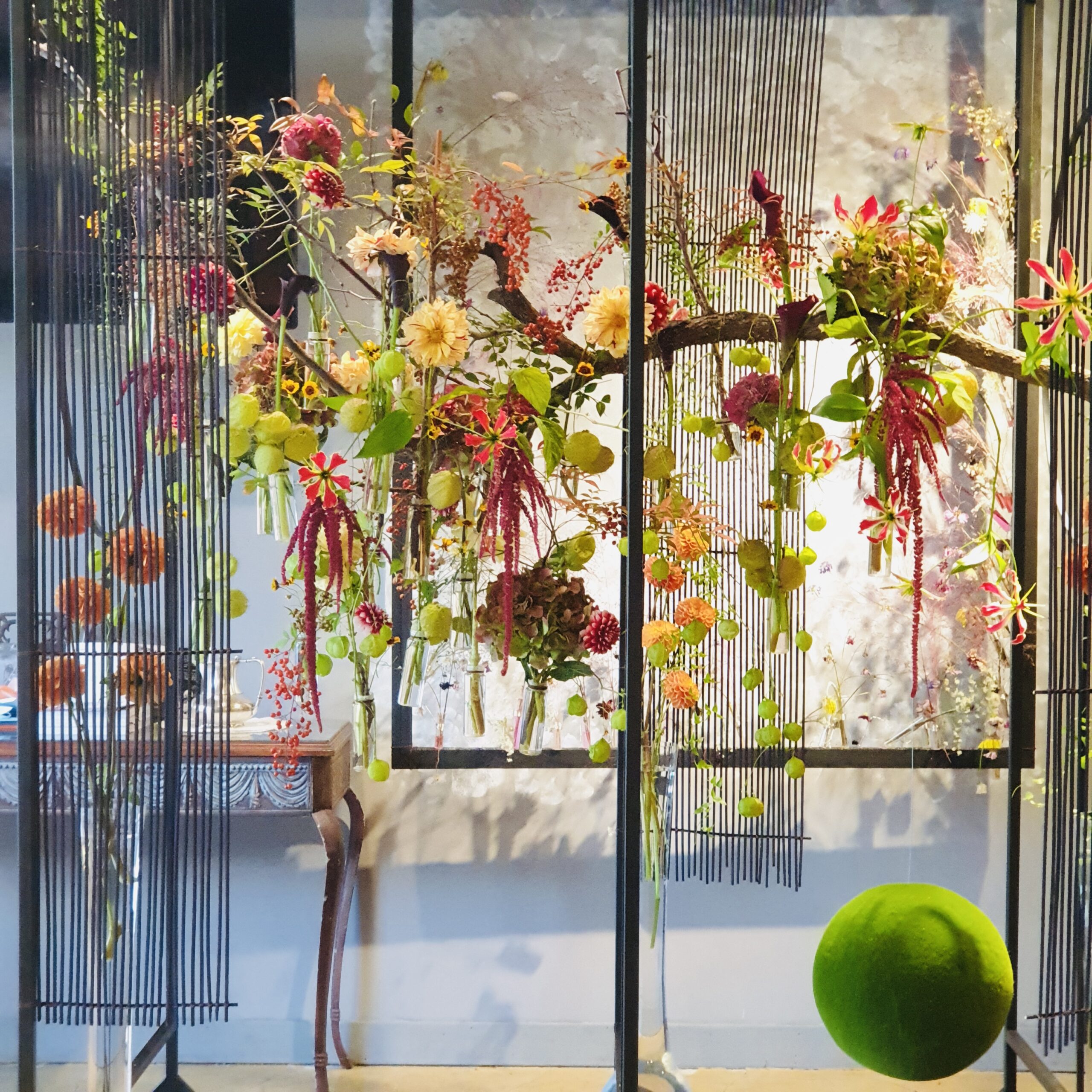 Join food-stylist Nicole Dowds and florist Julia Kim for a relaxed and inspiring workshop in the heart of one of Italy’s most beautiful villages. Using floral elements in arrangements with Italy's famous charcuterie and cheeses, participants will learn strategies through which they can to bring beauty to their homes and tables. Throughout the workshop, all will be inspired by the timeless charm of Monte Castello’s medieval streets, sun-drenched piazzas, and sweeping Umbrian landscapes.
Participants will be housed in the remarkably well-preserved Umbrian hill town of Monte Castello di Vibio. Your workshoppackage is all-inclusive, providing welcome and departure services and airport transfer from the Rome Fiumicino, Leonardo Da Vinci Airport (FCO) aboard our comfortable private bus, single occupancy accommodations with shared bath (a wide range of upgrades with private bath are available), 3 meals per day Monday-Thursday, Prosecco brunch and dinner on Saturday and Sunday (no meals are served on Friday, our excursion day. Your workshop includes one excursion per week and many additional options are available on weekends for an additional fee. Of course, 24/7 access to facilities and 24/7 bi-lingual suppor
July 5 - July 19
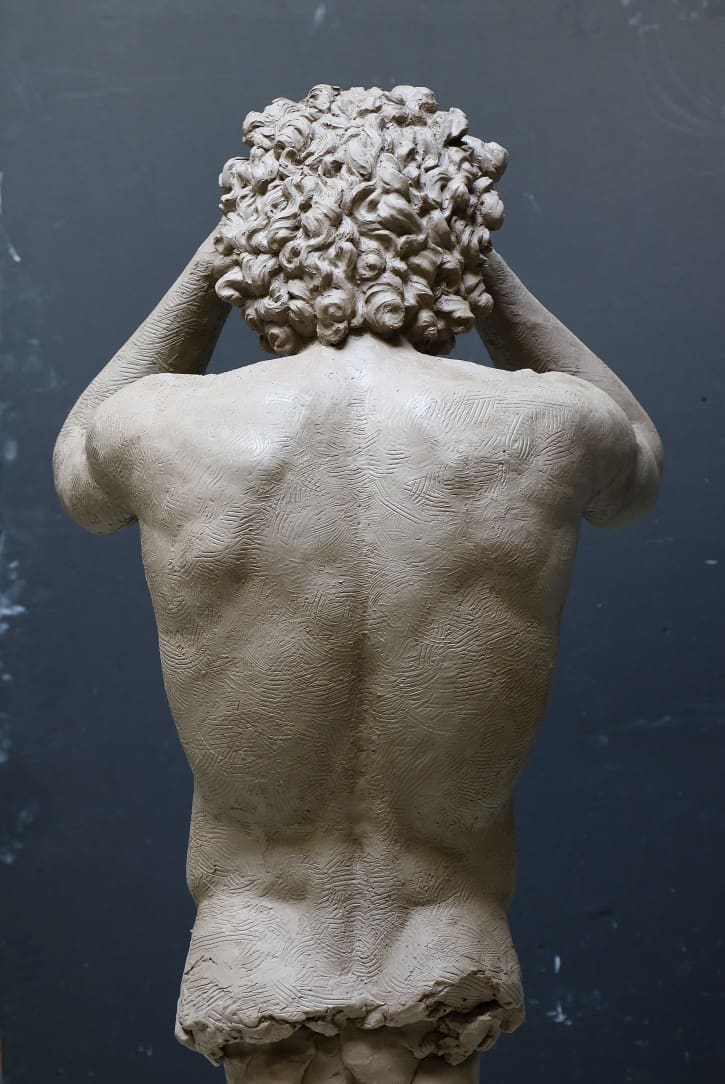 In this course, we will sculpt a 24” tall portrait bust, with the upper torso, using contemporary hand building techniques informed by Renaissance and 19th century sculpting practices. We will sculpt from a live model, focusing on the large masses of the body, and how they move in concert together to form a clear gesture. Our approach is based around close observation, and an emphasis on anatomical structure and form relationships. Students will learn how to think three-dimensionally, judging likeness with volume and mass.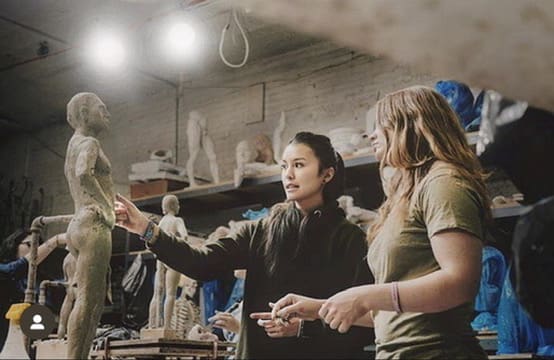
The class will cover basic anatomy, and how to use proportional cannons or measuring systems to sculpt a well-proportioned figure at any scale. We will cover basic “block-in” technique, learning how to accurately establish the large relationships of the figure, before moving on to modeling and finishing techniques for clay.
We will be slab building pieces that can be fired at the end of class, so students can go home with a finished sculptural vessel. The class will include sculpting demonstration, constructive critiques, and lecture. No experience is necessary, teaching will be tailored to individuals and students will return home with a finished sculptural vessel.
Included in the cost of the course are day trips to Deruta/Assisi and Orvieto.
On our Deruta/Assisi trip, we will start the day at the Santuario della Madonna dei Bagni, a sanctuary constructed around a tree where an apparition of the Virgin Mary appeared to a shepherd, distraught over his wife’s grave illness. According to legend, he prayed to the Virgin and his wife was cured. For centuries afterward, pilgrims have come to the church to pray for loved ones who were injured or ill. Later, in gratitude some donated a votive majolica plaque commemorating the accidents and illnesses from which victims were saved through the intercession of the Virgin. What remains is an intimate and moving glimpse into the lives and struggles of individuals who sought spiritual intervention in times of need throughout centuries.
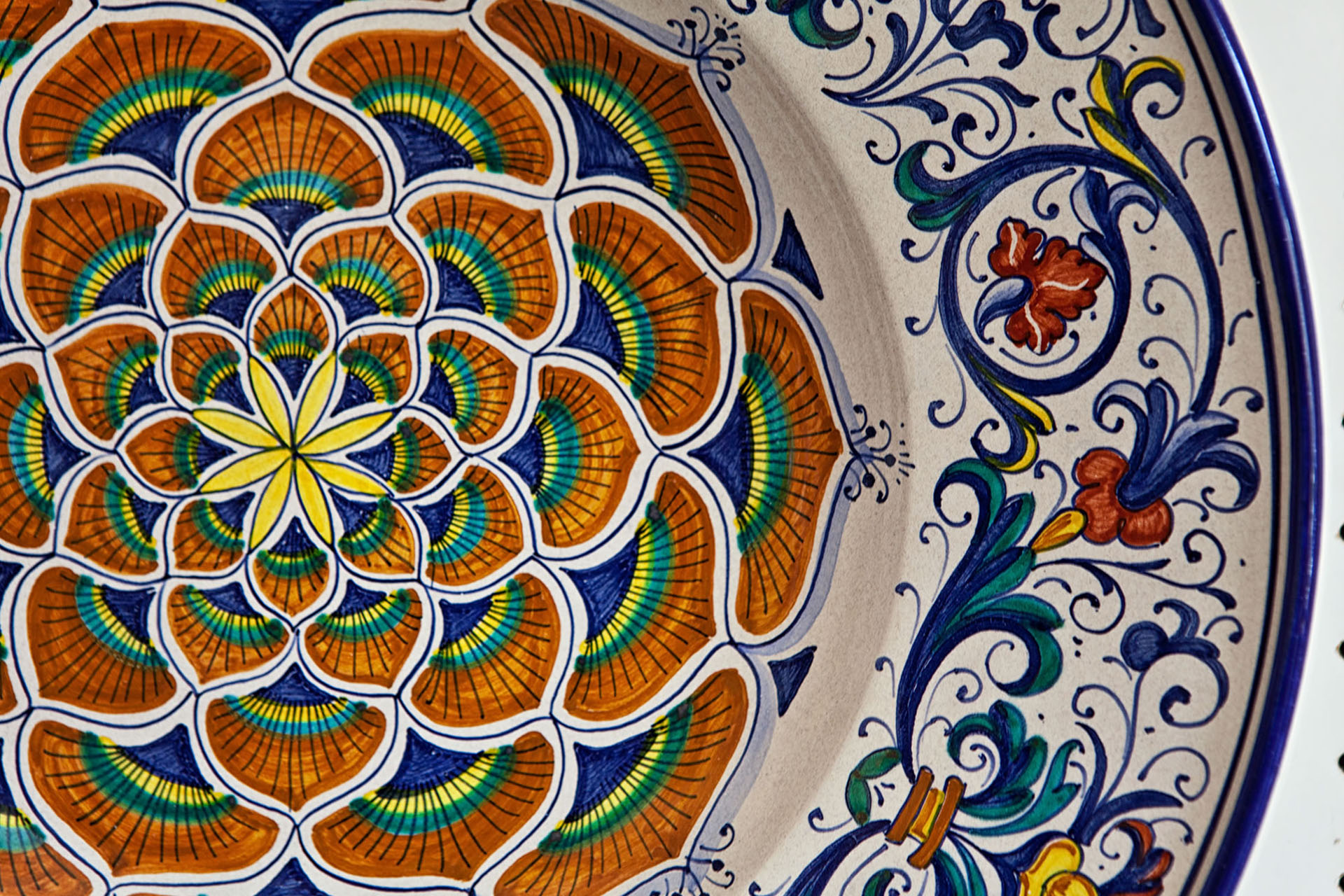 Moving on to Deruta, we will tour several local ceramics studios who work in the maiolica tradition, and visit the extraordinary, Museo Regionale Della Ceramica di Deruta. We will next travel to Assisi to visit Basilica of Saint Francis of Assisi, decoratedwith frescoes by Cimabue, Giotto, Simone Martini, Pietro Lorenzetti, and possibly Pietro Cavallini. The range and quality of the works give the basilica a unique importance in demonstrating the outstanding development of Italian art of this period.
Finally, we will visit Spello, to see the astounding frescos by Pinturicchio in the Cappella Baglioni, as well as the mosaic work in Villa de Mosaici, a beautifully preserved Roman Villa with mosaic floors from the imperial era. Before returning to Monte Castello, we will have dinner that includes a wine tasting, and enjoy the region’s famous terroir.
 Our second trip will be to Orvieto here we will see the cathedral, full of rich architectural ornament, mosaics, and the beautiful fresco Cycle in the San Brizio Chapel, begun by Fra Angelico, and finished by Luca Signorelli, Michelangelo’s forerunner in painting. We will also visit the The Pietà Ippolito Scalza, 1579 Duomo of Orvieto, Italy. For wine enthusiasts, there will be many available options for sampling some of the best wine in Italy. Afterward we will have dinner in Orvieto, which will feature a tasting of several of the Regions excellent wines.
 Participants will be housed in the remarkably well-preserved Umbrian hill town of Monte Castello di Vibio. Your workshop package is all-inclusive, providing welcome and departure services and airport transfer from the Rome Fiumicino, Leonardo Da Vinci Airport (FCO) aboard our comfortable private bus, single occupancy accommodations with shared bath (a wide range of upgrades with private bath are available), 3 meals per day Monday-Thursday, Prosecco brunch and dinner on Saturday and Sunday (no meals are served on Friday, our excursion day. Your workshop includes one excursion per week and many additional options are available on weekends for an additional fee. Of course, 24/7 access to facilities and 24/7 bi-lingual support are provided. Materials for the course will be available in the ICA Art Supply store in Monte Castello.
May 31 - June 14
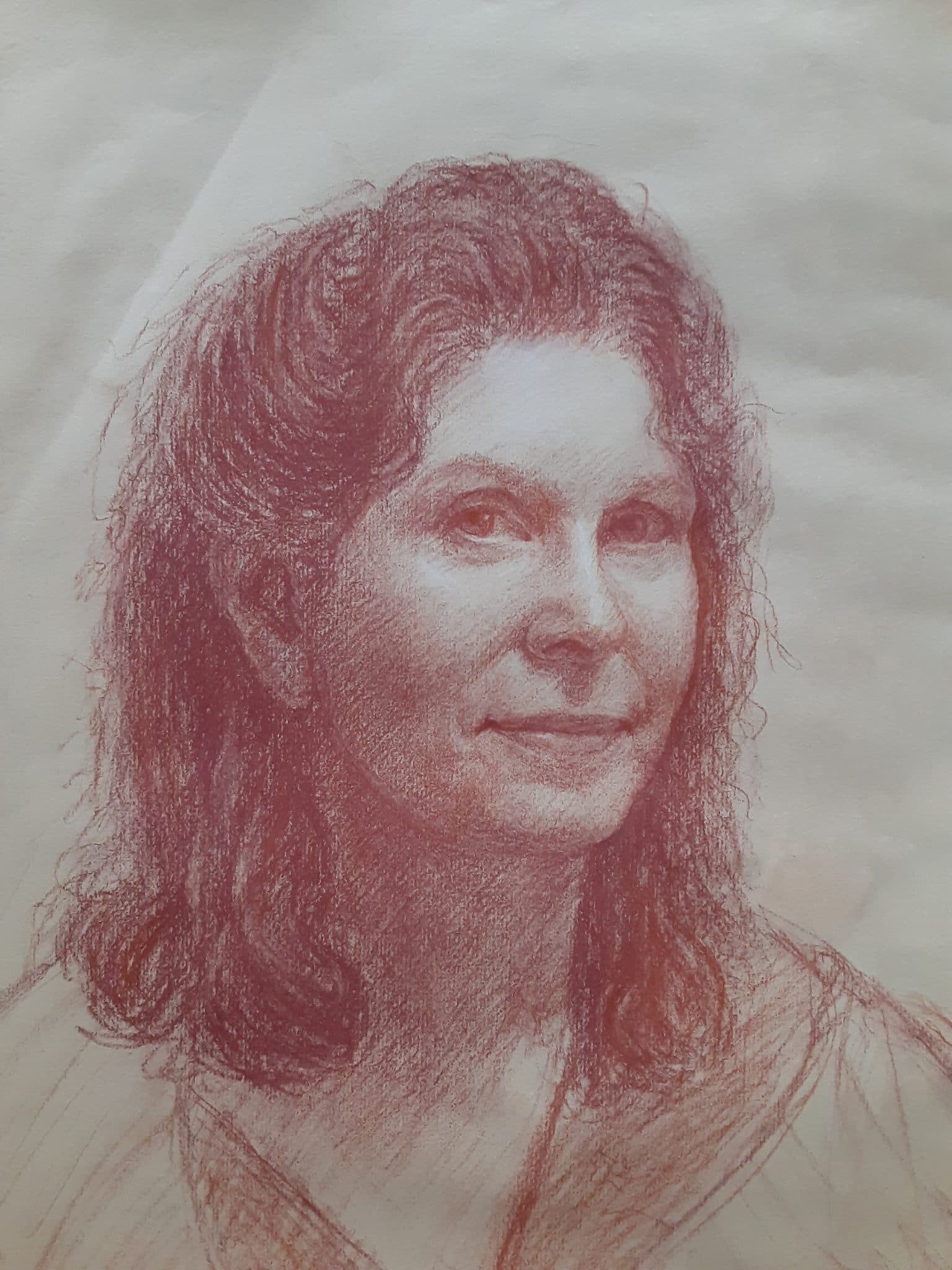 Fueled by a new interest in the individual, the birth of the Renaissance in Florence in the 15th century brought a rebirth of the long dormant art of Portraiture. What better place to study the art of Portraiture than in Monte Castello di Vibio, just a stone’s throw from that extraordinary city?
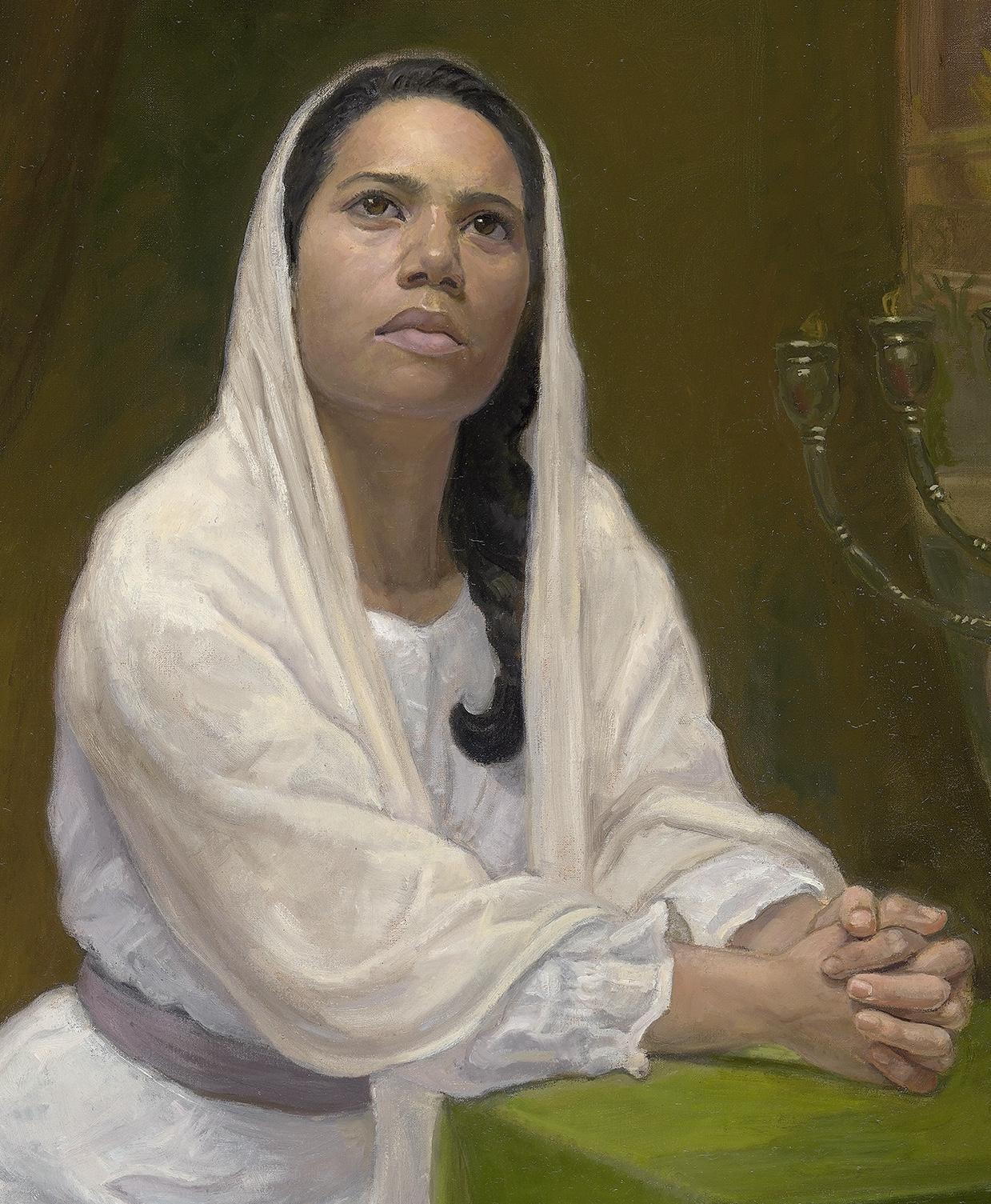
This comprehensive two-week workshop offers a unique opportunity to study classical realist Portraiture in both two and three dimensions under the expert guidance of renowned sculptor Constance Ramsey Bowden and acclaimed painter Karen Warshal.
Workshop Focus
Working from live models in an intimate studio setting, students will explore the fundamental principles of portrait creation across three classical mediums: drawing, painting, and sculpture. This intensive program emphasizes the essential building blocks of representational art, making it ideal for both beginners seeking solid foundations and more seasoned artists looking to refine their skills. The small class size ensures ample individual instruction for each student.
Class Structure
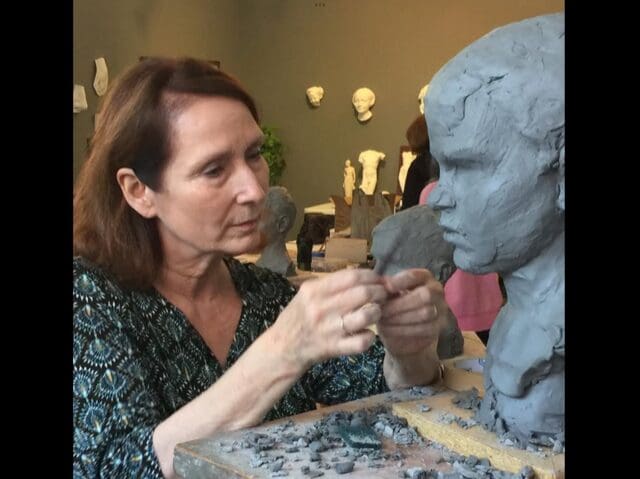
Students will draw or paint the model in the morning. After lunch, students will sculpt the same model in water based clay. Models will maintain the same pose for the duration of the workshop.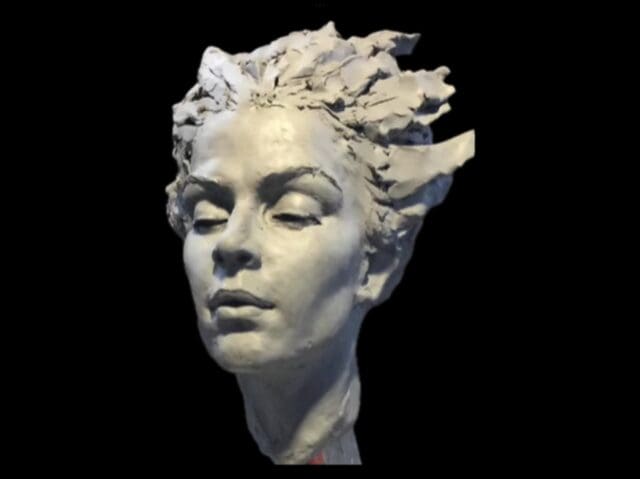
Curriculum Highlights
* Design Elements: Explore the principles of traditional design inherent in each portrait.
 Cultural Immersion Beyond the Studio
Students will journey to the artistic heart of Renaissance Italy with guided excursions to Rome and Florence. These field trips will serve to deepen students’ understanding of the skills and concepts they’re learning in the studio. In addition, they’ll come to appreciate the history of Portraiture itself and its place in the overall history of art.
Florence: visit to the world class Palazzo Pitti, including the Galleria Palatina and the Gallery of Modern Art. The Palatina features some of the greatest paintings of the Renaissance and Baroque periods, while the Moderna hosts masterpieces of traditional art from the 19th century.
Rome: visit to the Musei Capitolini complex, filled with many of the finest Roman copies of Greek sculptures in existence.
Weekends
Weekends are reserved for relaxing and recharging, with optional visits to nearby towns such as Deruta and Todi. Open model time will also be available for those interested.
Join us for this unique experience in Monte Castello di Vibio, where life is always just a little bit magical!
 Included in the price
Transfer to and from airport on designated pick-up and drop off dates*
Transportation for excursions to Florence and Rome
Entrance fees to Palazzo Pitti e Musei Capitolini
All class instruction
All meals except for lunch and dinner on the days of our field trips to Florence and Rome
Accommodations in single room with shared bath in the Asilo. (One “matrimoniale” room is also available.)
Private tour of the Teatro della Concordia
Clay and armatures for sculpture
Not included in price
Optional excursions on weekends
Housing upgrades to private room with bath or entire apartment (see options below)
*Pick-up and drop-off at Fiumicino airport on days other than those designated. For those arriving at a different time, an additional charge will be added.
About the food
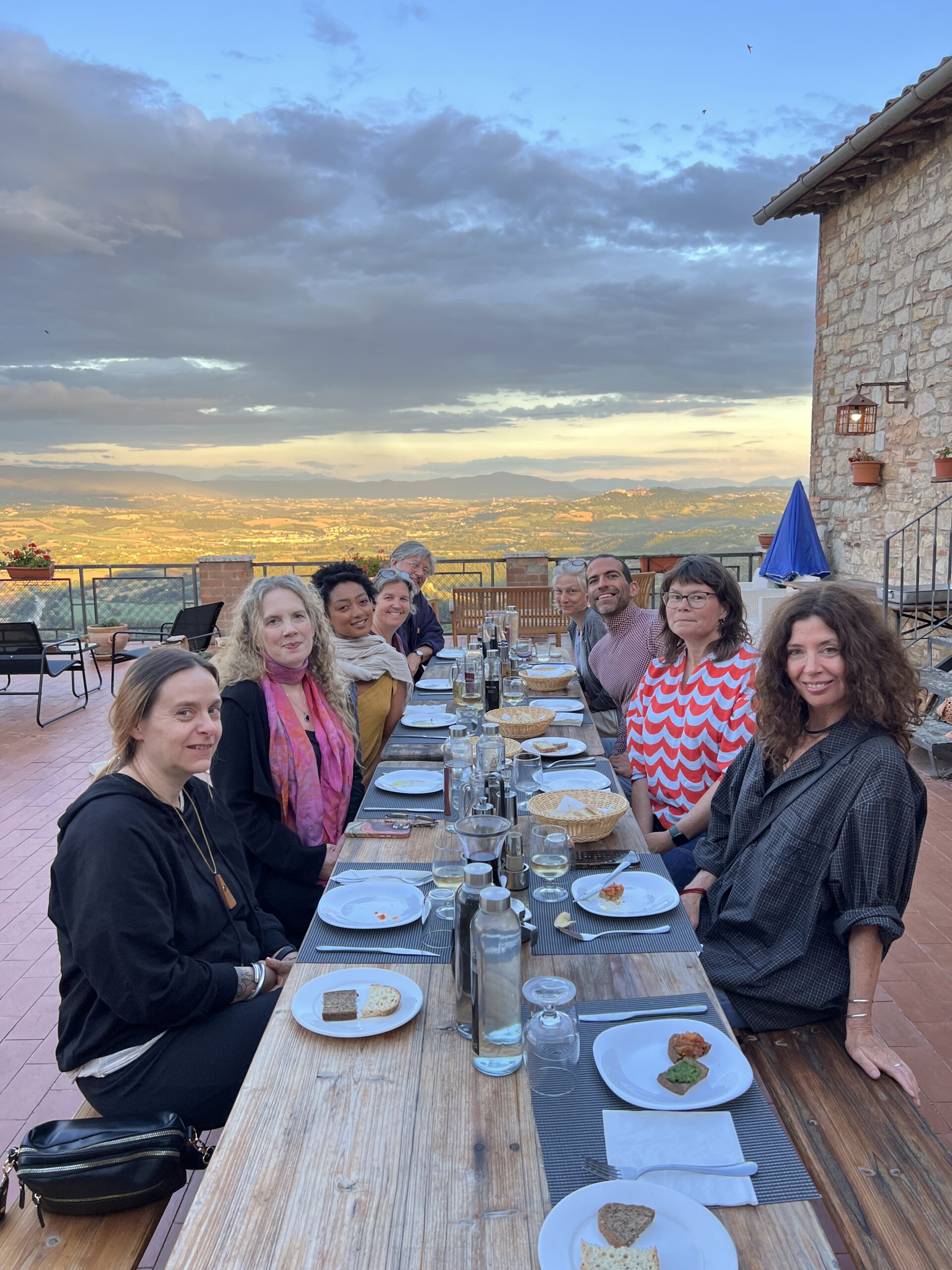
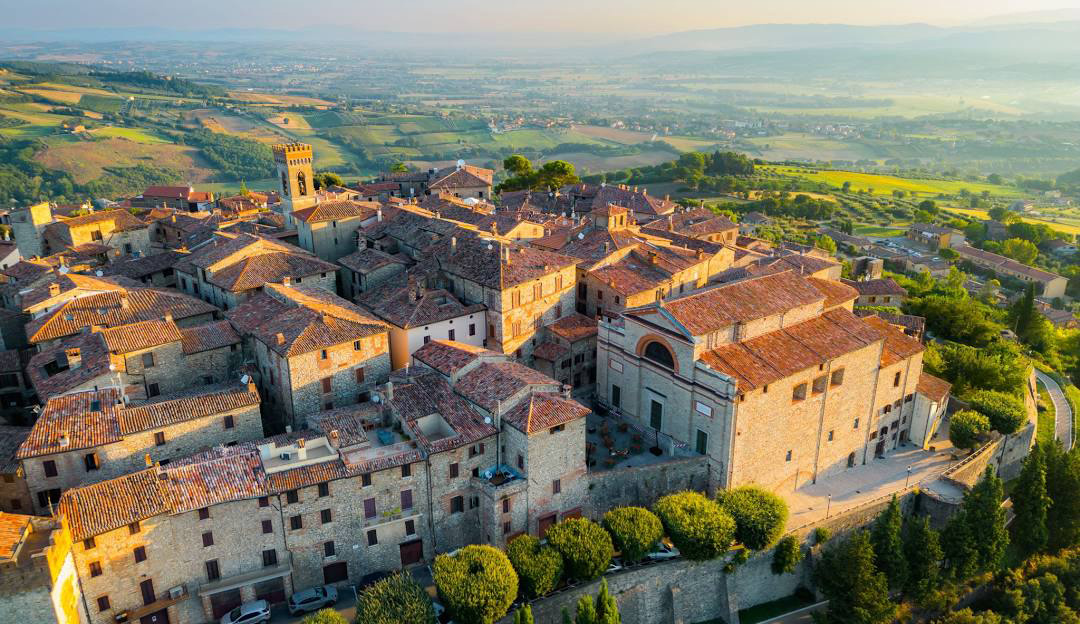
Delicious meals are lovingly prepared by our expert chefs, Cristiano and Loris. Featuring traditional Umbrian cuisine and always using the freshest ingredients purchased daily, Cristiano and Loris work hard to please everyone, honoring dietary restrictions and food preferences. Breakfast (buffet) and lunch are served indoors, while dinner is held on the scenic rooftop terrace ove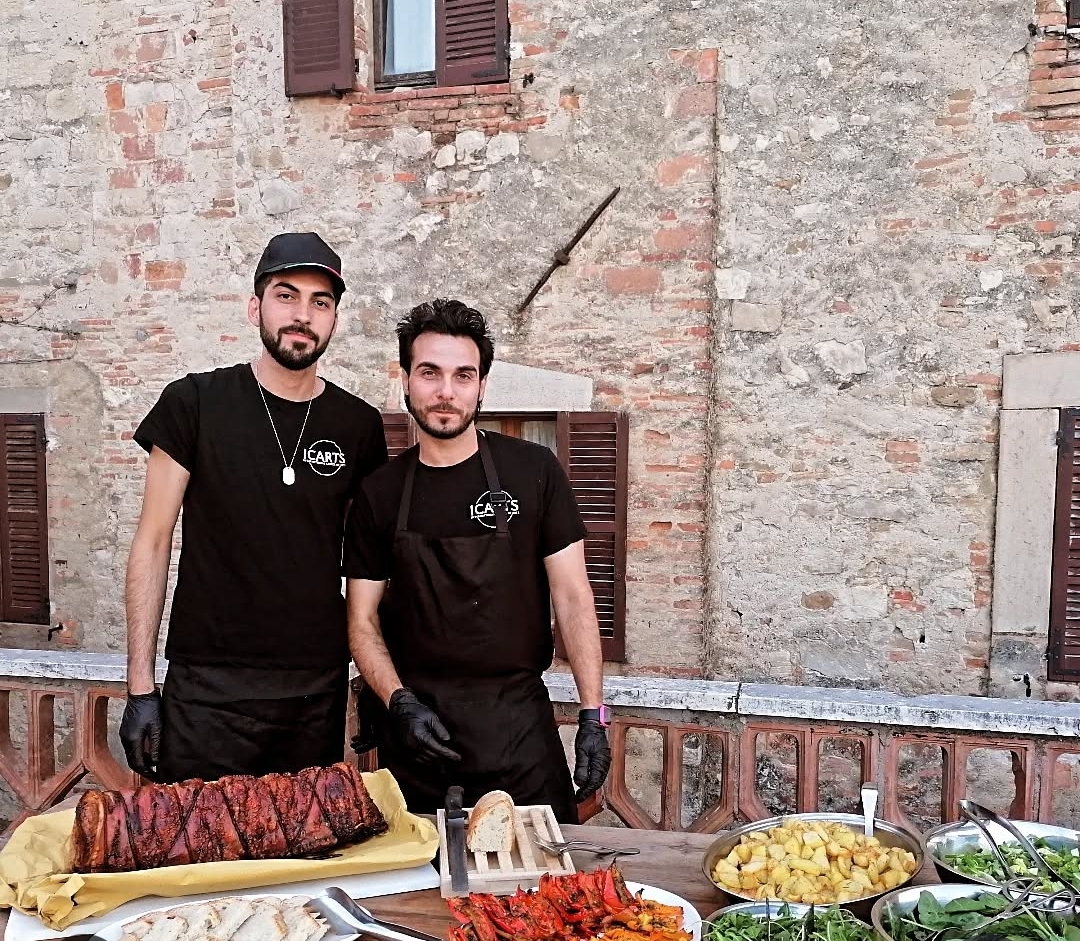 rlooking the valley surrounding Monte Castello di Vibio. To say that this is a breathtaking venue and an extraordinary experience would be an understatement.
Class Schedule
Monday, Tuesday, Thursday, Friday (of both weeks):
9:30-1:00 class (drawing/painting)
1:00-2:00 lunch
2:00-2:30 rest
2:30-6:00 class (sculpture)
Wednesdays: field trip Saturdays, Sundays: optional field trips, optional model time, free time
A PERSONAL NOTE FROM CONSTANCE AND KAREN TO YOU, OUR POTENTIAL STUDENTS:
We’ve designed this program with the goal of maximum learning because, as teachers, that’s our responsibility and it’s also who we are. But remember that this is YOUR special experience and it needs to meet your needs. This is an intensive program, so if you’re tired, take a rest. If you miss an hour or even a session, the world won’t come to an end.
May 23, 2027 - May 30, 2027
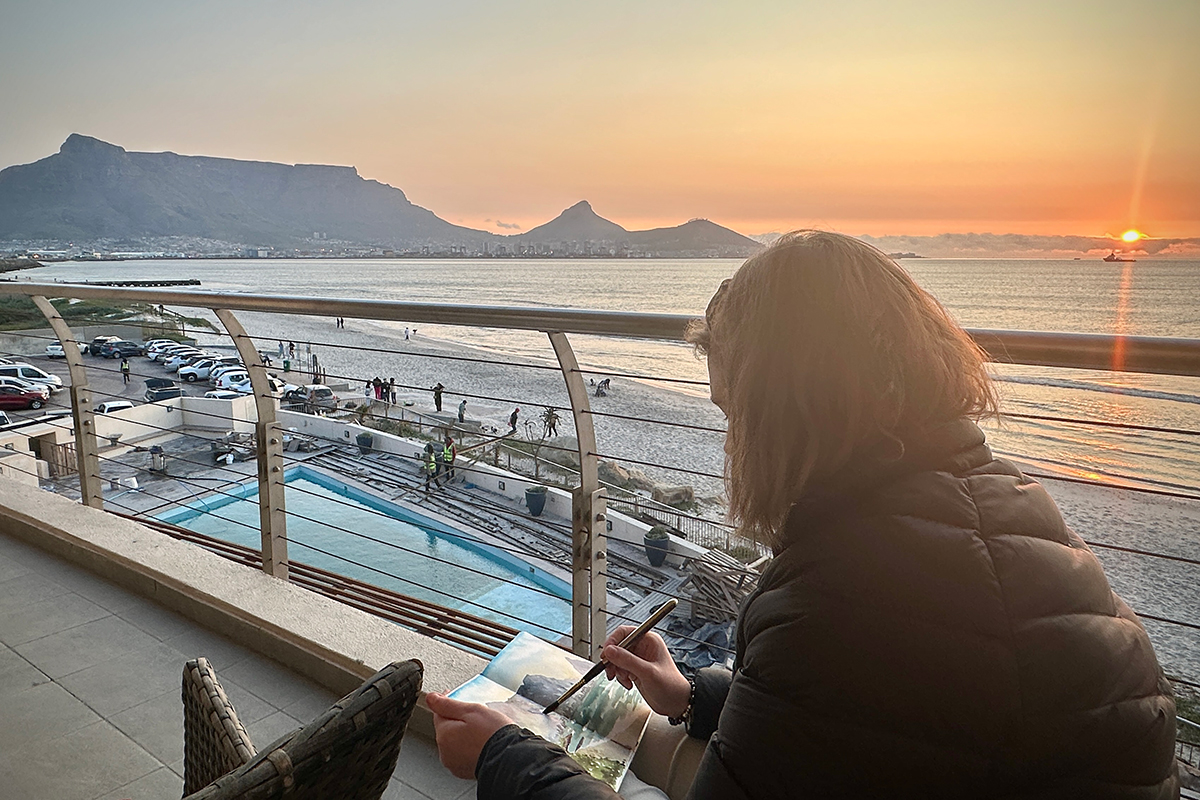
Join me for a relaxed and inspiring travel sketching workshop in the heart of one of Italy’s most beautiful villages. Using ink and watercolour, we’ll capture the timeless charm of Monte Castello’s medieval streets, sun-drenched piazzas, and sweeping Umbrian landscapes. My workshops focus on simplifying complex scenes, finding your personal sketching voice, and embracing the imperfections of on-location sketching.
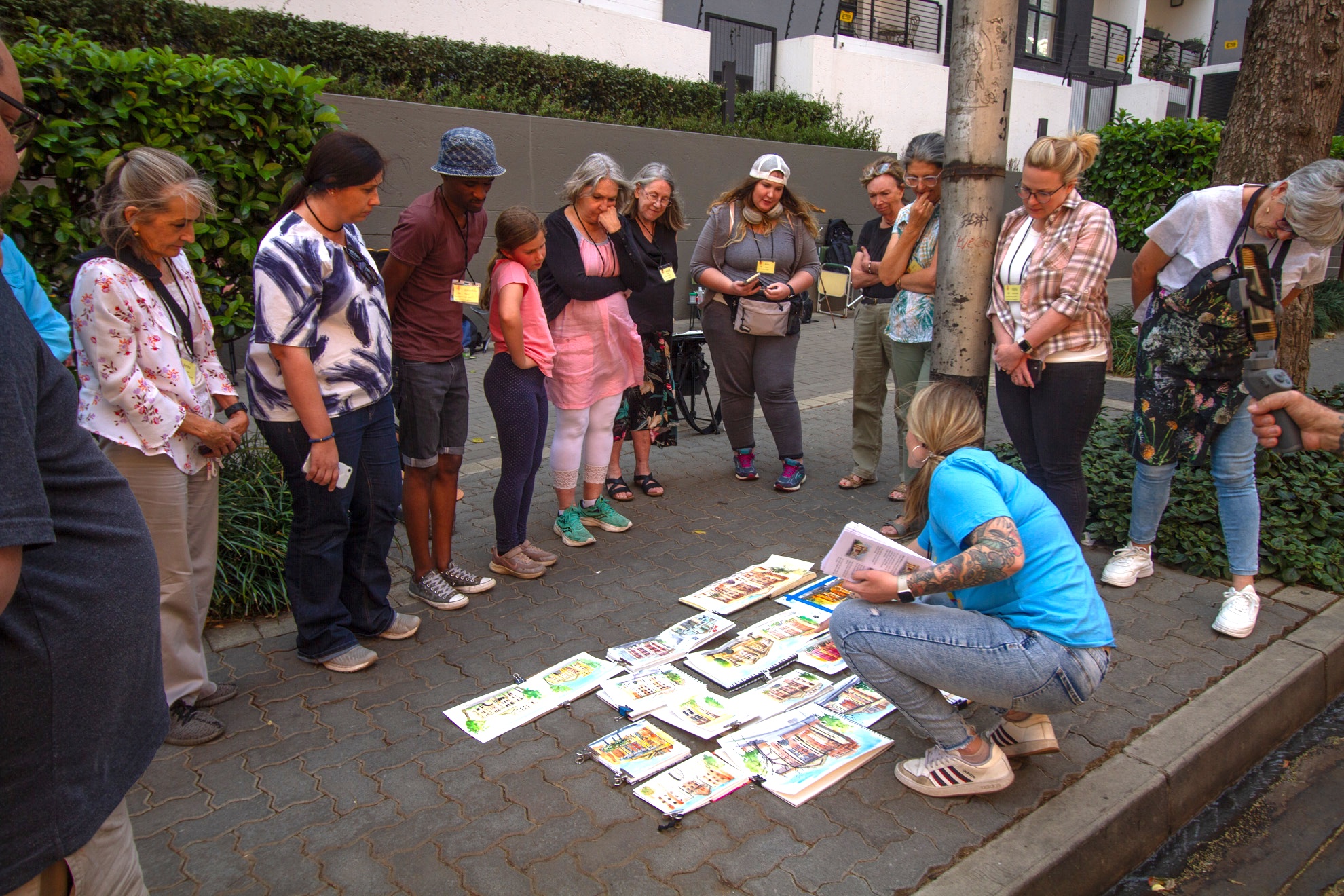 Participants will work with portable materials — pens, travel watercolour sets, and sketchbooks — ideal for capturing moments on the move. Monte Castello’s unique, car-free setting means we can sketch in peace, surrounded by ancient stone buildings, flower-draped balconies, and panoramic views without the interruption of traffic. It’s a dream location for artists and travellers alike, offering endless inspiration at every turn. Whether you're new to sketching or an experienced artist, this is your chance to slow down, observe deeply, and sketch your adventures.
Materials for the course will be available in the ICA Art Supply store in Monte Castello, but if you prefer to bring them from home, you will need: pencil (B or 2B), eraser, pen with waterproof ink (fineliners are a good option: 0.3, 0.5, 0.8 by brands such as UniPin, Micron, Copic, etc), watercolour brushes: one large (#10 round) and one small (#4 round or 1/4inch dagger), watercolour sketchbook (at least 200gsm, 300gsm preferred), watercolour set (12 colours is fine, artist grade preferred – St Petersburg White Nights, Rosa Gallery, Roman Szmal, Royal Talens Van Gogh (higher end student grade), Daniel Smith, Winsor Newton are all good brands and variety of price points), pot for water, cloth to wipe brush.
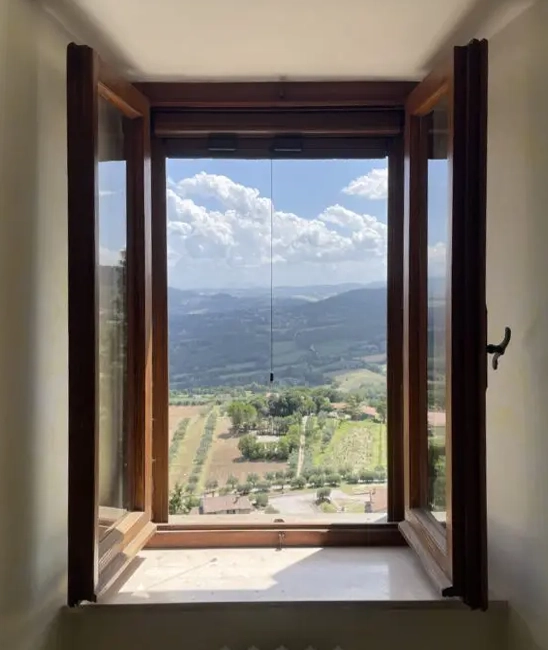 Participants will be housed in the remarkably well-preserved Umbrian hill town of Monte Castello di Vibio. Your workshoppackage is all-inclusive, providing welcome and departure services and airport transfer from the Rome Fiumicino, Leonardo Da Vinci Airport (FCO) aboard our comfortable private bus, single occupancy accommodations with shared bath (a wide range of upgrades with private bath are available), 3 meals per day Monday-Thursday, Prosecco brunch and dinner on Saturday and Sunday (no meals are served on Friday, our excursion day. Your workshop includes one excursion per week and many additional options are available on weekends for an additional fee. Of course, 24/7 access to facilities and 24/7 bi-lingual support.
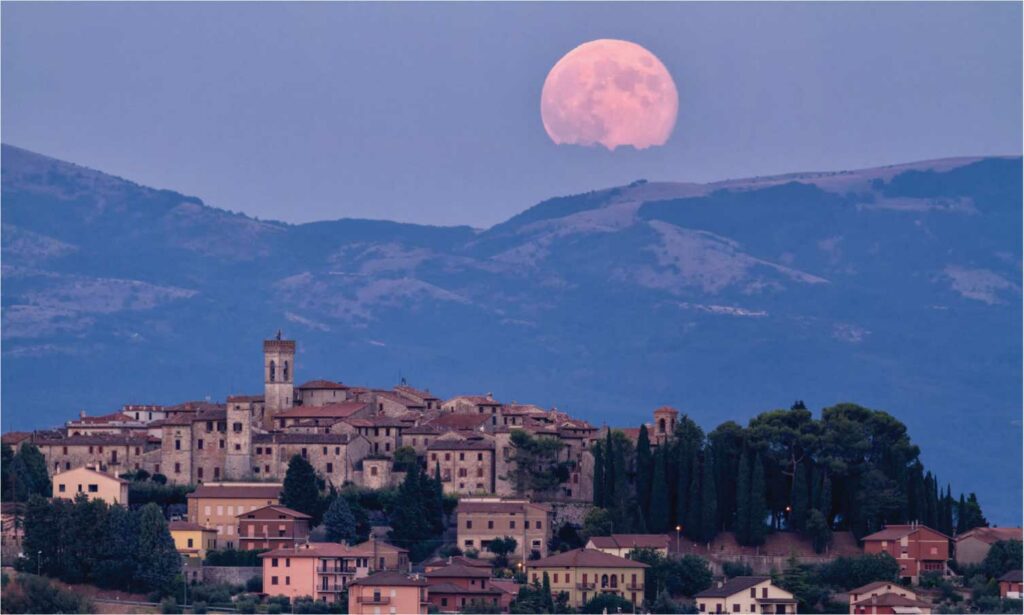
June 21 - June 28
 Our in-depth animal sculpture workshop will allow you to immerse yourself in your art. Nick will demonstrate the importance of observation, show you how to make an emotional connection with your subject and realize your own creative vision. Our extended workshop format allows plenty of time for instruction and practical work.
Under Nick’s expert guidance, you will make your own animal sculpture. Combining a mix of one-to-one and group demonstration and tuition, Nick will teach you building techniques and help you hone your modeling skills. No prior experience is needed and all the tools and materials you’ll need are provided.
Participants will be housed in the remarkably well-preserved Umbrian hill town of Monte Castello di Vibio. Your workshop package is all-inclusive, providing welcome and departure services and airport transfer from the Rome Fiumicino, Leonardo Da Vinci Airport (FCO). Aboard our comfortable private bus, single occupancy accommodations with shared bath (a wide range of upgrades with private bath are available), 3 meals per day Monday-Thursday, Prosecco brunch and dinner on Saturday and Sunday (no meals are served on Friday, our excursion day. Your workshop includes one excursion per week and many additional options are available on weekends for an additional fee. Of course, 24/7 access to facilities and 24/7 bi-lingual support are provided.

A Note to Participants:
When packing:
Materials to bring from home:
The study of human anatomy in Italy is a long and distinguished tradition. The extraordinary anatomical theatres in medical schools at the University of Padua and the University of Bologna bear witness to this history and were among the first of their kind in existence. Even today, we marvel at the accuracy and lifelike intensity of the 17 th c. wax anatomical models in the Specola Museum in Florence, which were made to allow medical students to observe venous, muscular, and skeletal systems without a cadaver. In this regard, the study of anatomy in Italy has profoundly impacted not only our understanding of the human body, but also the study of medicine in the western world.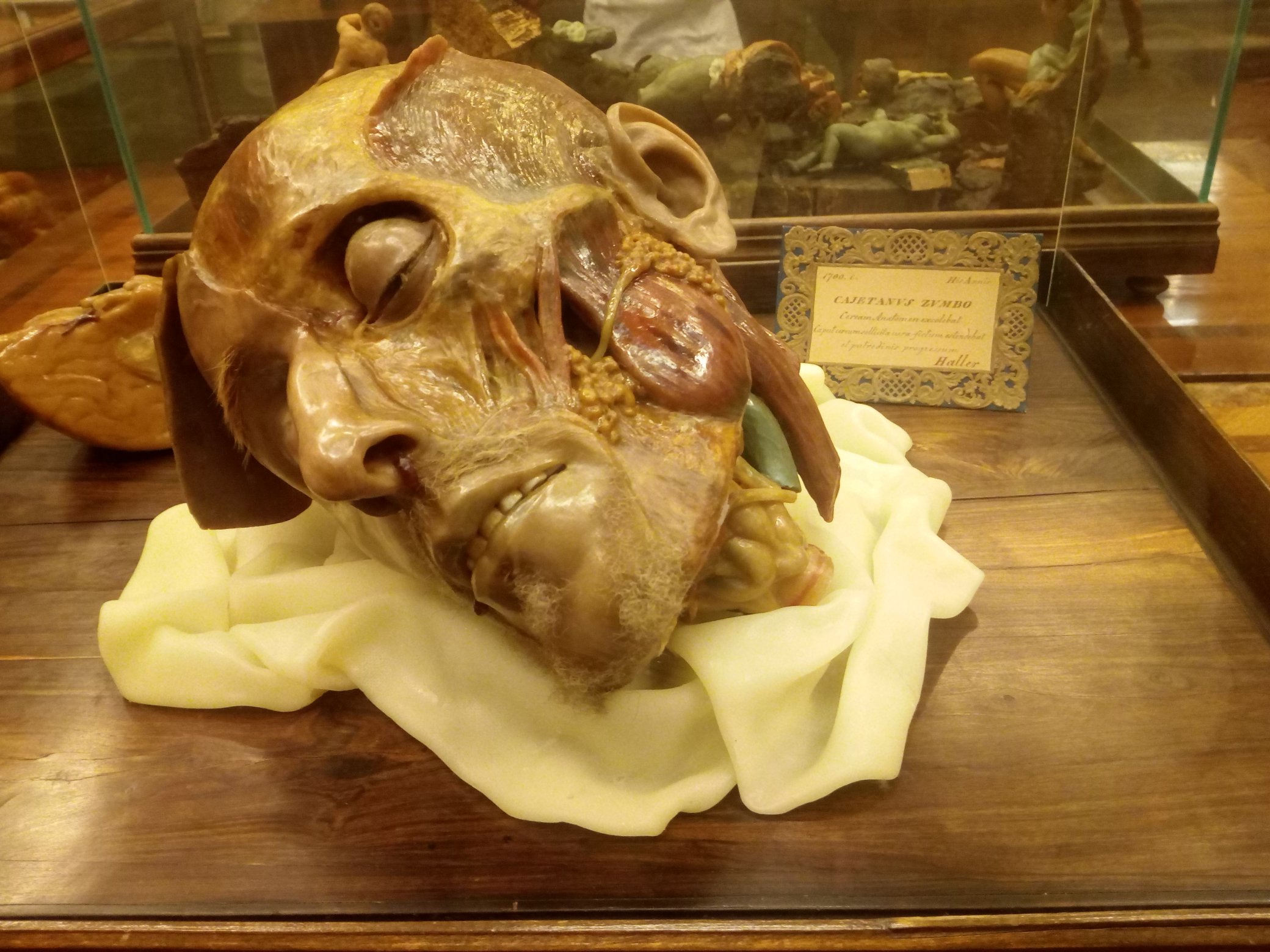
Surprisingly, this history also reveals much about the significance of the role of visual art in furthering science and medicine. In his brilliant series of lectures at the Art Students League in New York, artist, anatomist, and scholar, Robert Beverly Hale once said: “science had actually sprung from art, that it had developed in those great periods when artists had looked at nature very closely and carefully, and had tried to record exactly what they saw. That, what we explained, was what scientists have been doing ever since.”
To support Hale’s observation one need look no further than Leonardo’s anatomical studies. These drawings are incredible not only for their accuracy and beauty as works of art, but also as a highly accurate analysis of function, of what anatomist George Bridgeman referred to as “the human machine.” Leonardo is perhaps unequalled in his analysis of the form of the human body as a manifestation of the interrelationship of functioning systems. It is known, for example that Leonardo once injected the heart of an ox with hot wax, then made a glass model of the casting. He then pumped the model with water to analyze the circulation of fluids in the human heart. Incredibly, Leonardo’s conclusions were not fully corroborated by cardiologists until the 1980’s.
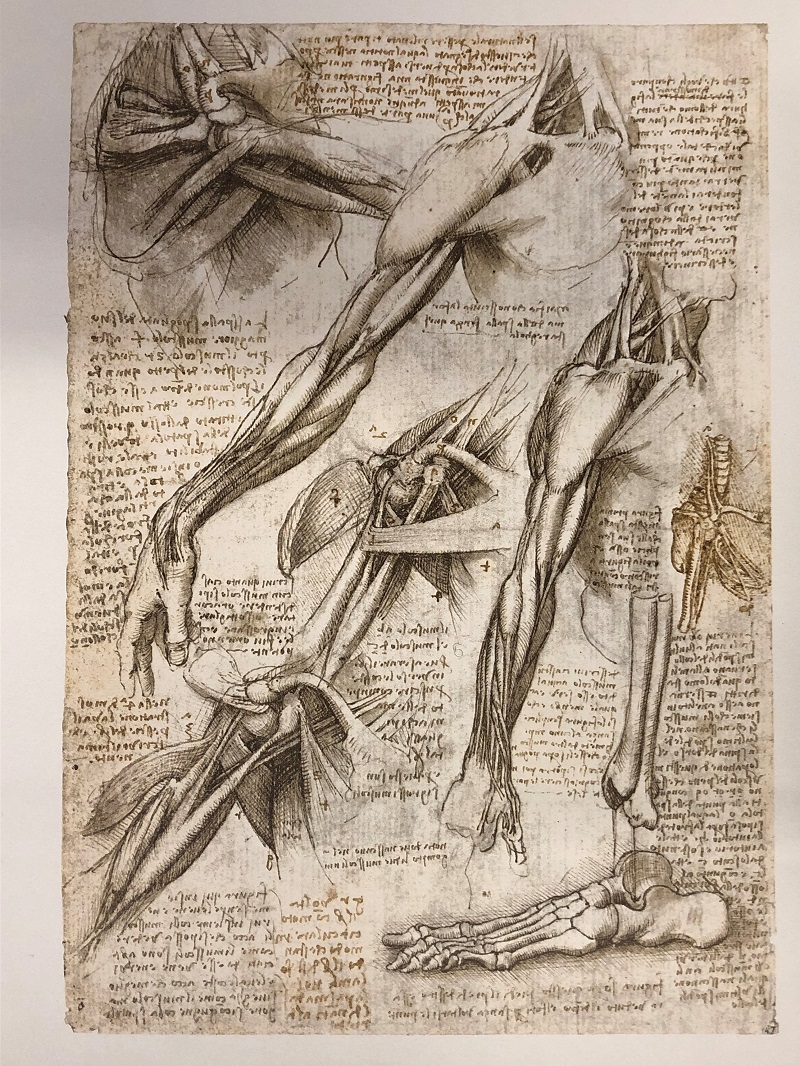 The objective of our Human Anatomy intensive is to follow in this tradition. Thus, we will not only identify anatomical structures of the human body, but we will also analyze the function of those structures and their effect on its outward form. Throughout the workshop, we will reference functional systems in understanding their manifestation in surface anatomy of the figure.
Our focus will be on the skeletal and muscular systems, with some analysis of the major arteries of the venous system. We will work from a variety of sources, including real human skeletons as well as drawing from our collection of anatomical models and plaster casts. Our medium in the course will be various drawing media in large-format sketchbooks as a means of note taking for the course.
Our approach will be in the form of lectures and hands on drawing focusing first on the skeletal system. We will draw from real human skeletons as well as anatomical models. We will explore one area of the body at a time, first in analyzing the skeletal structure of the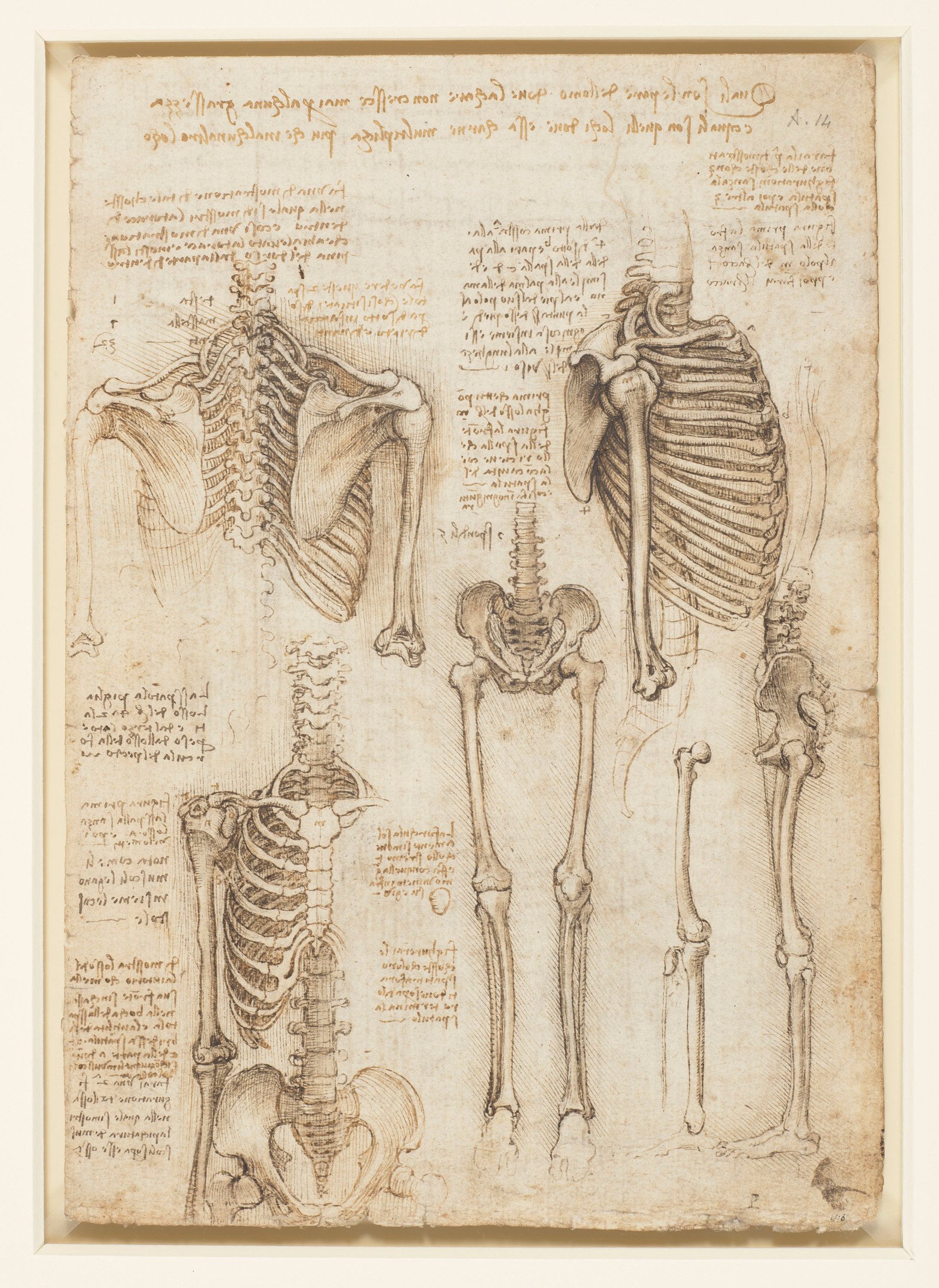 torso. Afterward, we will move on to the head, arms, and legs, as well as hands, and feet. Participants will produce life-sized drawings with charcoal on heavy paper as well as drawings in sketchbooks of details such as joint articulations.
Afterward, the course will focus on the muscular system first through lecture and note-taking then by drawing from anatomical models, plaster casts, and the live model, in the same order. However, we will in exploring the muscular system we will utilize tracing paper and colored pencil, in order to add layers of muscles over our previous skeletal drawings.
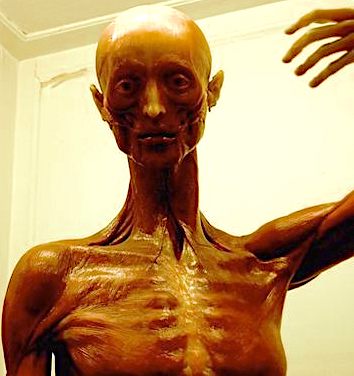
In addition to the intensive schedule of daily drawing and lecture, we will make an excursion to the famed Specola Museum in Florence where we will draw from their collection of 16 th to 18th c. wax anatomical sculptures. The incredibly lifelike flayed figures are shockingly lifelike - at once factual and at the same time, powerfully expressive. Here, the wax models will provide an overview of the skeletal and muscular systems as well as an introduction to the venous system.
Throughout the workshop, participants will be housed in the remarkably well-preserved Umbrian hill town of Monte Castello di Vibio. Your workshop package is all-inclusive, providing welcome and departure services and airport transfer from the Rome Fiumicino, Leonardo Da Vinci Airport (FCO). Aboard our comfortable private bus, single occupancy accommodations with shared bath (a wide range of upgrades with private bath are available), 3 meals per day Monday-Thursday, Prosecco brunch and dinner on Saturday and Sunday (no meals are served on Friday, our excursion day. Your workshop includes one excursion per week and many additional options are available on weekends for an additional fee. Of course, 24/7 access to facilities and 24/7 bi-lingual support are provided.

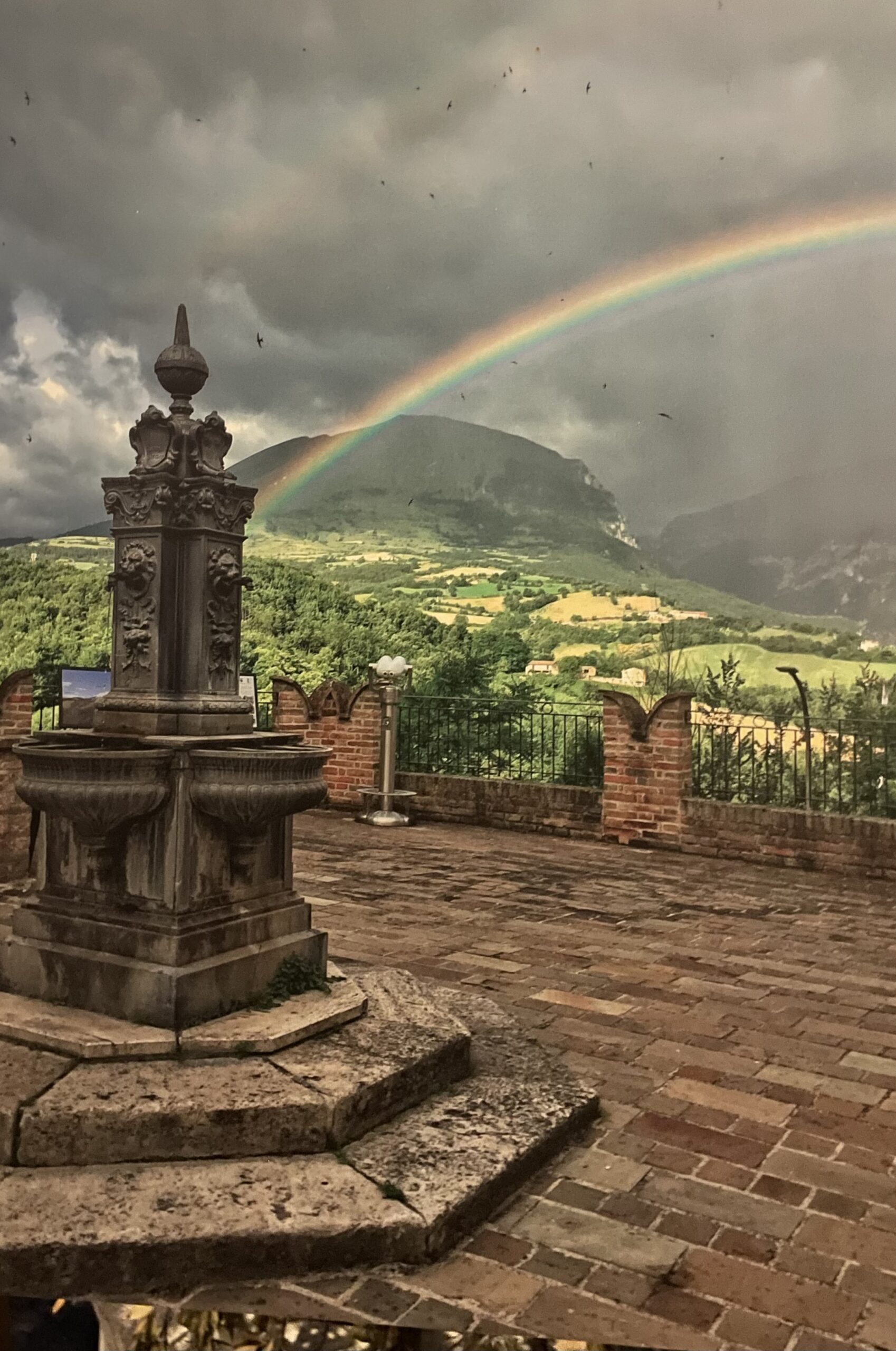 Of Sibyls and Source: Performance in the Landscape is a two-week exploration of live art in geo-mythic sites in the Central Italian regions of Umbria and Marche.
This dynamic residency is guided by research, inquiry, and connection through myth-making and embodied presence in/with/of the land. We will spend three days exploring the Parco Nacional di Sibilline, part of the Apennines named for the Sibyl, or prophetess of antiquity, who is believed to have lived in a cave at the top of Monte Sibilla. This includes a day-long hike to the top of Monte Sibila and an excursion into the Gola dell' Infernaccio, a protected landscape of ancient beech trees and gorges crossed by an ancient pilgrimage trail. We will experience sites of ritual and esoteric rites related to the myth of the Sibyl mentioned in literary sources as well as living local folk traditions dating back thousands of years.
Our time together will also include day trips to the Nera River with Roman ruins whose source is the Monti Sibillini and entrance into the remarkable Frassasi Caves. Performances may take place at any or all of these locations including the impeccably maintained medieval town of Monte Castello di Vibio, our home base. At the conclusion of the residency we will hold a screening and live performance event in Monte Castello di Vibio. Our group includes a collaborative documentarian, misael soto, to help participants realize our work through video documentation as well as other methods in addition to providing critical feedback. (see below).
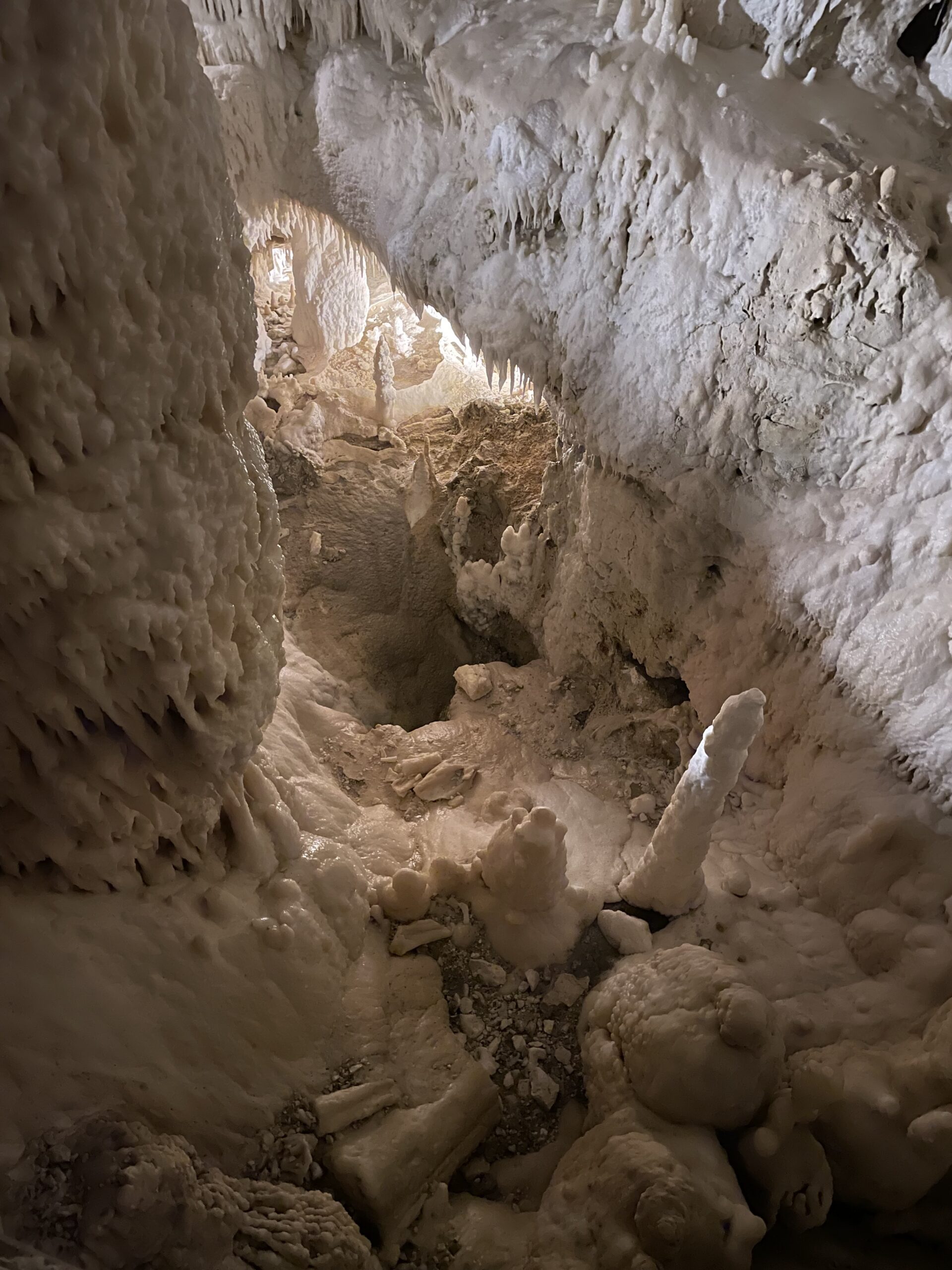 Please note this Residency includes physical complexities: moderate hiking up to an altitude of 7654 ft (2333 m), cold-water wild swimming and a cave visit. Applicants are responsible for their own physical wellbeing. With these logistical and locational considerations in mind, a brief Project Proposal (of approximately 300 words) is required for this workshop. Additionally, please specifically identify project proposals related to Parco Nacional di Sibilline, Nera River and Frassasi Cave for consideration. Please submit the proposal with a current CV and images of recent work (or link to a website) via email to: icarts.info@gmail.com Responses will be issued within 48 hours.
Participants will be housed in the remarkably well-preserved Umbrian hill town of Monte Castello di Vibio. Your Residency package is all-inclusive, providing welcome and departure services and airport transfer from the Rome Fiumicino, Leonardo Da Vinci Airport (FCO), aboard our comfortable private bus; single occupancy accommodations with shared bath (a wide range of upgrades with private bath are available); 3 meals* per day, when on campus, Monday-Thursday; Prosecco brunch and dinner on Saturday and Sunday (when on campus) No meals are served on Friday - our excursion day - unless previously arranged. Your workshop includes the excursions below, however, many additional options are available for an additional fee. Of course, 24/7 access to facilities and 24/7 bilingual support is provided. *Meal service is provided while in Monte Castello only, unless otherwise noted. Meals on excursions and admissions are not included in the cost, unless specifically noted in the itinerary.
Our Documentarian
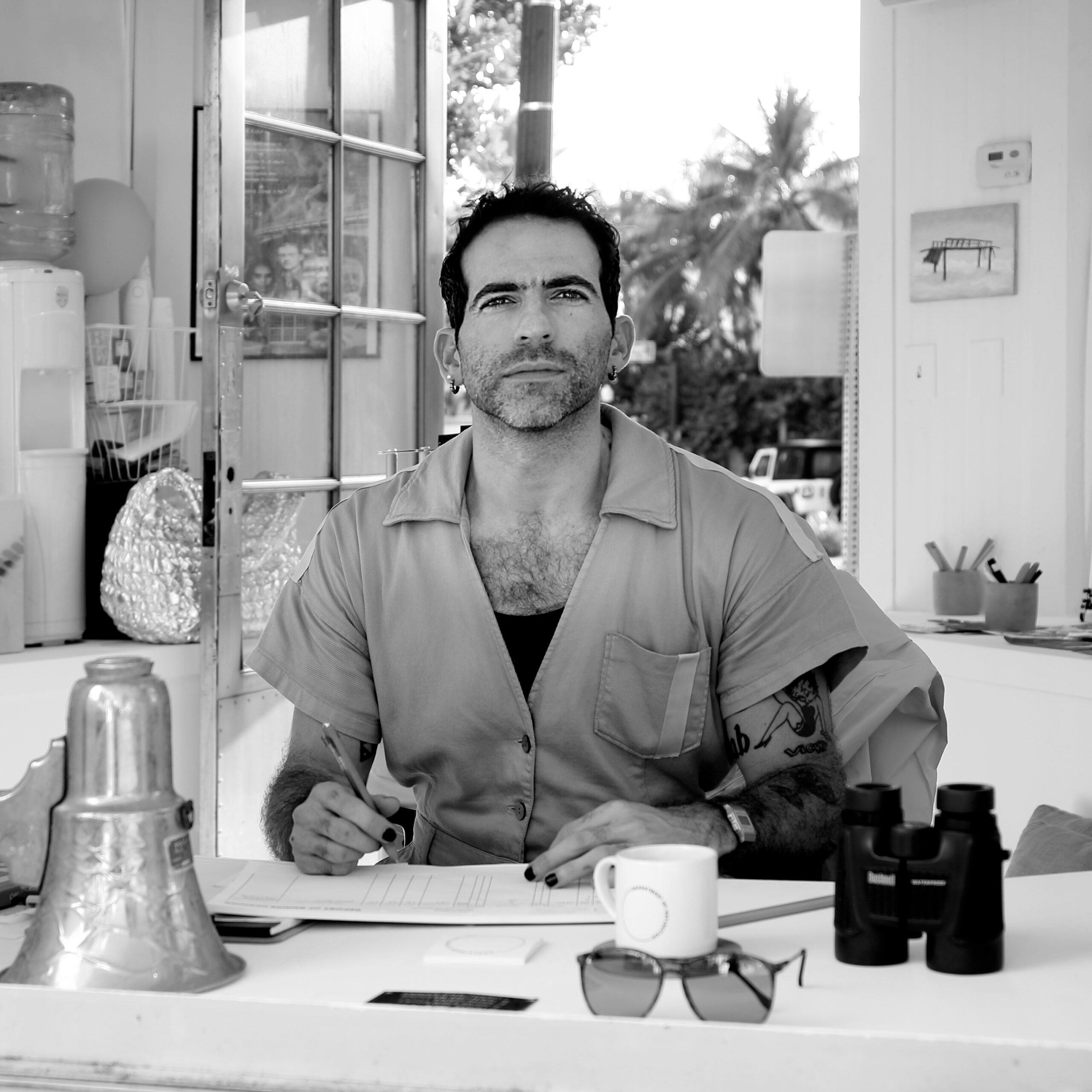 Born in Puerto Rico (1986) and based in Miami, misael soto’s practice interrogates and subverts contextually associated everyday objects and systemic roles, disrupting and manipulating space, systems, and frameworks. The publicly accessible, time-based, and ephemeral work involves interventions made upon existing objects, performative activations, institutional mediations, and is often a combination of these elements. misael received their MFA from the School of the Art Institute of Chicago (2018) and graduated Magna Cum Laude with a Bachelor's Degree in Art History from Florida Atlantic University (2008). misael was the first ever Art in Public Life Resident with the City of Miami Beach's Department of Environment and Sustainability and Oolite Arts, where they founded the Department of Reflection. Beyond their public artworks which they have shown extensively for many years, misael has exhibited at MCA Chicago, Open Engagement 2015, the Museum of Contemporary Art in North Miami, Material Art Fair in Mexico City, David Castillo Gallery in Miami, and Museum of Art Fort Lauderdale, amongst others.
 Stories in Clay with Gerit Grimm


 This workshop delves into the precise methods and sophisticated tools essential for crafting a bust directly from a live model. Participants will explore in-depth the intricate anatomy, structural nuances, proportional considerations, cranial aspects, and facial features, while meticulously observing a diverse range of expressions and potential interpretations. Moreover, attendees will gain insight into the time-honored techniques employed by Italian and European old Masters. The program features a blend of interactive group discussions and personalized demonstrations tailored to participants' needs. Open to individuals of all skill levels, this workshop offers a unique opportunity to engage with the art of portraiture.
 During the workshop, we will also take a day trip to Perugia in order to visit the National Gallery of Umbria and view their remarkable collection. Afterwards, we will stop in Assisi in order to visit the Church of San Francesco, one of the great monuments of Italy, that features works by Giotto and Cimabue as well as an "all-star cast" of early Renaissance artists! As a special treat, we will make a brief afternoon visit to see the incredible marble sculpture inside and outside of the Duomo of Orvieto, one of which the most remarkable examples of Italian Gothic architecture with some of the most renowned late medieval marble sculptures. The opportunity to observe and discuss these great works of Italian art will enhance your understanding of workshop topics, while also enriching your knowledge of the history of art.
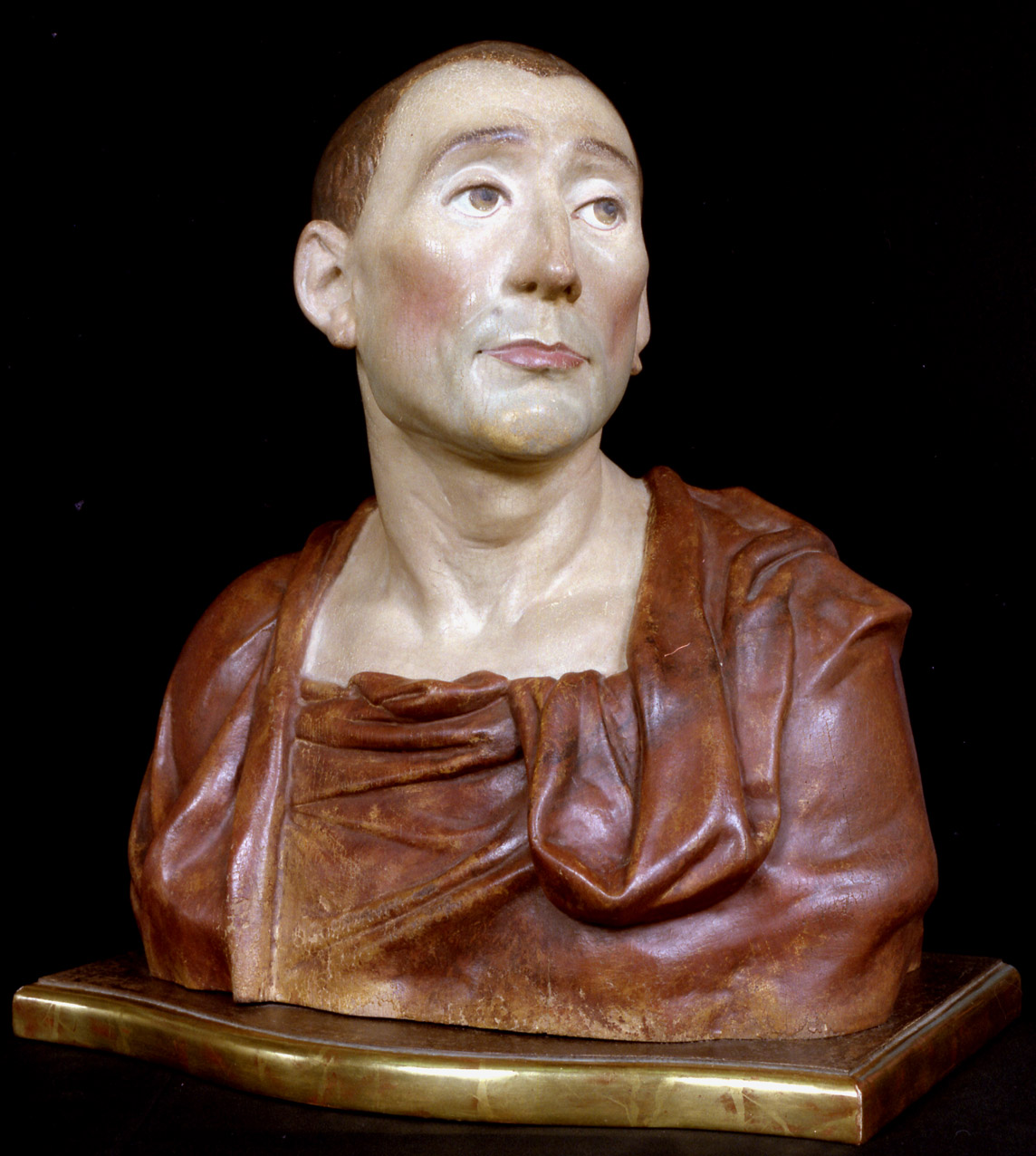
Study after Donatello; Polychromed Wood; Dionisio Cimarelli
Participants will be housed in the remarkably well-preserved Umbrian hill town of Monte Castello di Vibio. Your workshop package is all-inclusive, providing welcome and departure services and airport transfer from the Rome Fiumicino, Leonardo Da Vinci Airport (FCO) aboard our comfortable private bus, single occupancy accommodations with shared bath (a wide range of upgrades with private bath are available), 3 meals per day Monday-Thursday, Prosecco brunch and dinner on Saturday and Sunday (no meals are served on Friday, our excursion day. Your workshop includes one excursion per week and many additional options are available on weekends for an additional fee. Of course, 24/7 access to facilities and 24/7 bi-lingual support are provided. Materials for the course will be available in the ICA Art Supply store in Monte Castello.
 Situated in one of the most beautiful regions of Italy, the idyllic medieval hill town of Monte Castello di Vibio, provides both amazingly picturesque vistas as well as unique challenges for the painter. Majestic mountains stairstep their way into the distance, as their deep green forested hillsides fade to blue gray. The famed, Tiber River, winds like a giant serpent through the valley on its path to Rome, and farm fields and meadows become ribbons on hillsides.
In describing this environment, one cannot help but wax poetic about the opportunities that it provides for the landscape painter. Itis a place both steeped in history, yet constantly changing. Gates open to panoramas that locals refer to as Porta Montanna (“Door to the Mountains”) and the south-facing, Porta Maggio (“Door of May”). To the southwest, where mountain ridges collide above the village of Doglio, the Bocca della Stregna (the Witches Mouth) sometimes reveals the source of its name as the moaning wind circles through its crevices. Castles in the distance appear and disappear in the morning fog as swallows dart in and out of a vista called simply, il Mare (the sea). Far off in the distance to the east lie the mysterious Sibillini Mountains, home of the famed Sybill and the mountain towns of Norcia and the breathtaking valley of Castelluccio, where wildflowers carpet the ground and wolves still howl at night. It is a timeless landscape where past and present meet in the eyes of those lucky enough to experience it. This workshop and your immersion in the surroundings will provide unforgettable experiences. This non-touristed location will allow you to enjoy this small town and its authentic ambiance.
 Participants will be housed in the remarkably well-preserved Umbrian hill town of Monte Castello di Vibio. Your workshop package is all-inclusive, providing welcome and departure services and airport transfer from the Rome Fiumicino, Leonardo Da Vinci Airport (FCO). Aboard our comfortable private bus, single occupancy accommodations with shared bath (a wide range of upgrades with private bath are available), 3 meals per day Monday-Thursday, Prosecco brunch and dinner on Saturday and Sunday (no meals are served on Friday, our excursion day. Your workshop includes one excursion per week and many additional options are available on weekends for an additional fee. Of course, 24/7 access to facilities and 24/7 bi-lingual support are provided.
The immersive workshop may be taken for one or for two weeks in duration. In either case, participants will cover the essential aspects of outdoor landscape painting: choosing a motif, working quickly and directly, controlling value and color to create compelling harmonies, and thinking intentionally about form.
We will meet together four days a week, with weekends allowing time for independent painting time and Friday’s reserved for excursions. The first week will include ample instruction and support from the instructor. The second week students will be guided as they approach the landscape with more confidence and clarity. Painting sessions will be scheduled generally: 9am-1pm and 4pm-7pm Monday-Thursday.
Included in the workshop are two excursions: to Florence in Week 1 and to Assisi to see the unforgettable Giotto frescos in the Church of San francesco, in Week 2.

San Gimignano, Kevin Wixted
This workshop is directed towards artists, educators, and students interested in exploring the dynamics of classical Italian art and it’s relationship to Contemporary painting. Our broad objective is to share experiences first hand of great works of Italian Art, and consider these experiences in relation to our own studio practice.
Using the remarkable landscape, art and architecture of Umbria and Tuscany as inspiration, this workshop investigates the ways in which perceptual study and abstraction can combine to form contemporary painting language. In the beautiful setting of Monte Castello di Vibio, we begin with drawing and painting in the village and surrounding landscape. Daily work sessions in private studios are augmented with excursions, slide talks, and group critiques. We will travel the “Piero Trail” to see the major frescos of Piero Della Francesca in Arezzo, Sansepolcro and Monterchi. We will also visit Assisi, Perugia and spend two days in Florence to study works by Giotto, Perugino, Fra Angelico and many more great works of Renaissance art.

Annunciation, Piero della Francesca
Midway through our journey, we will further these objectives through viewing paintings by Piero della Francesca in Monterchi, Sansepolcro, and Arezzo, before moving on to Florence. We arrive in Florence, to see the city in the golden light and enjoy a fantastic dinner! The next morning, we will visit the Monastery of San Marco, after which, participants will have the remainder of the day to explore according to their objectives. The following day, proceeding by train to Assisi, we will see the great S.Francis cycle of Giotto in the Basilica of Saint Francis, before we re-join our bus on our return to Monte Castello! The following week, participants will focus on their objectives in our serene village.
Our workshop is centered in the remarkably well-preserved Umbrian hill town of Monte Castello di Vibio.Here, your stay is all-inclusive, from the time our welcome service greets you at the Rome Fiumicino, Leonardo Da Vinci Airport (FCO) - aboard our comfortable private bus - until our bur returns you to FCO and our staff bids you a farewell at the airport, our staff facilitates comprehensive services. In Monte Castello, we allow complete focus by providing: single occupancy accommodations with shared bath (a wide range of upgrades with private bath are available), 3 meals per day Monday-Thursday, Prosecco brunch and dinner on Saturday and Sunday. (Additional options are available on weekends for an additional fee.) Of course, 24/7 access to facilities and 24/7 bi-lingual support are provided. All these factors, allow for an environment of focus and clarity, in which participants are free to integrate all of the experiences of this wonderful country and its extraordinary artistic traditions.
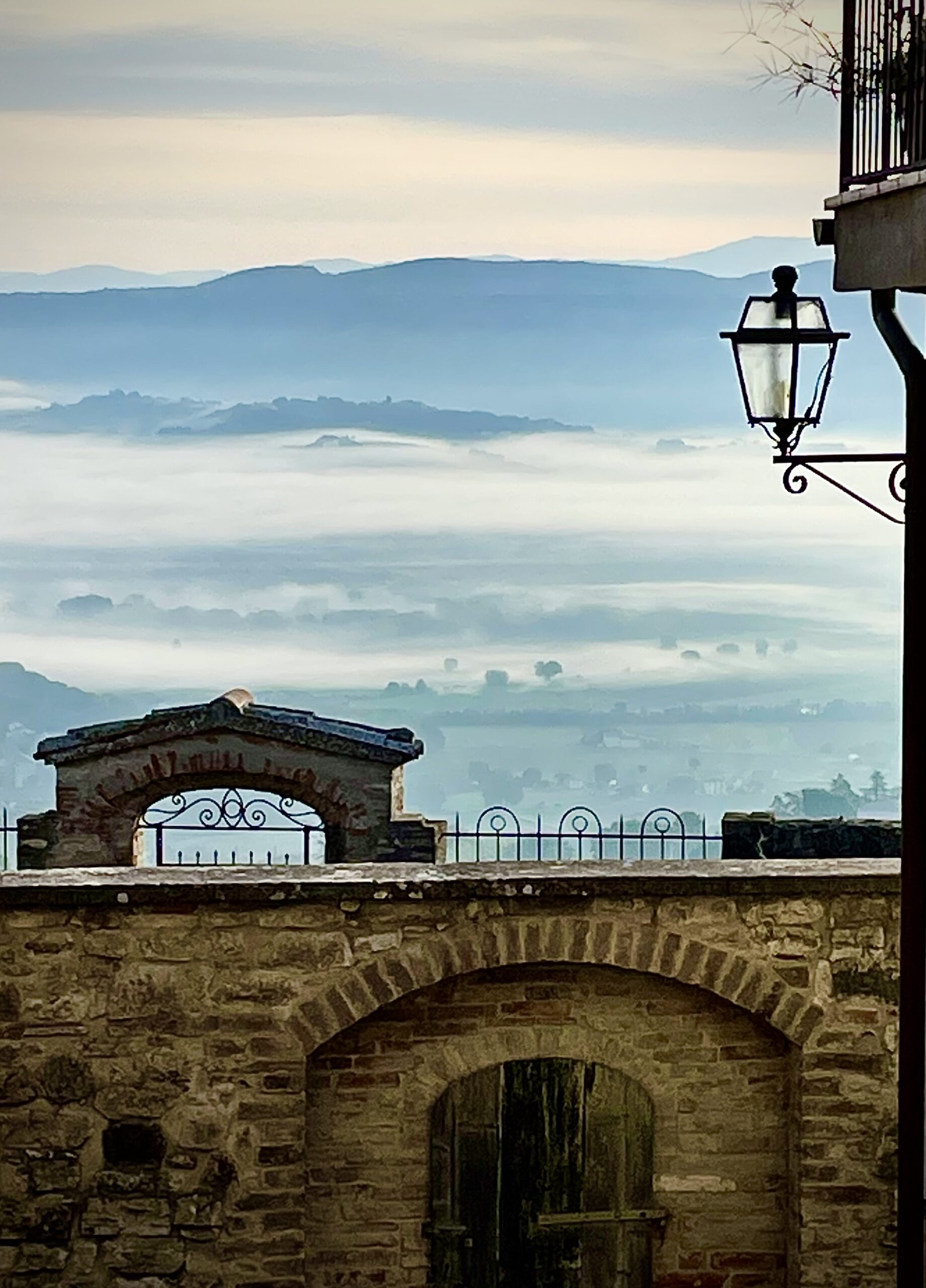
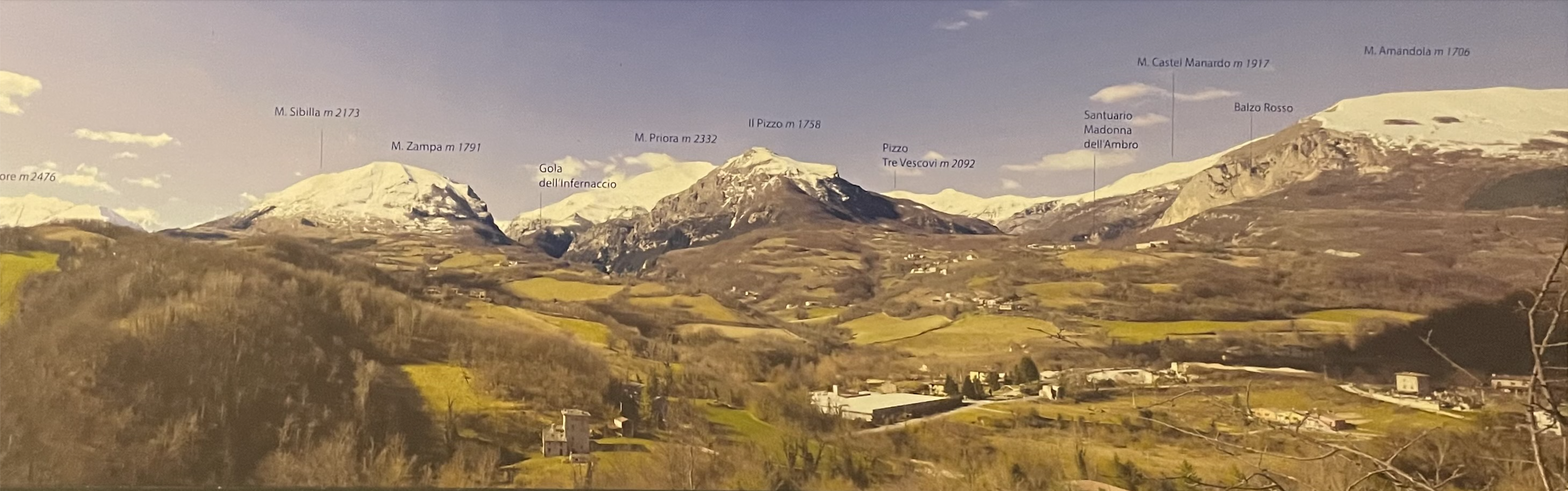
Monte Castello di Vibio, view to the Sibillini Mountains

 The most basic and important skill that an artist must acquire is the ability to draw. Drawing from plaster casts of Ancient and Renaissance sculptures is one of the most traditional and effective ways for an artist to enhance their drawing skills.
Here in Monte Castello di Vibio, students will work from plaster casts in our collection. Striving towards accuracy at all times, students will render a drawing of a cast of their choice. The process is intensive and time-consuming, but those willing to put in the hard work will be rewarded with heightened skills that will serve them for the rest of their lives as artists.
As part of the course, participants will make an excursion to view original drawings in the Gabinetto dei Disegni at the Galleria degli Uffizi in Florence. Seeing a drawing touched and executed by the hands of masters such as Michelangelo, Leonardo da Vinci, and Raffaello is an experience one never forgets.
A VERY SHORT HISTORY OF CAST DRAWING
From ancient times until the nineteenth century, the ability to realistically depict the visual world was mandatory for any working artist. An essential part of an artist’s training was drawing from plaster casts of Ancient and Renaissance sculpture. This practice dates back to the late Renaissance, although perhaps the most famous cast drawing program is the one executed in the French academies of the 19th century. Only upon completion of an intensive period of cast drawing were students permitted to work from the live model. The rigor of cast drawing produced countless artists with highly refined skills, many of whom created masterpieces that fill our museums to this day.
Today we have a less structured system but the training to become a highly skilled artist is no less rigorous. Classical programs always involve a heavy emphasis on cast drawing, allowing students to practice proportion, understand shading, and gain an appreciation of the aesthetics of the classical world.

Materials for the course will be available in the ICA Art Supply store in Monte Castello.
 Participants will be housed in the remarkably well-preserved Umbrian hill town of Monte Castello di Vibio. Your workshop package is all-inclusive, providing welcome and departure services and airport transfer from the Rome Fiumicino, Leonardo Da Vinci Airport (FCO) aboard our comfortable private bus, single occupancy accommodations with shared bath (a wide range of upgrades with private bath are available), 3 meals per day Monday-Thursday, Prosecco brunch and dinner on Saturday and Sunday (no meals are served on Friday, our excursion day. Your workshop includes one excursion per week and many additional options are available on weekends for an additional fee. Of course, 24/7 access to facilities and 24/7 bi-lingual support are provided.
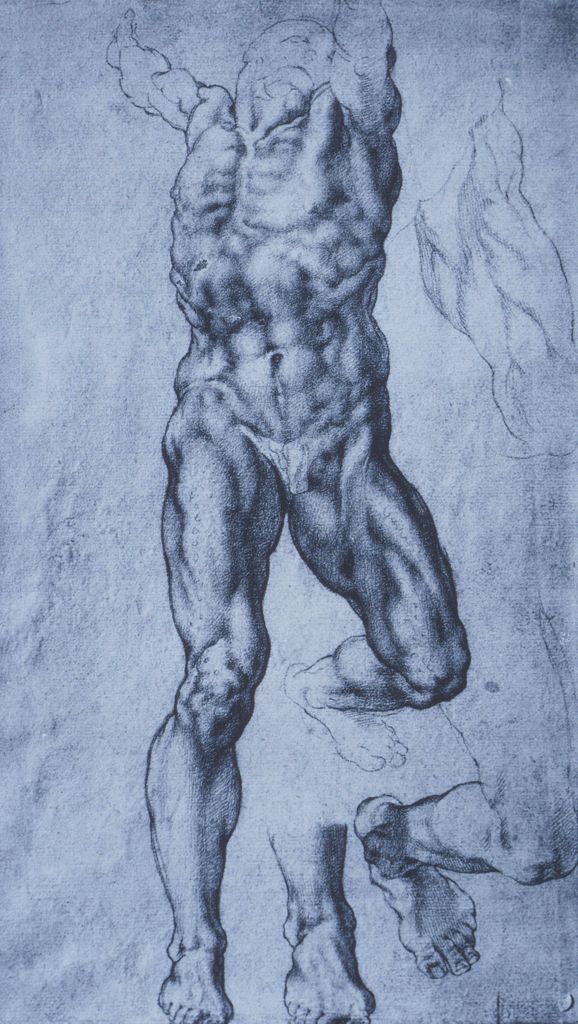
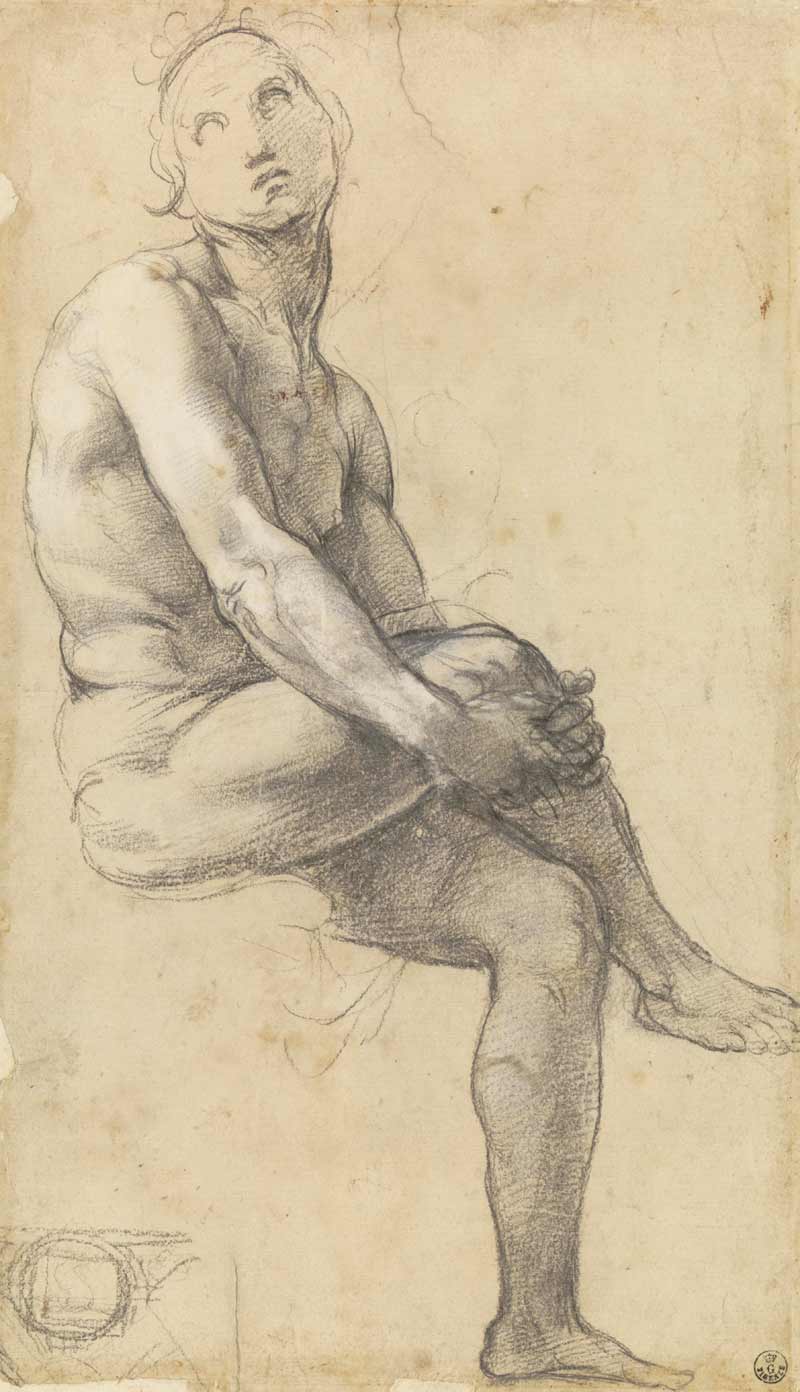
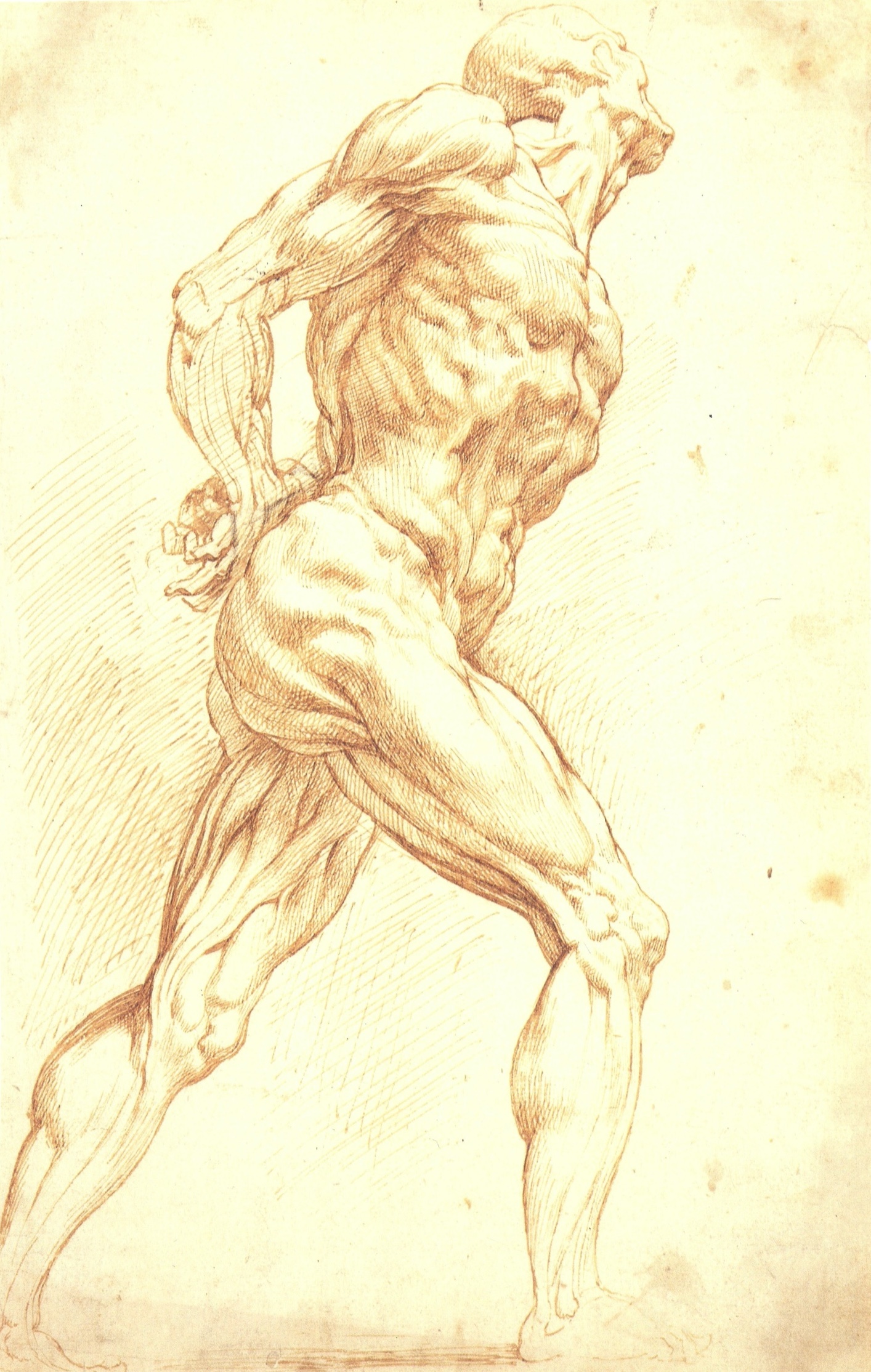
A knowledge of surface anatomy and its underlying structure has been a central tenet of figurative art throughout history. This is nowhere more evident than in the art of the Italian Renaissance, when man himself became an appropriate subject matter for works of art.
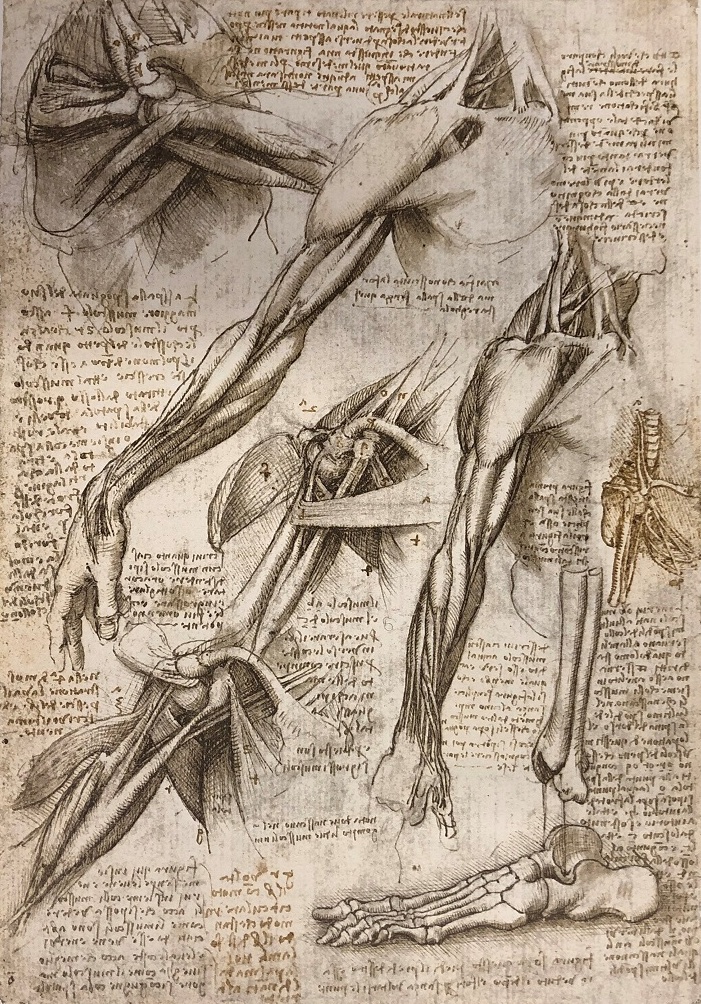 Artists such as Leonardo drew from dissections to better understand the underlying structure of the body and the mechanics of the human figure. Since this time, drawing from the nude has been the bedrock of an artist’s training, and the study of human anatomy continues to be an essential part of that process.
In this two-week workshop, you will draw daily from the live model, improving your ability to see line, proportion and form. You will also study human anatomy in depth, utilizing the rich collection of resources available at the ICA. Your growing understanding of anatomy will enable you to draw contours and render values with a greater degree of accuracy. In short, you will learn to draw better figures.
Six centuries ago, in the Renaissance city of Florence, Michelangelo and Leonardo began the first in depth studies of anatomy since the ancient Greeks. The drawings they created remain among the most beautiful in Western art. You will have the unique opportunity to view original drawings by these masters and others up close during our visit to the Gabinetto dei Disegni at the Uffizi Gallery in Florence.
We will also take a day trip to Rome to visit the Capitoline Museum and the Palazzo Massimo, both of which house Greek sculptures considered the most magnificent ever created. The opportunity to observe and discuss these sculptures will enhance your understanding of anatomy and form, while also enriching your knowledge of the history of the figure in art.
Materials for the course will be available in the ICA Art Supply store in Monte Castello.
 Participants will be housed in the remarkably well-preserved Umbrian hill town of Monte Castello di Vibio. Your workshop package is all-inclusive, providing welcome and departure services and airport transfer from the Rome Fiumicino, Leonardo Da Vinci Airport (FCO) aboard our comfortable private bus, single occupancy accommodations with shared bath (a wide range of upgrades with private bath are available), 3 meals per day Monday-Thursday, Prosecco brunch and dinner on Saturday and Sunday (no meals are served on Friday, our excursion day. Your workshop includes one excursion per week and many additional options are available on weekends for an additional fee. Of course, 24/7 access to facilities and 24/7 bi-lingual support are provided.
 Experience some of the great mosaics treasures of the world and create your own mosaics!
Rick Shelley's comprehensive, two-week mosaic workshop welcomes both beginning and advanced mosaic enthusiasts. Each week offers excursions to many magnificent treasures throughout Italy that will lead participants to a deeper understanding of mosaic arts.
Rick will teach you how to create mosaics. At our studios in Monte Castello, learn to shape stone, glass and ceramic into tesserae. Experiment with glues and cements to adhere tesserae onto wooden panels. Work with the beautiful and traditional practice of gold-leafing glass. Design and execute small mosaics using outlines, shadows and highlights - simple images, letters, or symbols are ideal subjects. You will learn first-hand, why mosaic is the most enduring form of pictorial art. From our central location in Italy, tour outstanding monuments and collections in Rome, Ravenna, Venice, and more. Visit mosaic schools and studios where you will meet Italian mosaic artists and study their techniques - all under the guidance of a master-mosaicist, Rick Shelley. (To see Rick in action, see his video:"Making mosaics in Italy"
The two-week format of the workshop, allows participants three options: Week 1 only/ Week 2 only/ or - both Weeks.
Week 1
 Infiorate Week-end
On Saturday and Sunday, June 1 and 2, we have the extraordinary opportunity to visit the annual Infiorate of Spello. The Infiorate, is a festival held on the feast of Corpus Cristi. In Spello, the Infiorate is is a breathtaking event in which residents stay up all night on June 1, creating a wondrous "mosaic of flowers." Literally, the streets are covered with carpets of flower petals arranged in designs as well as images. (For wonderful insights into the festival and how these, "flower petal mosaics" come into being, see Michelle Damiani's wonderful website.) The fragile "tapestry" lasts only until June 2. With this schedule in mind, those in Week 1 only will attend the Saturday set up of the event. Those in Week 2, will be present for the procession through the streets of flowers. (Anyone wishing to add an extra day to a one week event, in order to experience both days of the Infiorate, may do so on a "day-rate" basis. Please contact us at: icarts.info@gmail.com for further info.)
 Week 2:
Ravenna - a beautifully preserved city with monuments and mosaics from the 6th c. Here we will participate in a day-long workshop with demonstrations on the Ravenna Method.
Venice - where the magnificent church of San Marco, shimmers with mosaics inside and out. Here, we will visit the legendary Orsoni Furnace glassworks, and travel to the island of Murano to experience their incredible glassmaking traditions.
Cost of week 2 (including the Sunday ONLY Infiorate visit) is: € 3531

Both Weeks: The cost of BOTH, week-long workshops is: € 5950 and includes both Saturday and Sunday Infiorate visits.
Studio work in Monte Castello

Ancient Roman Mosaic Artists at Work
Between these excursions, the International Center for the Arts provides the perfect atmosphere to experience the mosaic arts. Surrounded by the Italian countryside, the studio at Monte Castello di Vibio is an oasis in which to work and learn.All the while, participants will be housed in the remarkably well-preserved Umbrian hill town of Monte Castello di Vibio. Your workshop package is all-inclusive, providing welcome and departure services and airport transfer from the Rome Fiumicino, Leonardo Da Vinci Airport (FCO). Aboard our comfortable private bus, single occupancy accommodations with shared bath (a wide range of upgrades with private bath are available), 3 meals per day Monday-Thursday while in Monte Castello, Prosecco brunch and dinner on Saturday and Sunday (no meals are served on Friday, our excursion day. On the final day of the workshop, participants will exhibit their work in our, Bocca al Luppo gallery with opening reception provided. Of course, 24/7 access to facilities and 24/7 bi-lingual support are provided. All supplies are included.
Our Mosaics in Italy with Rick Shelley workshop is a rare opportunity to study with a master of the medium in a country renowned for some of its greatest examples. All the while, participants will enjoy a rare immersion in traditional culture, enjoy incredible views made possible by our mountaintop location, delight in gourmet and traditional food prepared fresh by expert chefs from fresh, locally sourced ingredients all accompanied by excellent local wine (or optional selections from our wonderful Wine List, for an additional fee). It is a rare experience, available to only 10 participants.

June 28 - July 12
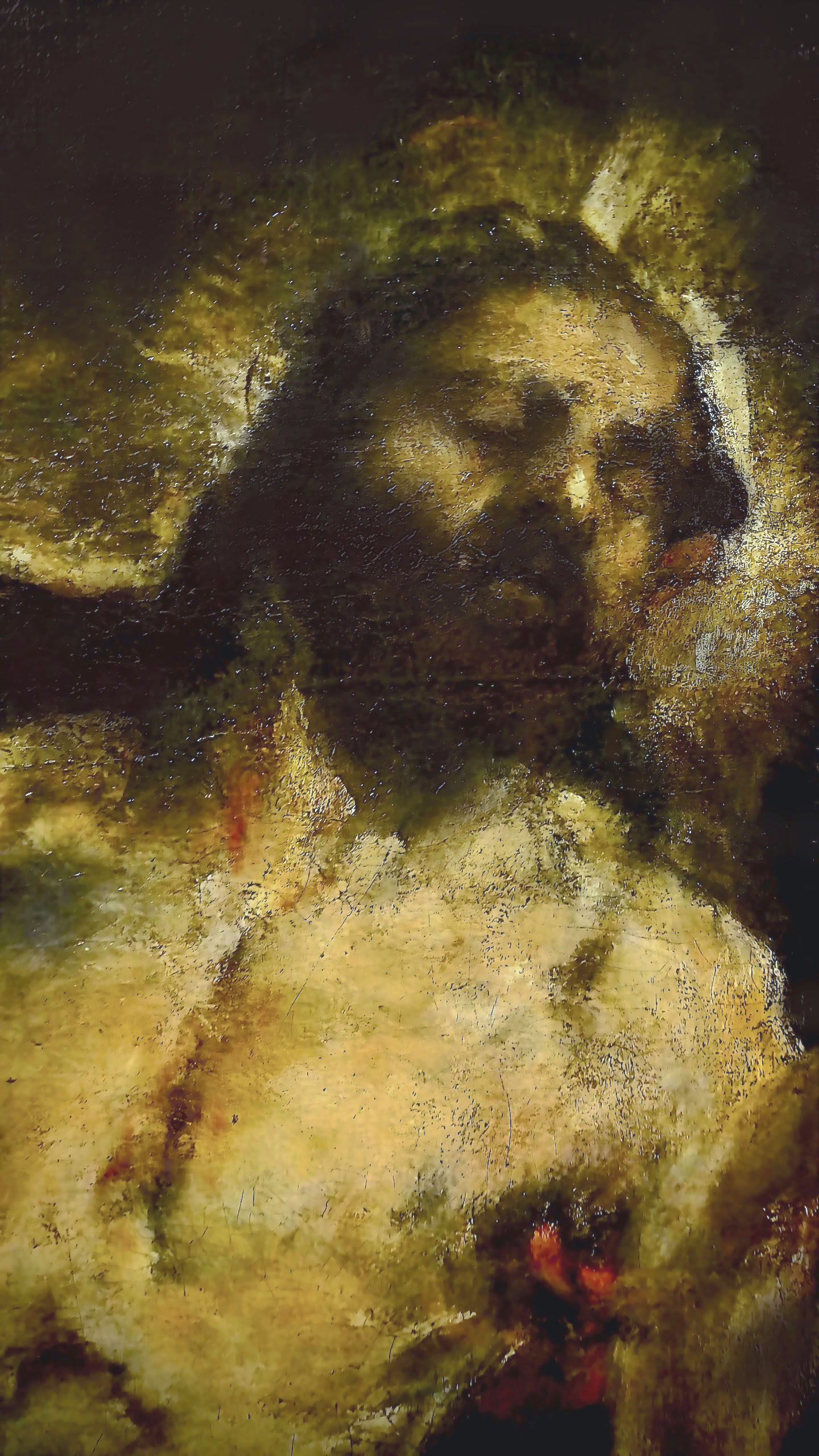
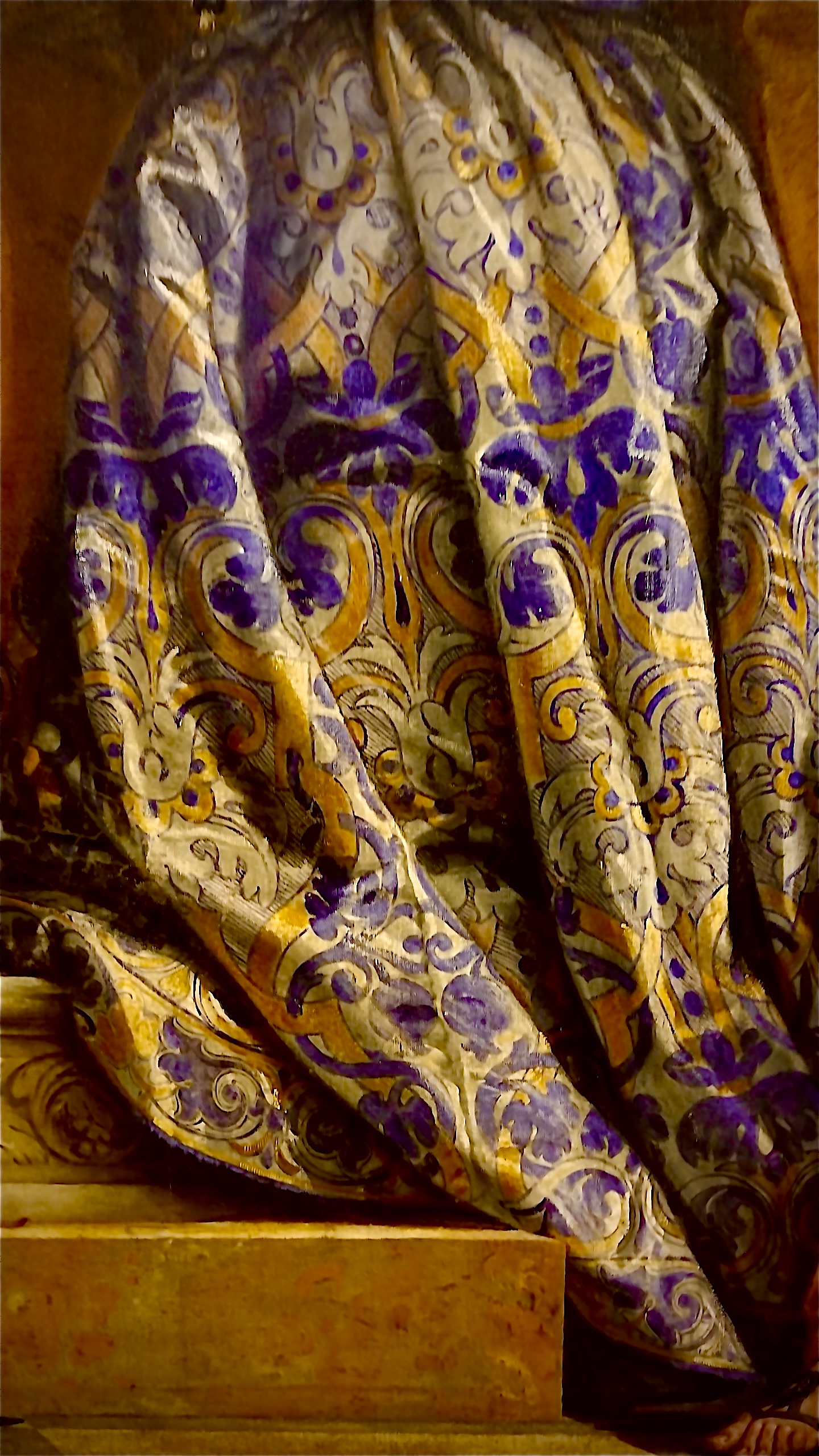
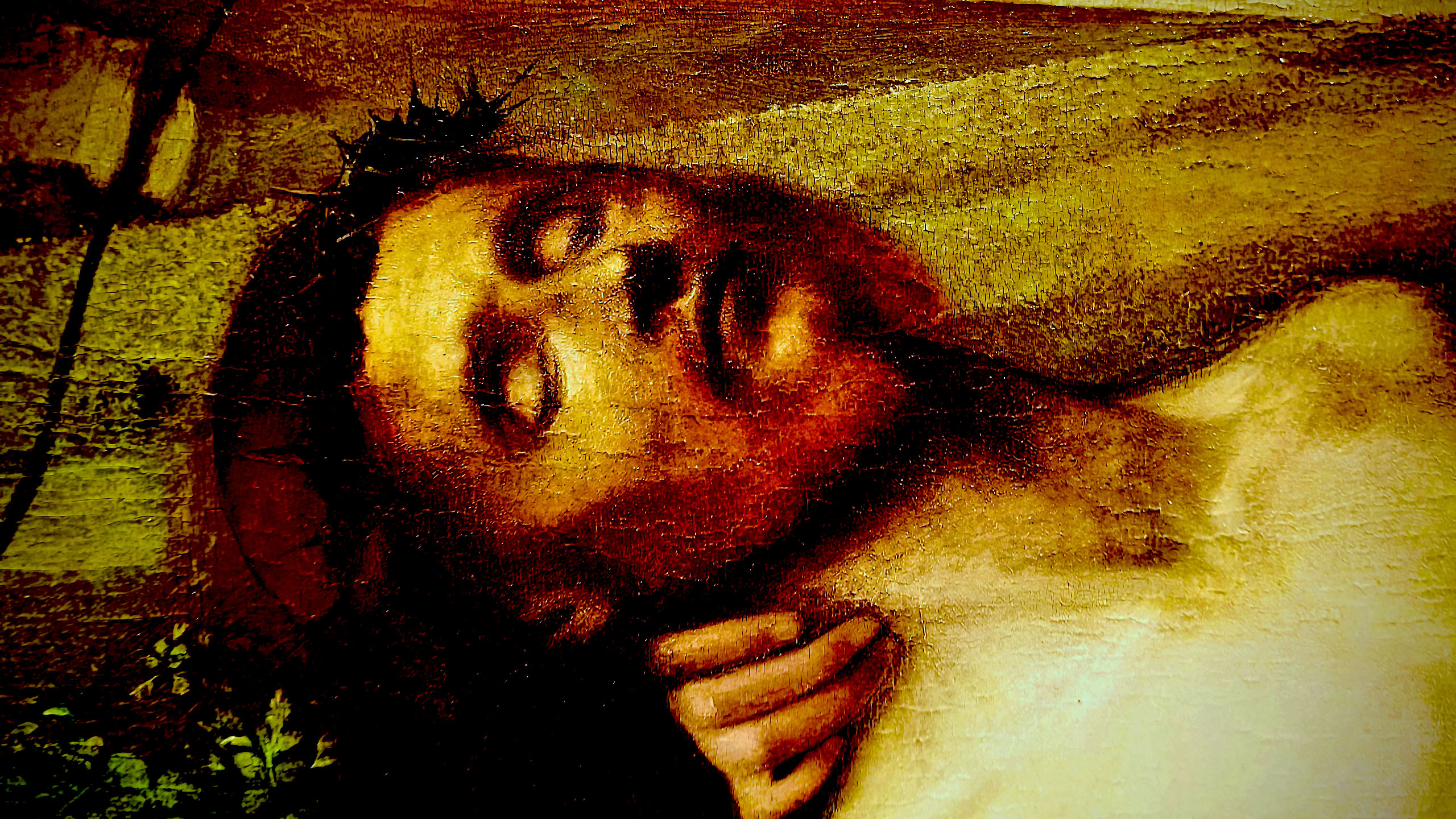 In the 14th c. Sicilian painter, Antonello di Messina brought the new medium of oil painting to Italy. In his travels, he brought the medium to Venice, where artists such as Giovanni Bellini, adopted, and expanded the expressive potential of the medium. Perhaps one of the most influential painting teachers in history, Bellini’s pupils included some of the greatest figures in the history of the medium: Titian, Tintoretto, and Veronese. Their often huge, operatic paintings mark a kind of crowning achievement for the medium, and the processes they developed consequently influenced other great artists and schools of art that included Caravaggio, Rembrandt, Velazquez and countless others who have followed in their path.
This workshop will follow the oil painting methods of the great Venetian masters. Working from reproductions, participants will reproduce easel-sized works of the Venetian school of the 16th-18th c. They may also choose to copy a detail from larger Venetian masterworks. To as great an extent possible, students will use the same materials of 15th and 16th c. Venetian artists, many of which will be prepared by hand in class, according to traditional recipes.
Beginning on a uniquely coarse, stretched canvas (approximately 36” x 30”) prepared with rabbit skin glue and white lead, participants will apply a colored ground. This rich, colored surface establishes an overall, atmospheric tonality, that also functions as a very useful neutral color. This then, serves as the basis for the serendipitous approach to color and the remarkable atmospheric effects that are unique to this school of painting.
On this rich surface, participants will transfer perforated drawings with charcoal and a pounce as was done in this time. Afterward, earth colors, carbon black, and white lead ground in oil will be prepared by the class. With these basic colors, an underpainting will be developed using alternating layers of washes and thick impasto areas of white lead. Afterward, rich layers of transparent colors made primarily from pigments produced in in our Pigments and Paint Workshop will be applied. In the process, students will develop an unders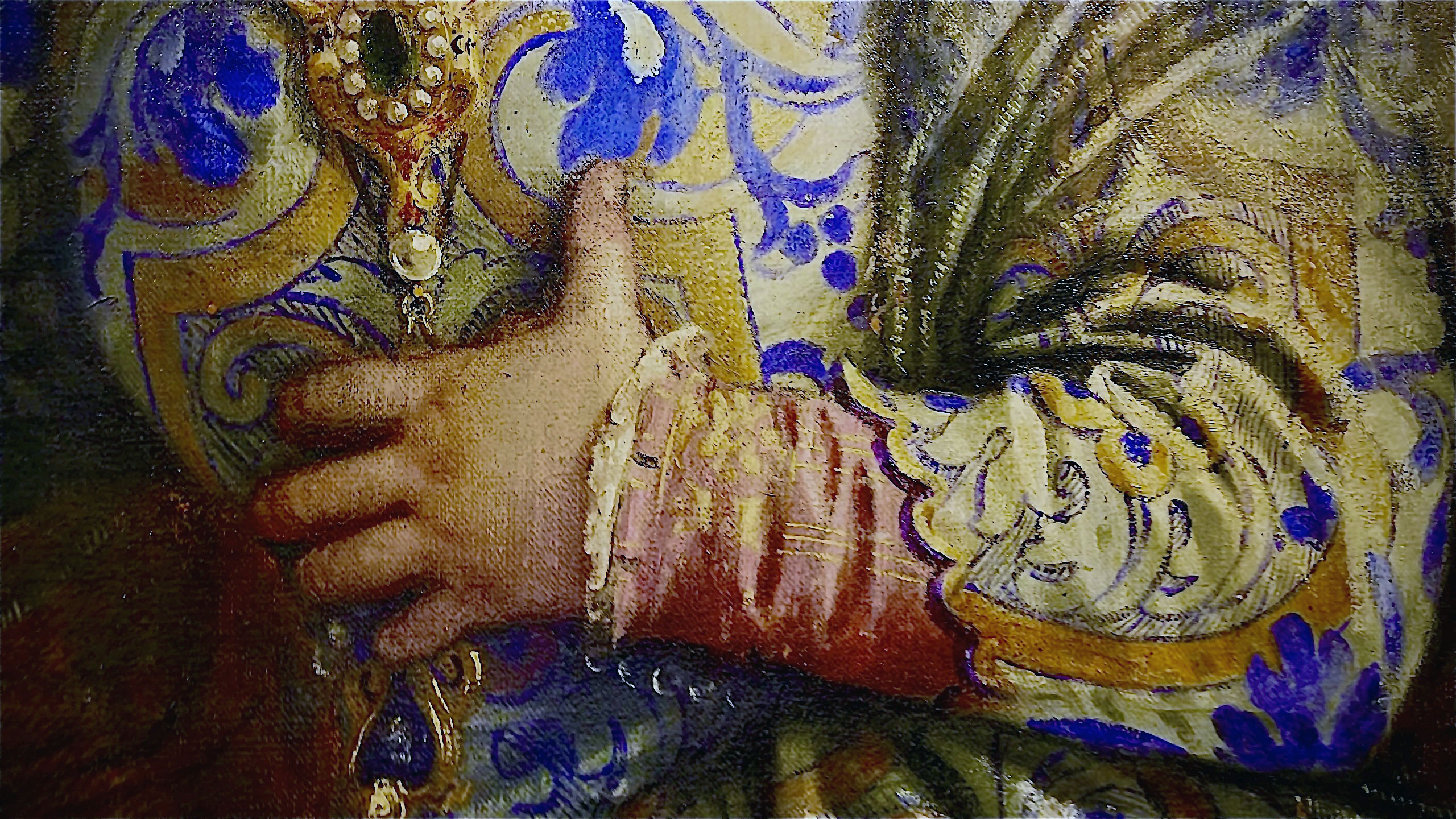 tanding of the important terms, glaze (a dark, thinned color over a lighter surface) and scumble (a thin layer of white lead) as they seek to reproduce the sumptuous color and dramatic brushwork characteristic of the Venetian School.
During the class participants will have the unique opportunity to see remarkable examples of work by the Venetian masters in person during our excursion to the Pitti Palace in Florence.
Throughout the workshop, participants will be housed in the remarkably well-preserved Umbrian hill town of Monte Castello di Vibio. Your workshop package is all-inclusive, providing welcome and departure services and airport transfer from the Rome Fiumicino, Leonardo Da Vinci Airport (FCO). Aboard our comfortable private bus, single occupancy accommodations with shared bath (a wide range of upgrades with private bath are available), 3 meals per day Monday-Thursday, Prosecco brunch and dinner on Saturday and Sunday (no meals are served on Friday, our excursion day. Your workshop includes an excursion to Florence. Of course, throughout your stay, 24/7 access to facilities and 24/7 bi-lingual support are provided.
Price of the workshop includes all materials needed to produce the painting described above, except brushes, which will be available for sale at ICA in Italy. While it is unlikely that the painting will be completed in the timeframe allowed by the workshop, our goal is to give participants a sufficient understanding of the Venetian process in order to complete the painting at home. As part of the course fee, participants will be issued a unique folding stretcher that allows the painting itself to be folded into a carry-on luggage-sized parcel, even if not fully dry.
June 21 - June 28
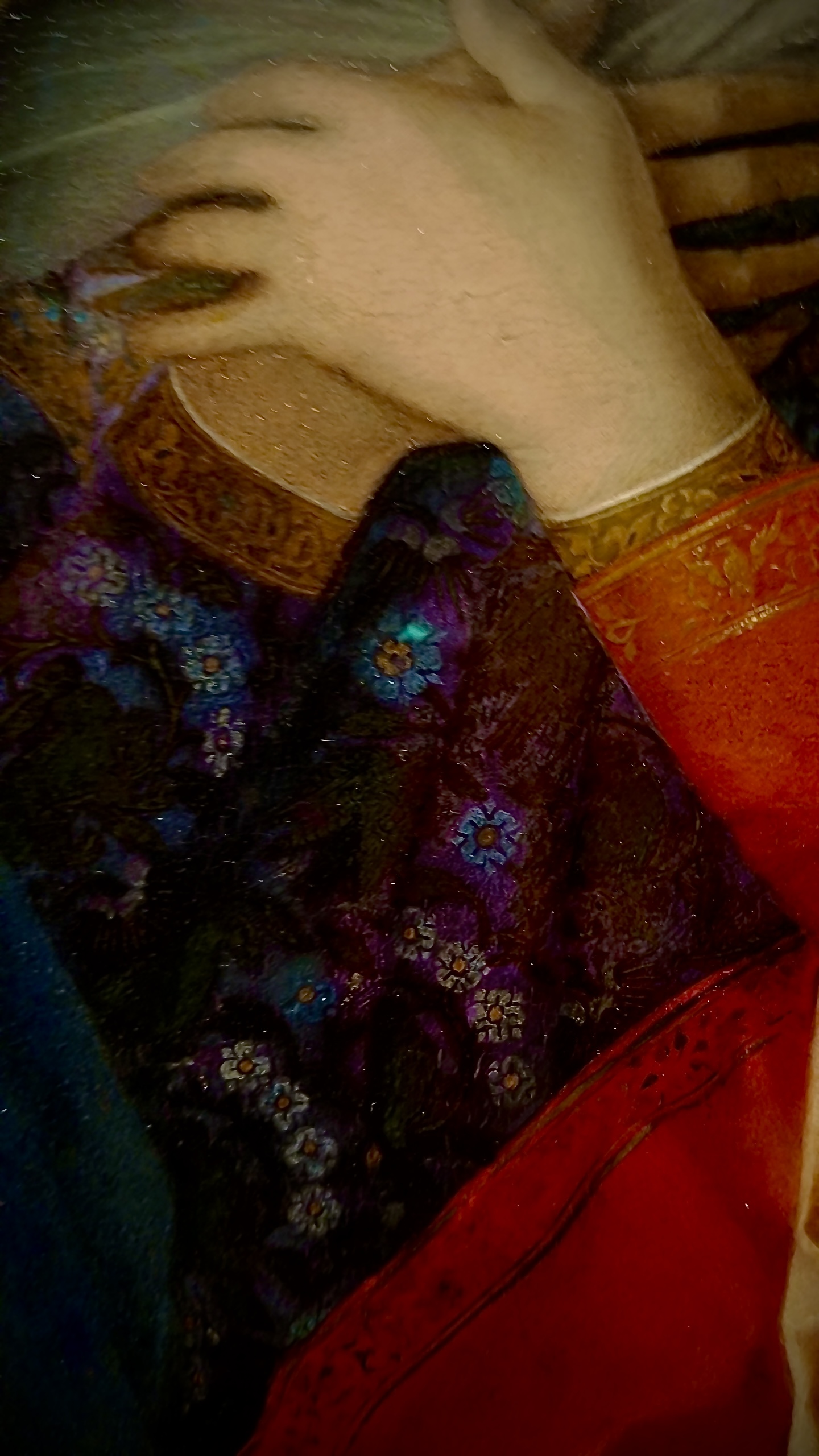
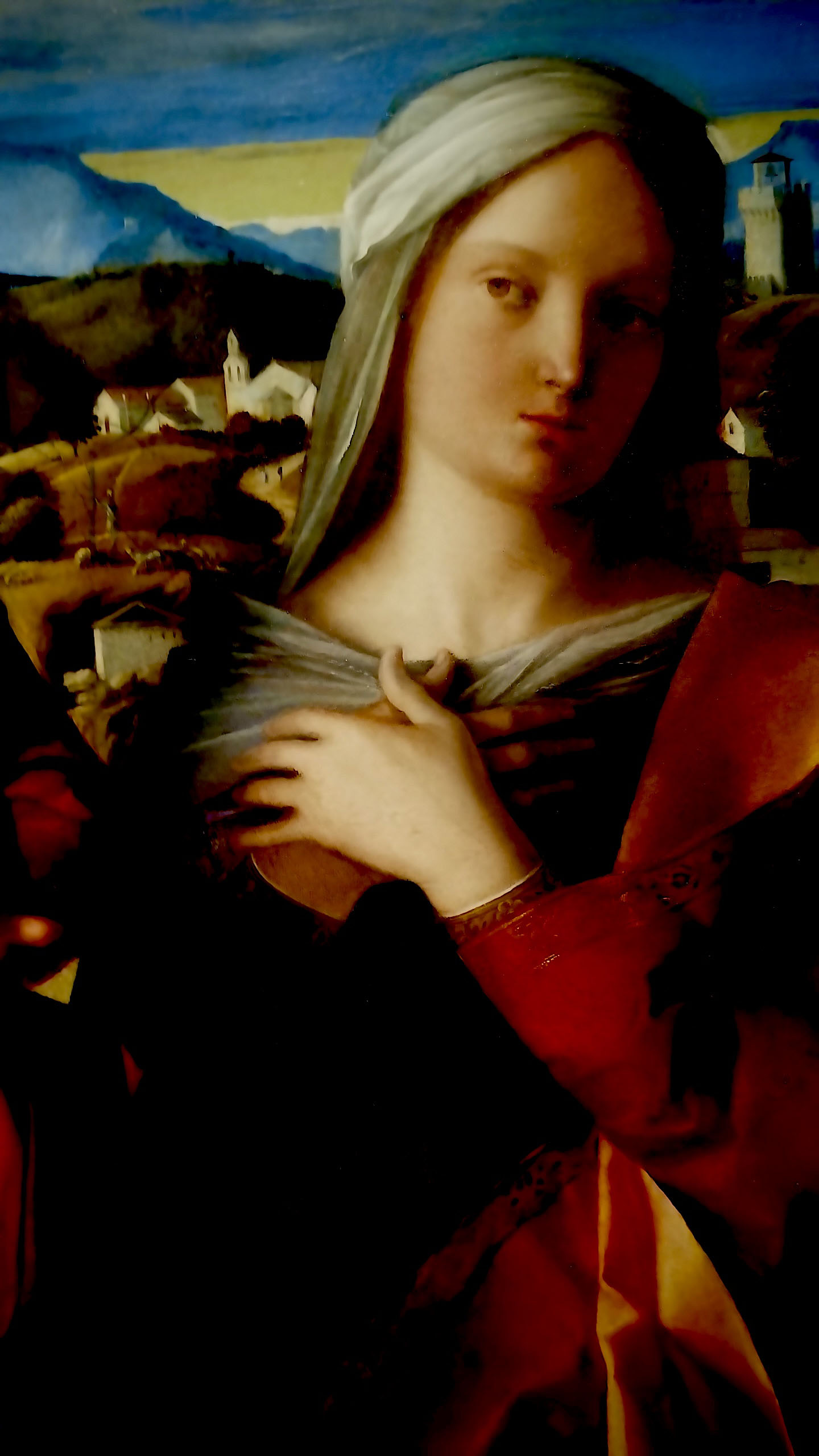
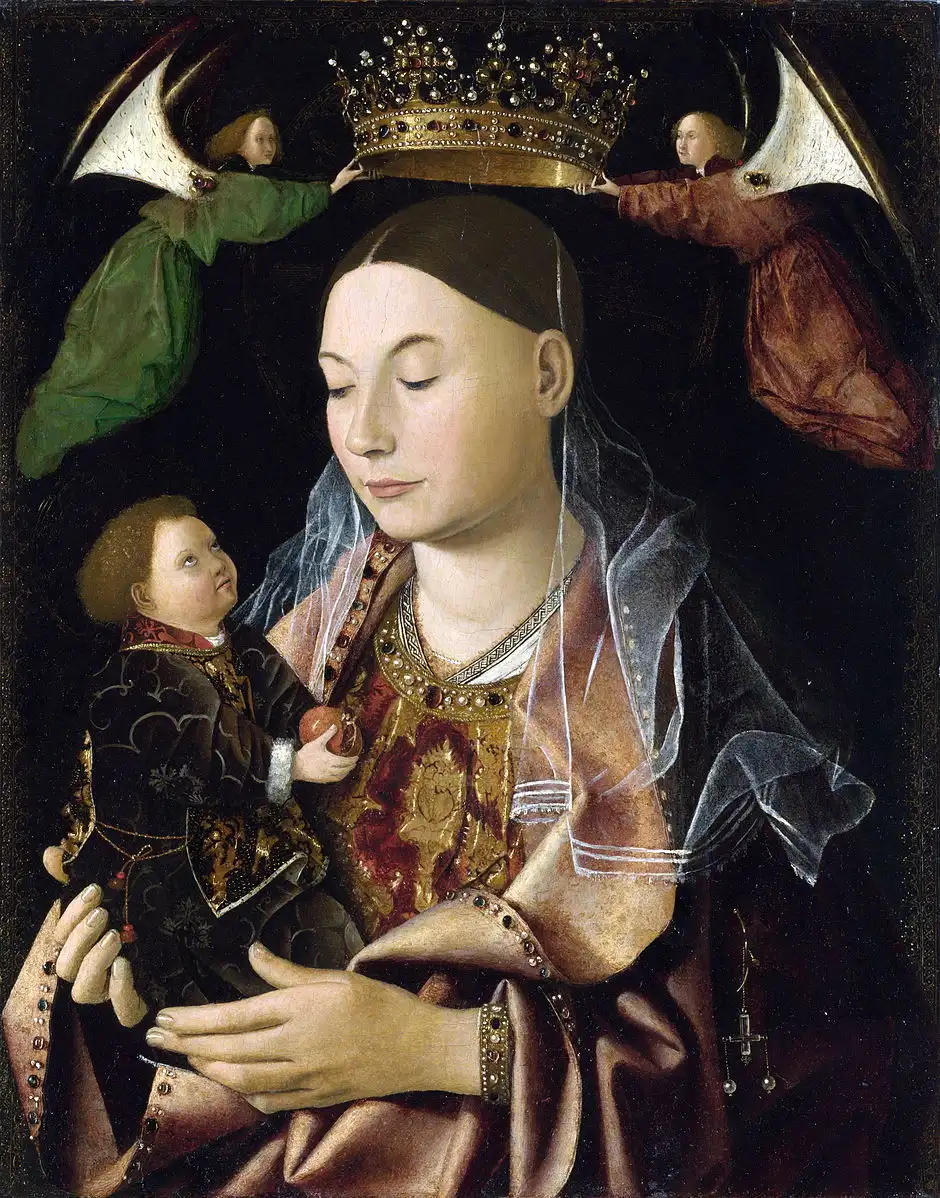
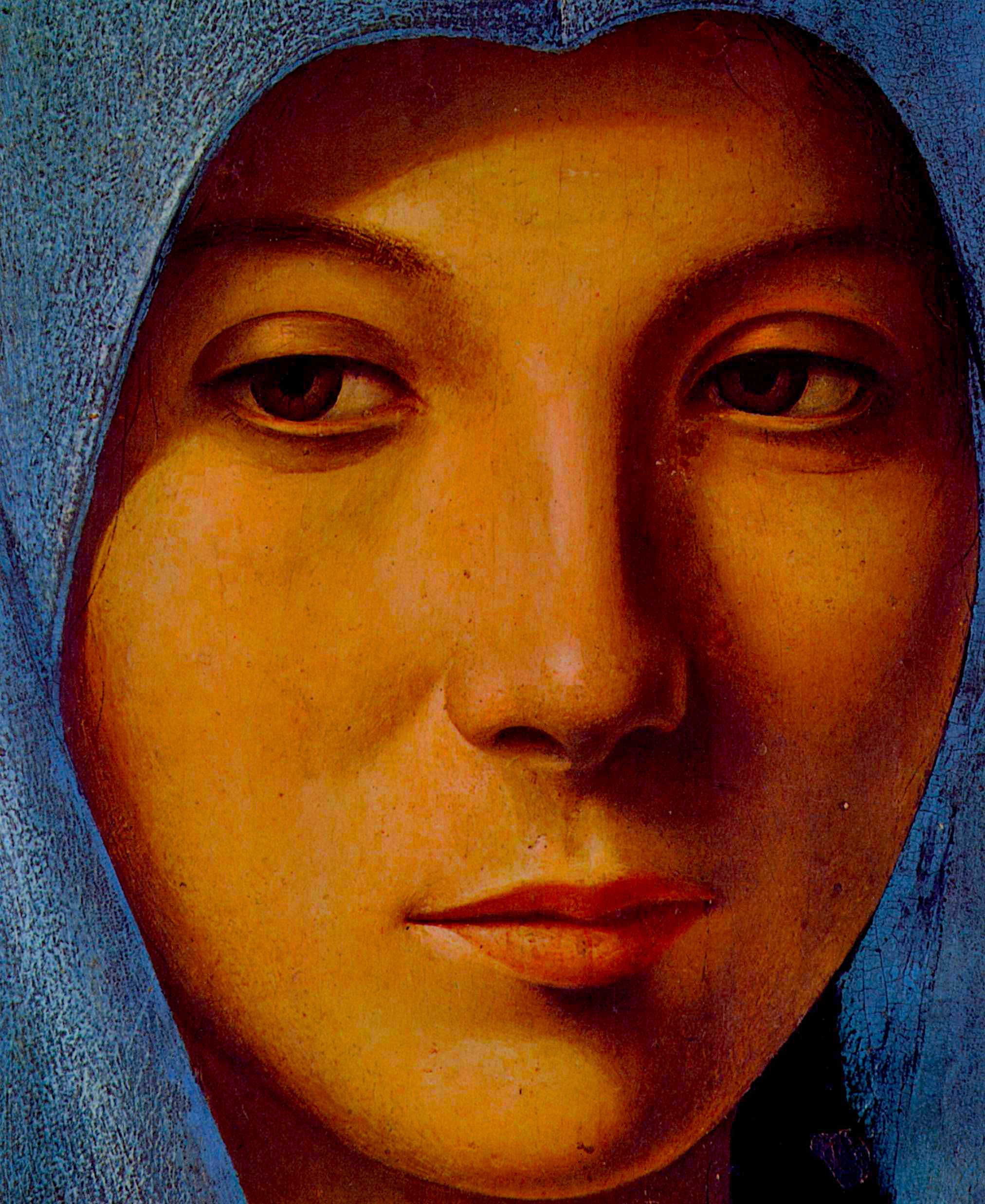
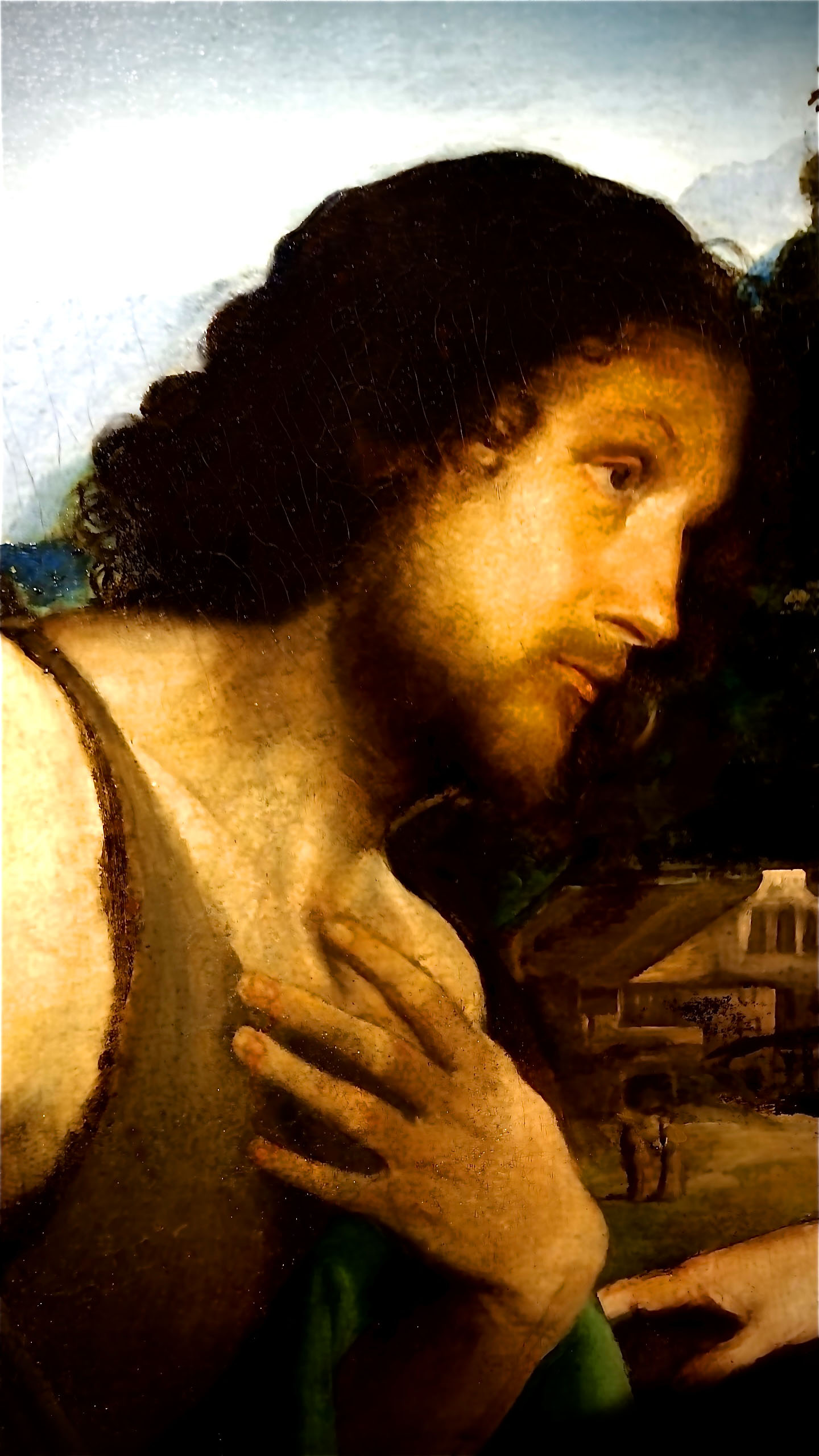
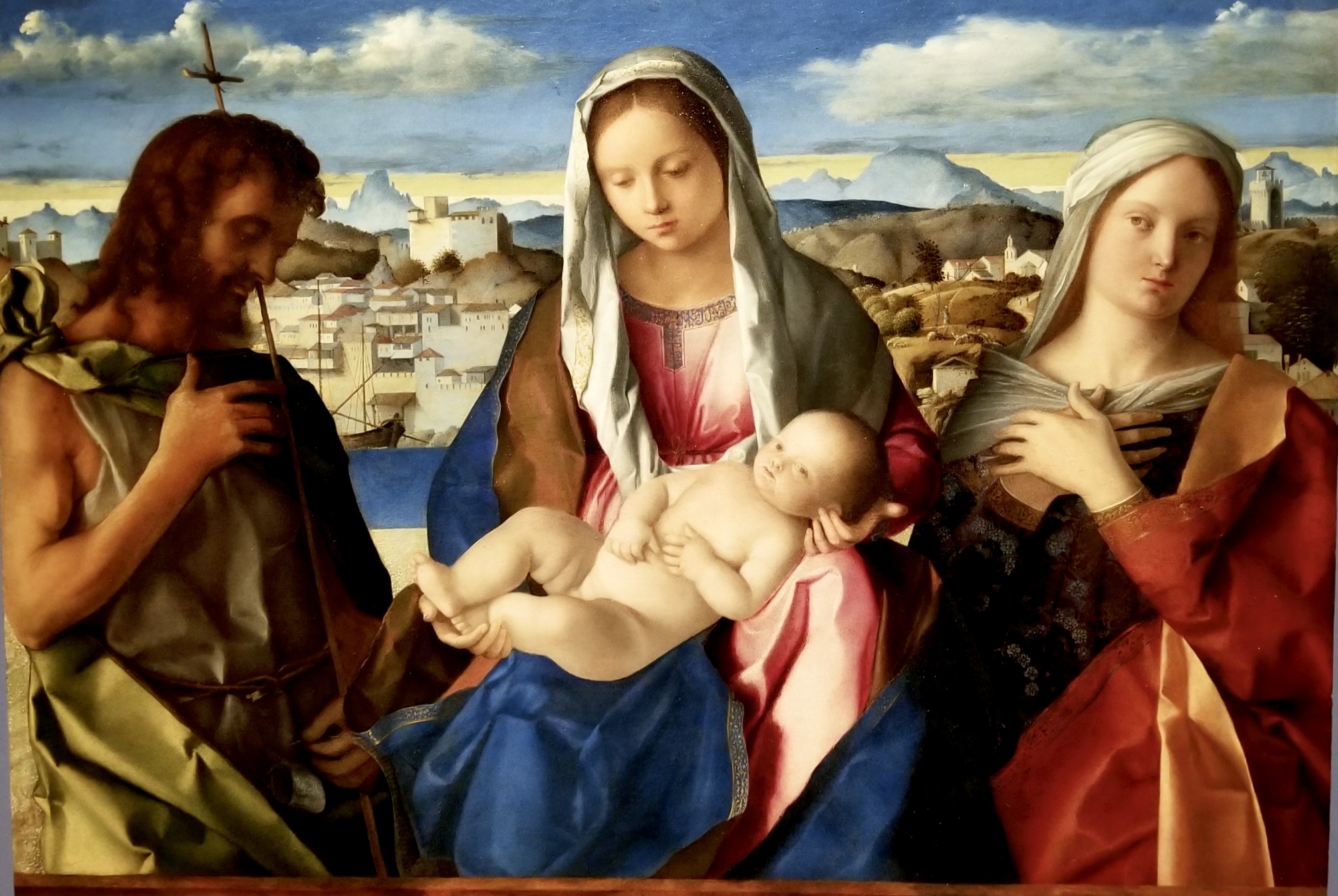 Oil painting developed in Northern Europe early in the 15th c. and Italian painters of the next generation quickly adopted the medium to their own unique vocabulary. Antonello di Messina is generally credited with the introduction of oil painting to Italy and more specifically, to Venice. Artists such as Giovanni Bellini, as well as Leonardo further expanded the expressive potential of the medium. The processes that these artists developed consequently influenced the whole history of Western Art.
This workshop will follow their methods. Working from reproductions participants will use materials of the time, prepared by hand in a traditional way. Beginning on a wooden panel, prepared with rabbit skin glue and chalk gesso, participants will transfer their perforated drawings with charcoal and a pounce, then develop a wash drawing with genuine sepia ink, followed by an imprimatura – a colored “veil” - that establishes a tonality and a very useful neutral color. From here, oil paint ground in class will be used to develop the underpainting. Afterwards, rich glazes of transparent colors made primarily from pigments produced in in our Pigments and Paint Workshop.
Throughout the workshop, participants will be housed in the remarkably well-preserved Umbrian hill town of Monte Castello di Vibio. Your workshop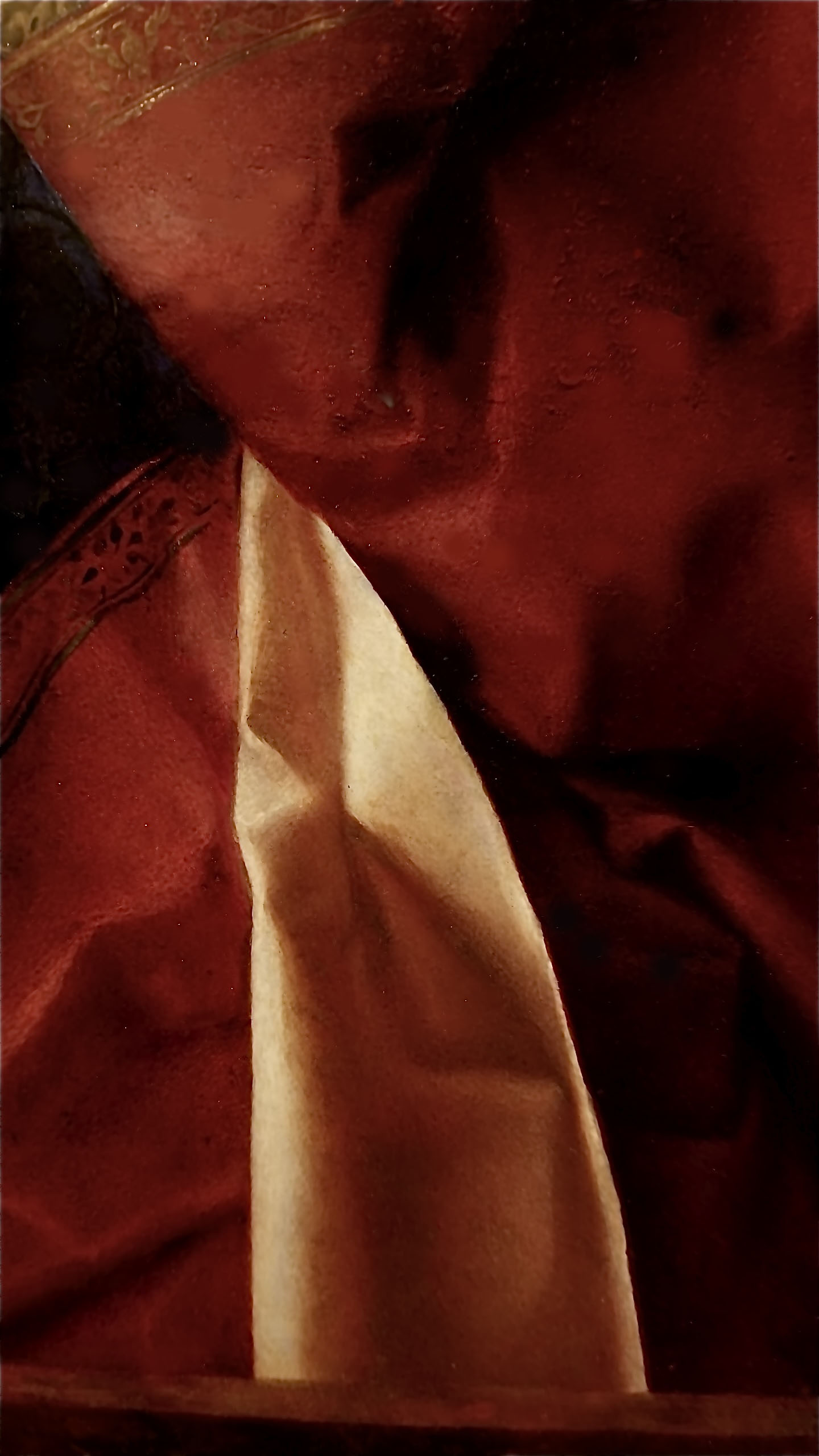
 package is all-inclusive, providing welcome and departure services and airport transfer from the Rome Fiumicino,Leonardo Da Vinci Airport (FCO). Aboard our comfortable private bus, single occupancy accommodations with shared bath (a wide range of upgrades with private bath are available), 3 meals per day Monday-Thursday, Prosecco brunch and dinner on Saturday and Sunday (no meals are served on Friday, our excursion day. Your workshop includes an excursion to Perugia. Of course, throughout your stay, 24/7 access to facilities and 24/7 bi-lingual support are provided.
Price of the workshop includes all materials needed to produce the painting described above, except brushes, which will be available for sale at ICA in Italy. While it is unlikely that the painting will be completed in the timeframe allowed by the workshop, our goal is to give participants a sufficient understanding of the Northern Renaissance process in order to complete the painting at home. As part of the course fee, participants will be issued a unique case for the painting that allows the painting itself to be folded into a carry-on luggage-sized parcel even if not fully dry.
July 5 - July 12
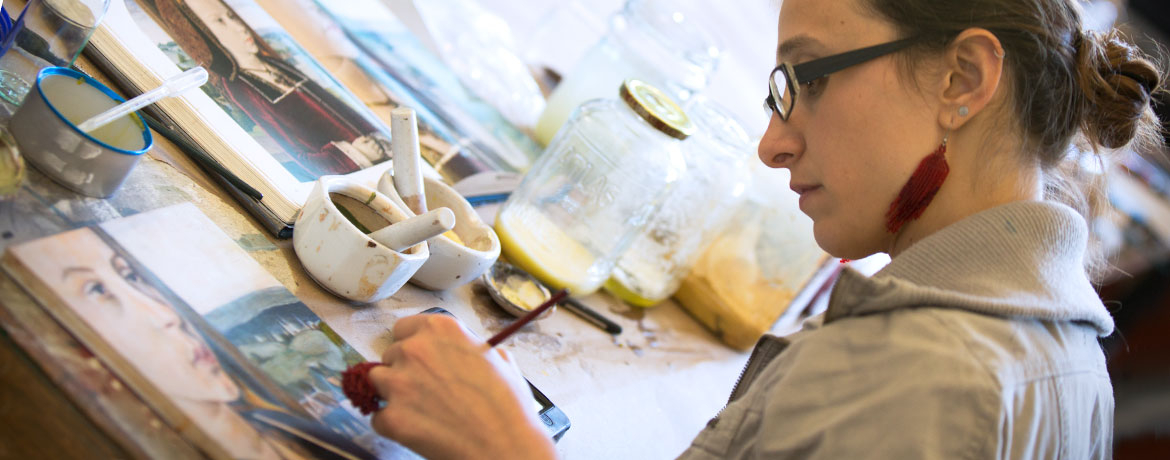 A hands-on workshop on producing painting and drawing materials according to historical methods. The intensive, week-long workshop is ideal for painters interested in gaining greater familiarity with their materials, academics and teachers interested in curricular development, art historians, and people interested in developing a deeper understanding of traditional works.
Born in 1360, painter Cennino d’Andrea Cennini, left a remarkable legacy, beyond that of his surviving works.
A student, of a student, of Giotto, Cennino left of us a remarkable and intimate record of the life and working processes of a painter in his time. His book is called, il Libro del’Arte, simply, “The Book of Art.” It provides insights into the training of the artists of his time, as well as that of the next generations of artists in Italy. Incredibly, this included some of the greatest figures in the history of Western painting: Masaccio, Fra Angelico, Leonardo, Botticelli, Michelangelo, and Raphael among others. To the reader of today, Cennini’s text provides the remarkable opportunity to participate in this legacy.
On a practical level, Cennini’s book is also a very useful guide to the production of pigments, paints, painting surfaces, and other materials of the medieval and Renaissance artist. In this however, it also reveals something larger than that of a recipe book. It speaks to a very special connection between artists and the materials they choose. Often, that connection resulted from artists making their materials themselves, by hand. Indeed, Cennini refers lovingly to the rare, almost spiritual beauty of, ultramarine blue to the easy, sensual qualities of a charcoal black as well as to their sometimes, tempestuous personalities of materials like, dragon’s blood!
What is revealed is a unique connection to the materials of the artist, in which all elements have significance. As translator, Daniel Thompson describes, “A very choice black was, and still is, made from peach stones; and almond shells were sometimes charred to produce another sort. To the outsider all these blacks would seem very much alike; indeed, they would probably be quite indistinguishable. But a painter of the medieval kind becomes familiar with the little quirks of personality in his pigments, and is affected by small subtleties which it is hopeless to try to define, subtleties not so much of color as of working quality, how the pigment feels, how it mixes, whether it tends to settle out of a color mixture, or stays nicely in suspension, and little things like that.” These “little things” can indeed have big effect to the artist who remains sensitive to the qualities of their materials, creating a bond that becomes a language of its own.
We will use Cennini’s book as a basis for our exploration of making pigments and paints. Guided by the experience of our staff, in collaboration with our long-time supplier, Kremer Pigmente, and the advantage of modern chemistry and production methods, we will embark on a historical overview of pigments used by artists throughout the ages - actually, making many pigments from raw ingredients. We will observe sometimes miraculous transformations in color, creating beautiful and luscious pigments that will last …forever. We will then turn these colored particles into a variety of paints, pastels, and charcoal. Our goal will be to produce the following materials which participants will take home with them at the end of the workshop:
20 g. Jars of pigment as follows:
3 ml. Jars of pigment as follows:
Inks as follow:
50 ml tubes of oil colors as follows:
20 ml jar of
Watercolors in natural mussel shell, as follows:
Pastels as follow:
In doing so, we will understand the processes of levigation, grading for optimal particle size, grinding, precipitation of lake colors, and many other processes. We will also make surfaces to be used in a variety of aqueous, solvent-based, and dry applications. At the end of the workshop, an excursion to the National Gallery of Umbria in Perugia, will provide real examples from Cennini’s time and later, which will illustrate both the beauty and the permanence of these materials.
 Participants will be housed in the remarkably well-preserved Umbrian hill town of Monte Castello di Vibio. Your workshop package is all-inclusive, providing welcome and departure services and airport transfer from the Rome Fiumicino, Leonardo Da Vinci Airport (FCO). Aboard our comfortable private bus, single occupancy accommodations with shared bath (a wide range of upgrades with private bath are available), 3 meals per day Monday-Thursday, Prosecco brunch and dinner on Saturday and Sunday (no meals are served on Friday, our excursion day. Your workshop includes one excursion per week and many additional options are available on weekends for an additional fee. Of course, 24/7 access to facilities and 24/7 bi-lingual support are provided.
All materials for the class and the excursion are included in the cost of the workshop.
We will explore the expressive potential of the "Cabinet of Curiosity," or "Wunderkammer" in making our own "cabinet," inspired by visits to mysterious and wondrous sites in Central Italy.
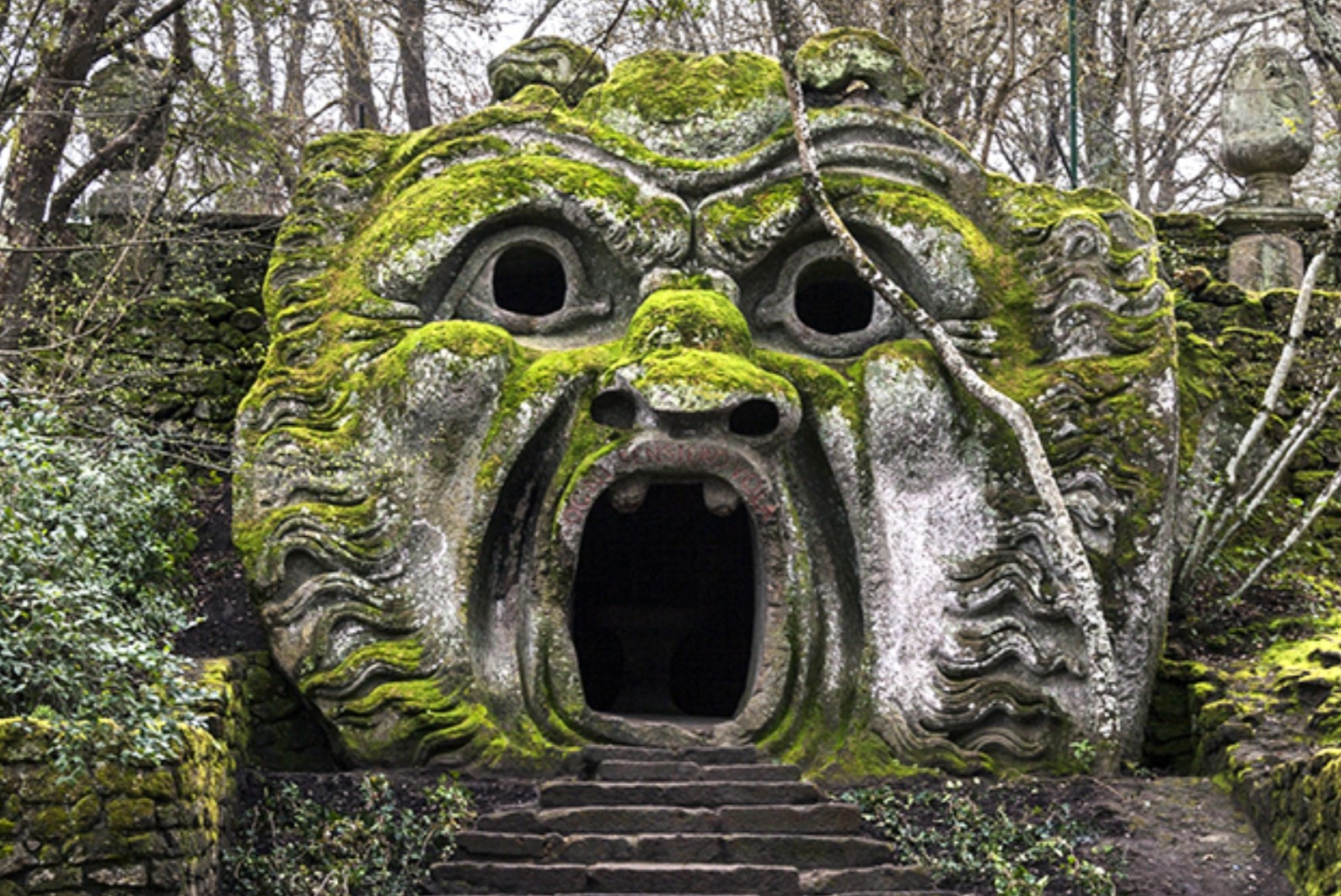
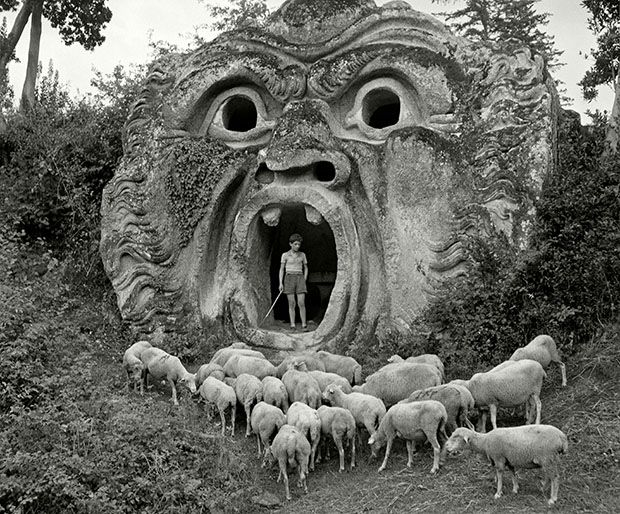
In creating our own cabinet of curiosities, we will explore the way that this enigmatic format conjures an evocative sense of place, through the inspiration of visits to remarkable places in Central Italy. We will see enormous stone monsters from the 16th c., mummies, marble serpents devouring the souls of the damned, huge mosaic and glass sculptures - all the while collecting fragments of these experiences in order to make our own "memory - theatre"

Places of Wonder:
Italy is steeped in history and legends. Myth and religion animate the land with endless places of wonder. Mountaintops host mysterious castles, bridges recall lost loves and battles won, and woodedglades conceal ancient temples. Across the Italian landscape, churches and shrines honor many saints and miracles, and monuments celebrate the beautiful as well as the grotesque. Mannerist gardens with grottos and statuary still evoke a liminal place between reality and dreams.Throughout time, travelers have visited Italy to enrich their faith, seek inspiration, and marvel at the wealth of wonders created by a people of limitless curiosity.


Cabinets of Wonder

Marco Polo returned from China and India with exotic tales and objects. Amerigo Vespucci described strange and marvelous creatures across the seas. Leonardo dissected thehuman body and marveled at its complexity. Galileo pondered the heavens with telescopes and other instruments. Travelers, explorers, artists, and scientists fostered new knowledge that overwhelmed. To understand an ever-expanding world, Italy established the first European museums. These earliest museums began with collectors acquiring oddities – natural and man-made – to be displayed in cabinets later known as Wunder Kammer. Emerging in the 16th c., these "wonder-rooms" or "wonder cabinets,' were filled with preserved animals, coral, tusks, skeletons, minerals, as well as exotic, man-made objects - "a wide variety of objects and artifacts, with a particular leaning towards the rare, eclectic and esoteric." They "were regarded as a microcosm or theatre of the world - and a memory theatre."
Our Workshop
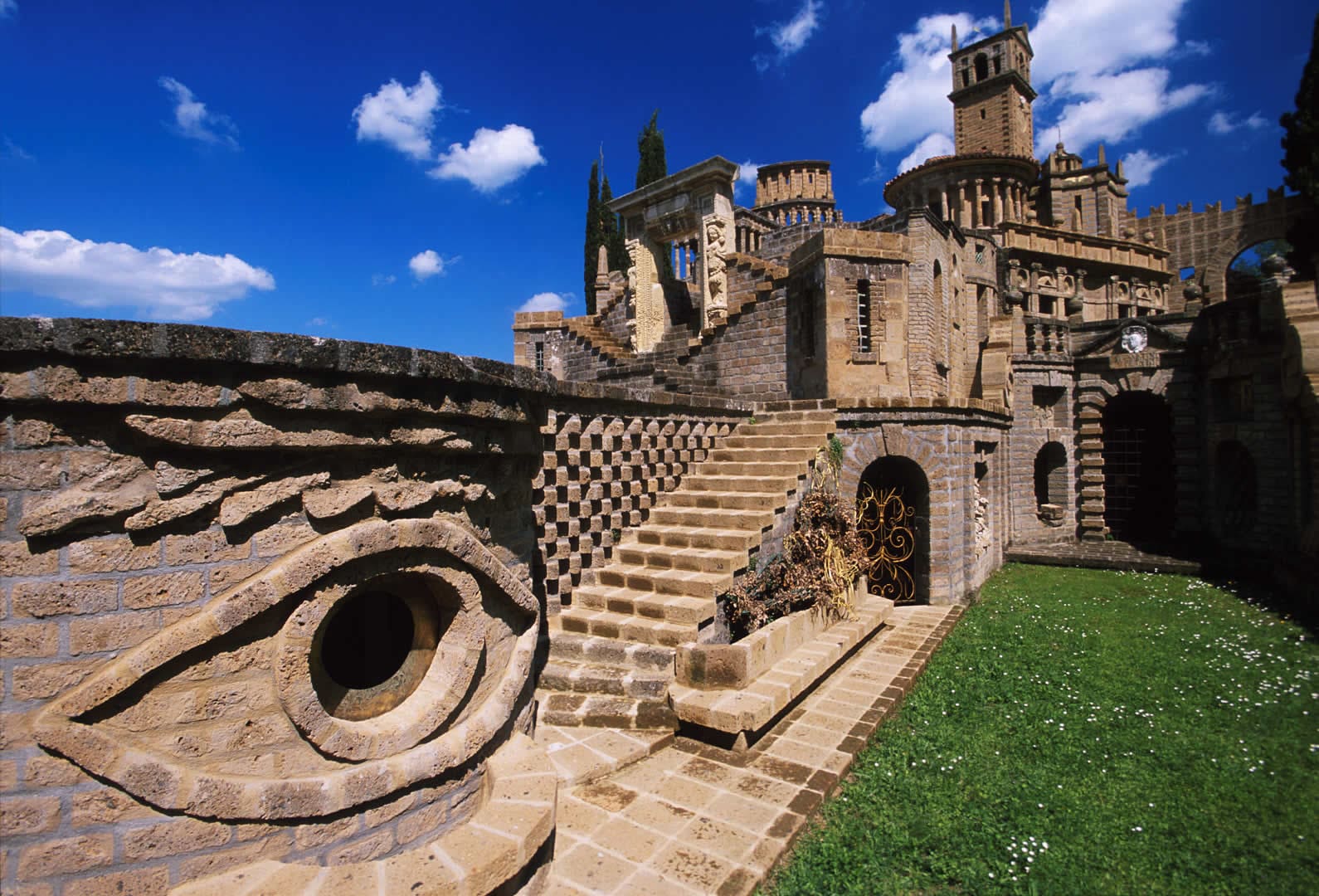
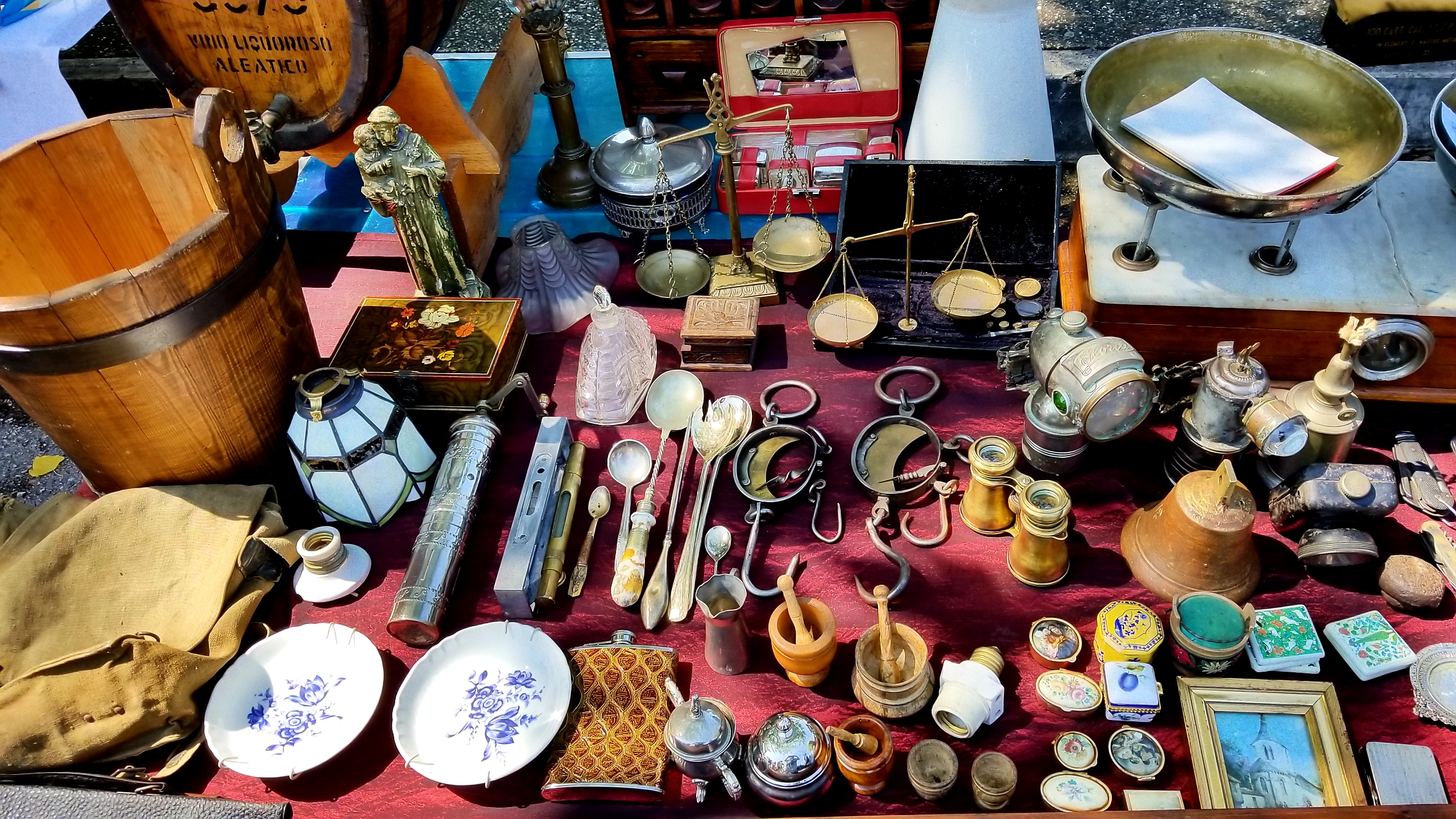
During the week, we will be inspired by visits to the Sacro Bosco also known as the Park of the Monsters in Bomarzo, Etruscan tombs, the Teatrum Mundi, the Tarot Garden and more. We will also hunt for modestly -priced treasures at local shops and antique markets. At the studio in Monte Castello, participants will be encouraged to create their own Wunder Kammer by making a small shrine, box, or cabinet to contain venerated objects or display a personal collection of curiosities accumulated on our adventures or brought from home..
 Throughout the workshop, participants will be housed in the remarkably well-preserved Umbrian hill town of Monte Castello di Vibio. Your workshop package is all-inclusive, providing welcome and departure services and airport transfer from the Rome Fiumicino, Leonardo Da Vinci Airport (FCO). Aboard our comfortable private bus, single occupancy accommodations with shared bath (a wide range of upgrades with private bath are available), 3 meals per day Monday-Thursday, Prosecco brunch and dinner on Saturday and Sunday (no meals are served on Friday, our excursion day. Your workshop includes one excursion per week and many additional options are available on weekends for an additional fee. Of course, 24/7 access to facilities and 24/7 bi-lingual support are provided.
.
June 14 - June 21
The study of human anatomy in Italy is a long and distinguished tradition. The extraordinary anatomical theatres in medical schools at the University of Padua and the University of Bologna bear witness to this history and were among the first of their kind in existence. Even today, we marvel at the accuracy and lifelike intensity of the 17 th c. wax anatomical models in the Specola Museum in Florence, which were made to allow medical students to observe venous, muscular, and skeletal systems without a cadaver. In this regard, the study of anatomy in Italy has profoundly impacted not only our understanding of the human body, but also the study of medicine in the western world.
Surprisingly, this history also reveals much about the significance of the role of visual art in furthering science and medicine. In his brilliant series of lectures at the Art Students League in New York, artist, anatomist, and scholar, Robert Beverly Hale once said: “science had actually sprung from art, that it had developed in those great periods when artists had looked at nature very closely and carefully, and had tried to record exactly what they saw. That, what we explained, was what scientists have been doing ever since.”
To support Hale’s observation one need look no further than Leonardo’s anatomical studies. These drawings are incredible not only for their accuracy and beauty as works of art, but also as a highly accurate analysis of function, of what anatomist George Bridgeman referred to as “the human machine.” Leonardo is perhaps unequalled in his analysis of the form of the human body as a manifestation of the interrelationship of functioning systems. It is known, for example that Leonardo once injected the heart of an ox with hot wax, then made a glass model of the casting. He then pumped the model with water to analyze the circulation of fluids in the human heart. Incredibly, Leonardo’s conclusions were not fully corroborated by cardiologists until the 1980’s.
The objective of our Human Anatomy intensive is to follow in this tradition. Thus, we will not only identify anatomical structures of the human body, but we will also analyze the function of those structures and their effect on its outward form. Throughout the workshop, we will reference functional systems in understanding their manifestation in surface anatomy of the figure.
Our focus will be on the skeletal and muscular systems, with some analysis of the major arteries of the venous system. We will work from a variety of sources, including real human skeletons as well as drawing from our collection of anatomical models and plaster casts. Our medium in the course will be various drawing media in large-format sketchbooks as a means of note taking for the course.
Our approach will be in the form of lectures and hands on drawing focusing first on the skeletal system. We will draw from real human skeletons as well as anatomical models. We will explore one area of the body at a time, first in analyzing the skeletal structure of the torso. Afterward, we will move on to the head, arms, and legs, as well as hands, and feet. Participants will produce life-sized drawings with charcoal on heavy paper as well as drawings in sketchbooks of details such as joint articulations.
Afterward, the course will focus on the muscular system first through lecture and note-taking then by drawing from anatomical models, plaster casts, and the live model, in the same order. However, we will in exploring the muscular system we will utilize tracing paper and colored pencil, in order to add layers of muscles over our previous skeletal drawings.
In addition to the intensive schedule of daily drawing and lecture, we will make an excursion to the famed Specola Museum in Florence where we will draw from their collection of 16 th to 18th c. wax anatomical sculptures. The incredibly lifelike flayed figures are shockingly lifelike - at once factual and at the same time, powerfully expressive. Here, the wax models will provide an overview of the skeletal and muscular systems as well as an introduction to the venous system.
Throughout the workshop, participants will be housed in the remarkably well-preserved Umbrian hill town of Monte Castello di Vibio. Your workshop package is all-inclusive, providing welcome and departure services and airport transfer from the Rome Fiumicino, Leonardo Da Vinci Airport (FCO). Aboard our comfortable private bus, single occupancy accommodations with shared bath (a wide range of upgrades with private bath are available), 3 meals per day Monday-Thursday, Prosecco brunch and dinner on Saturday and Sunday (no meals are served on Friday, our excursion day. Your workshop includes one excursion per week and many additional options are available on weekends for an additional fee. Of course, 24/7 access to facilities and 24/7 bi-lingual support are provided.
Of Sibyls and Source: Performance in the Landscape is a two-week exploration of live art in geo-mythic sites in Umbria.
This residency aims to open space for research,inquiry, and connection through myth making and embodied presence in/with/of the land. We will spend 3 days hiking in the Parco Nacional di Sibilline, part of the Apennines named for the Sibyl, or prophetess of antiquity, who is believed to have lived there in a cave at the top of Monte Sibilla. We will experience sites of ritual and esoteric rites related to the myth of the Sibyl mentioned in literary sources as well as living local folk traditions dating back thousands of years. Our time together will also include day trips to the Nera river with Roman ruins whose source is the Monti Sibillini and entrance into the remarkable Frassasi cave.
Performances may take place at any or all of these locations including the impeccably maintained medieval town of Monte Castello di Vibio, our home base. At the conclusion of the residency we will hold a screening and live performance event in Monte Castello di Vibio. Our group will include a videographer to help document our work.
Please note this residency includes physical complexities: moderate hiking up to an altitude of 7654 ft (2333 m), cold-water wild swimming and a cave visit. Applicants are responsible for their own physical wellbeing. Please submit project proposals related to Parco Nacional di Sibilline, Nera river and Frassasi cave for consideration. Thus, due to the unique, logistical and locational considerations, a brief Project Proposal (of approximately 300 words) is required for this workshop. Please submit this, as well as a current CV and images of work (or link to a website) via email at: icarts.info@gmail.com Responses will be issued within 48 hours.
Participants will be housed in the remarkably well-preserved Umbrian hill town of Monte Castello di Vibio. Your workshop package is all-inclusive, providing welcome and departure services and airport transfer from the Rome Fiumicino, Leonardo Da Vinci Airport (FCO), aboard our comfortable private bus; single occupancy accommodations with shared bath (a wide range of upgrades with private bath are available); 3 meals* per day, when on campus, Monday-Thursday; Prosecco brunch and dinner on Saturday and Sunday (when on campus) No meals are served on Friday - our excursion day - unless previously arranged. Your workshop includes the excursions below, however, many additional options are available for an additional fee. Of course, 24/7 access to facilities and 24/7 bilingual support are provided. *Meal service is provided while in Monte Castello only, unless otherwise noted. Meals on excursions and admissions are not included in the cost, unless specifically noted in the itinerary.
About our Videographer
Born in Puerto Rico (1986) and based in Miami, misael soto’s practice interrogates and subverts contextually associated everyday objects and systemic roles, disrupting and manipulating space, systems, and frameworks. The publicly accessible, time-based, and ephemeral work involves interventions made upon existing objects, performative activations, institutional mediations, and is often a combination of these elements. misael received their MFA from the School of the Art Institute of Chicago (2018) and graduated Magna Cum Laude with a Bachelor's Degree in Art History from Florida Atlantic University (2008). misael was the first ever Art in Public Life Resident with the City of Miami Beach's Department of Environment and Sustainability and Oolite Arts, where they founded the Department of Reflection. Beyond their public artworks which they have shown extensively for many years, misael has exhibited at MCA Chicago, Open Engagement 2015, the Museum of Contemporary Art in North Miami, Material Art Fair in Mexico City, David Castillo Gallery in Miami, and Museum of Art Fort Lauderdale, amongst others.
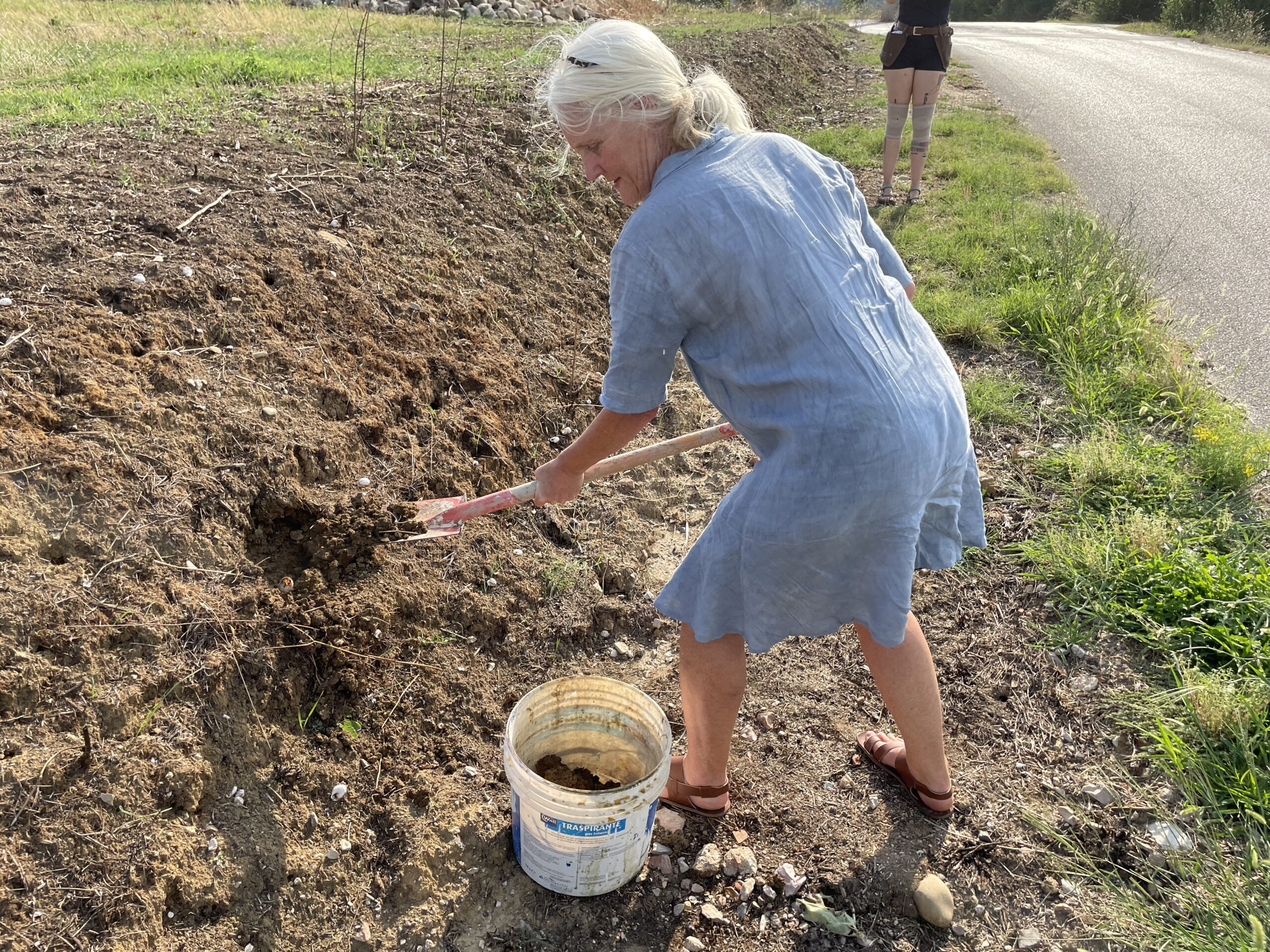
Living in the Play: Nido Residency,
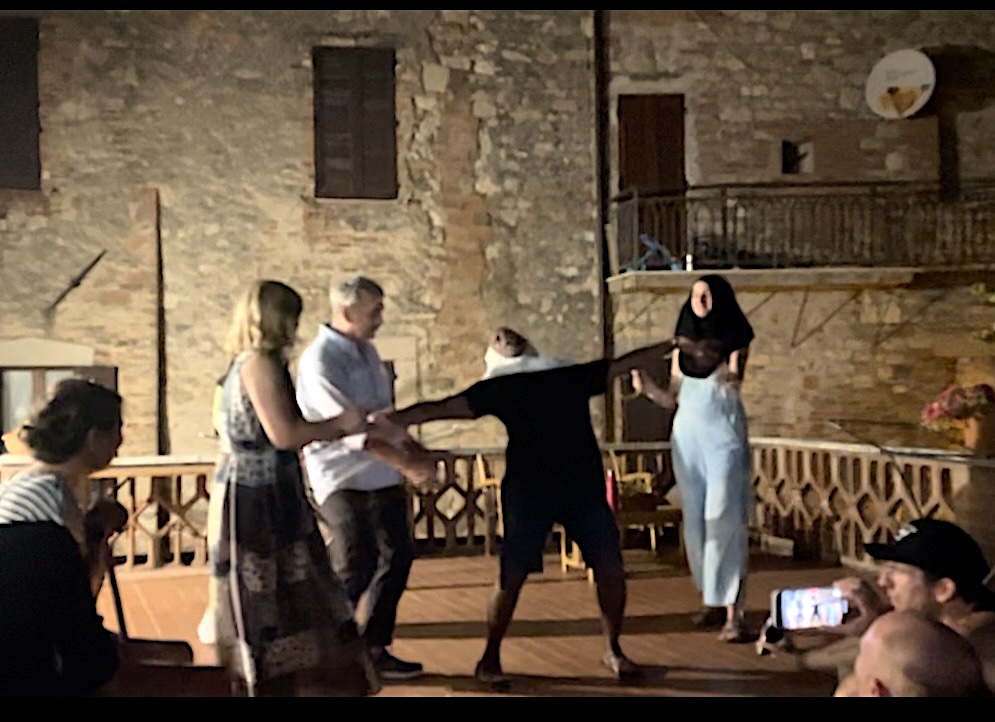
Living in the Play: nido, brings together an international consortium of artists to Monte Castello di Vibio, Italy, for a two-week artist residency that culminates in an exhibition of artworks and performances. During the residency, we individually and collectively explore the relationships between the social historical landscape, use of land resources, and the narratives of Monte Castello di Vibio and the surrounding region. Our explorations inform and guide our conversations as a group while contributing to the making practices of each individual artist Living in the Play.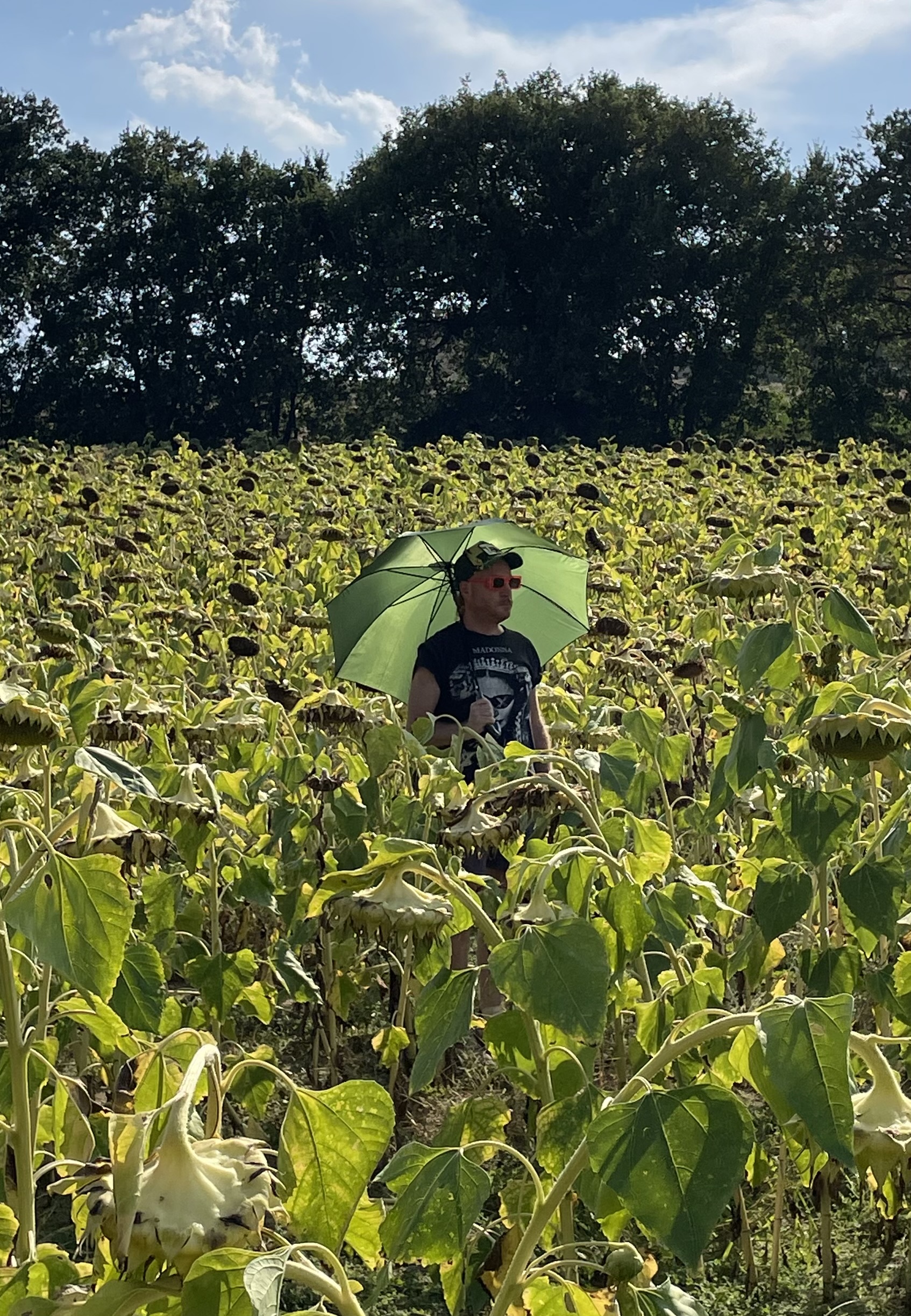
During the residency, your goal individually and collectively is to explore the social historical landscape, use of land resources, and the hidden histories of Monte Castello di Vibio and the surrounding region. This will inform and guide our conversations and contribute to the making practices of each artist amongst Living in the Play: nido.
This residency is in partnership with The Poor Farm Experiment in rural Wisconsin, USA, which has hosted Living In the Play since 2018. We are invested in creating spaces that uplift and connect fellow artists. Our goal is to gather artists through intentional actions that foster community. With a focus on inviting multi-generational and diverse pools of artists, we aim to offer art practitioners ways of engaging their practice with a focused depth of ideas around site, play, and community.
 Participants will be housed in the remarkably well-preserved Umbrian hill town of Monte Castello di Vibio. Your workshop package is all-inclusive, providing welcome and departure services and airport transfer from the Rome Fiumicino, Leonardo Da Vinci Airport (FCO). Aboard our comfortable private bus, single occupancy accommodations with shared bath (a wide range of upgrades with private bath are available), 3 meals per day Monday-Thursday, Prosecco brunch and dinner on Saturday and Sunday (no meals are served on Friday, our excursion day. Your workshop includes one excursion per week and many additional options are available on weekends for an additional fee. Of course, 24/7 access to facilities and 24/7 bi-lingual support are provided. Please consult the Participant Guide for valuable, practical information before travel. (https://icaitaly.com/wp-content/uploads/2022/02/Participant_guide-2019.pdf )

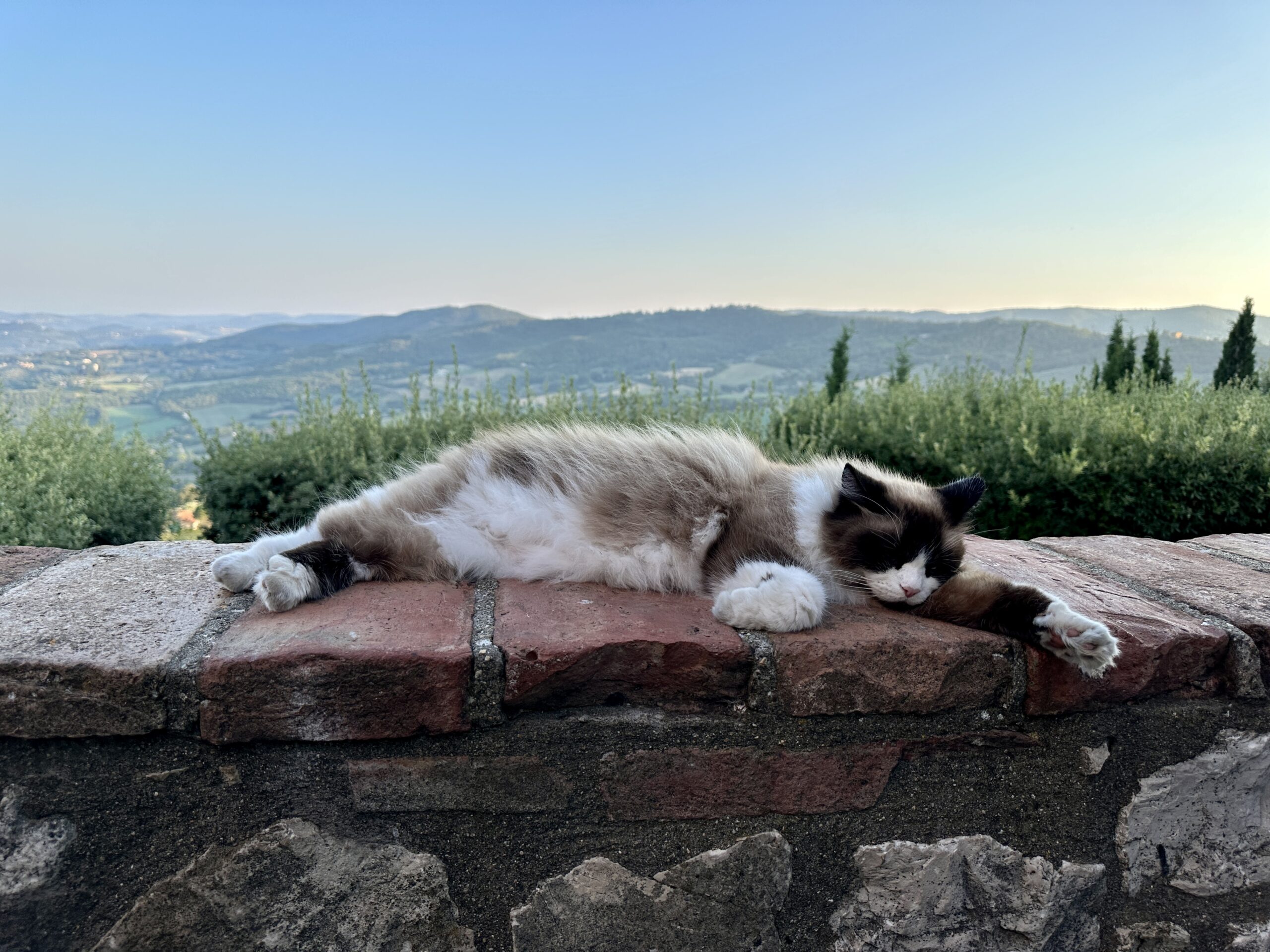
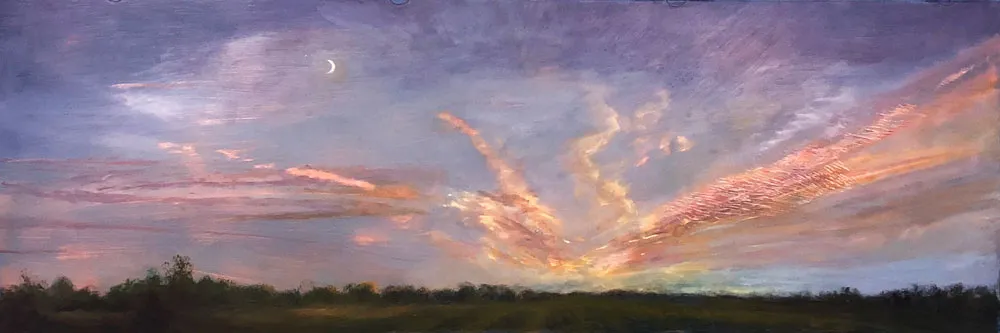
 This Fall Immerse yourself in the Umbrian countryside with the bountiful harvest of olives and wine while painting and exploring artistic treasures with Jill. The all-inclusive experience, features: Saturday and Sunday Brunch with Prosecco; painting on Saturday with instruction from Jill, dinner off the grill on the terrace with regional wine Saturday Night, Sunday Morning Art Conversation, Tour of Assisi after Sunday Brunch, Transfer to Fiumicino airport (FCO) after breakfast Monday.
Participants will be housed in the remarkably well-preserved Umbrian hill town of Monte Castello di Vibio. Again, your workshop package is all-inclusive and worry-free, providing departure services and airport transfer to the Rome Fiumicino, Leonardo Da Vinci Airport (FCO). Aboard our comfortable private bus, single occupancy accommodations with shared bath (a wide range of upgrades with private bath are available), lunch and dinner on Friday, Prosecco brunch and grilled dinner on Saturday and Sunday. Your workshop includes one excursion per week and many additional options are available on weekends for an additional fee. Of course, 24/7 access to facilities and 24/7 bi-lingual support are provided.
In the 14th c. Sicilian painter, Antonello di Messina brought the new medium of oil painting to Italy. In his travels, he brought the medium to Venice, where artists such as Giovanni Bellini, adopted, and expanded the expressive potential of the medium. Perhaps one of the most influential painting teachers in history, Bellini’s pupils included some of the greatest figures in the history of the medium: Titian, Tintoretto, and Veronese. Their often huge, operatic paintings mark a kind of crowning achievement for the medium, and the processes they developed consequently influenced other great artists and schools of art that included Caravaggio, Rembrandt, Velazquez and countless others who have followed in their path.
This workshop will follow the oil painting methods of the great Venetian masters. Working from reproductions, participants will reproduce easel-sized works of the Venetian school of the 16th-18th c. They may also choose to copy a detail from larger Venetian masterworks. To as great an extent possible, students will use the same materials of 15th and 16th c. Venetian artists, many of which will be prepared by hand in class, according to traditional recipes.
Beginning on a uniquely coarse, stretched canvas (approximately 36” x 30”) prepared with rabbit skin glue and white lead, participants will apply a colored ground. This rich, colored surface establishes an overall, atmospheric tonality, that also functions as a very useful neutral color. This then, serves as the basis for the serendipitous approach to color and the remarkable atmospheric effects that are unique to this school of painting.
On this rich surface, participants will transfer perforated drawings with charcoal and a pounce as was done in this time. Afterward, earth colors, carbon black, and white lead ground in oil will be prepared by the class. With these basic colors, an underpainting will be developed using alternating layers of washes and thick impasto areas of white lead. Afterward, rich layers of transparent colors made primarily from pigments produced in in our Pigments and Paint Workshop will be applied. In the process, students will develop an understanding of the important terms, glaze (a dark, thinned color over a lighter surface) and scumble (a thin layer of white lead) as they seek to reproduce the sumptuous color and dramatic brushwork characteristic of the Venetian School.
During the class participants will have the unique opportunity to see remarkable examples of work by the Venetian masters in person during our excursion to the Pitti Palace in Florence.
Throughout the workshop, participants will be housed in the remarkably well-preserved Umbrian hill town of Monte Castello di Vibio. Your workshop package is all-inclusive, providing welcome and departure services and airport transfer from the Rome Fiumicino, Leonardo Da Vinci Airport (FCO). Aboard our comfortable private bus, single occupancy accommodations with shared bath (a wide range of upgrades with private bath are available), 3 meals per day Monday-Thursday, Prosecco brunch and dinner on Saturday and Sunday (no meals are served on Friday, our excursion day. Your workshop includes an excursion to Florence. Of course, throughout your stay, 24/7 access to facilities and 24/7 bi-lingual support are provided.
Price of the workshop includes all materials needed to produce the painting described above, except brushes, which will be available for sale at ICA in Italy. While it is unlikely that the painting will be completed in the timeframe allowed by the workshop, our goal is to give participants a sufficient understanding of the Venetian process in order to complete the painting at home. As part of the course fee, participants will be issued a unique folding stretcher that allows the painting itself to be folded into a carry-on luggage-sized parcel, even if not fully dry.
Oil painting developed in Northern Europe early in the 15th c. and Italian painters of the next generation quickly adopted the medium to their own unique vocabulary. Antonello di Messina is generally credited with the introduction of oil painting to Italy and more specifically, to Venice. Artists such as Giovanni Bellini, as well as Leonardo further expanded the expressive potential of the medium. The processes that these artists developed consequently influenced the whole history of Western Art.
This workshop will follow their methods. Working from reproductions participants will use materials of the time, prepared by hand in a traditional way. Beginning on a wooden panel, prepared with rabbit skin glue and chalk gesso, participants will transfer their perforated drawings with charcoal and a pounce, then develop a wash drawing with genuine sepia ink, followed by an imprimatura – a colored “veil” - that establishes a tonality and a very useful neutral color. From here, oil paint ground in class will be used to develop the underpainting. Afterwards, rich glazes of transparent colors made primarily from pigments produced in in our Pigments and Paint Workshop.
Throughout the workshop, participants will be housed in the remarkably well-preserved Umbrian hill town of Monte Castello di Vibio. Your workshop package is all-inclusive, providing welcome and departure services and airport transfer from the Rome Fiumicino,Leonardo Da Vinci Airport (FCO). Aboard our comfortable private bus, single occupancy accommodations with shared bath (a wide range of upgrades with private bath are available), 3 meals per day Monday-Thursday, Prosecco brunch and dinner on Saturday and Sunday (no meals are served on Friday, our excursion day. Your workshop includes an excursion to Perugia. Of course, throughout your stay, 24/7 access to facilities and 24/7 bi-lingual support are provided.
Price of the workshop includes all materials needed to produce the painting described above, except brushes, which will be available for sale at ICA in Italy. While it is unlikely that the painting will be completed in the timeframe allowed by the workshop, our goal is to give participants a sufficient understanding of the Northern Renaissance process in order to complete the painting at home. As part of the course fee, participants will be issued a unique case for the painting that allows the painting itself to be folded into a carry-on luggage-sized parcel even if not fully dry.
June 25, 2023 - July 2, 2023
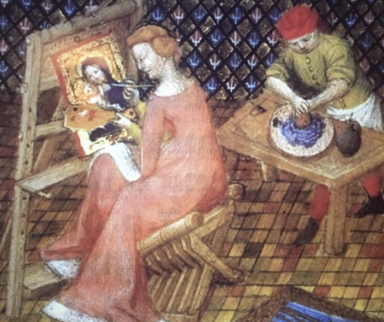
A hands-on workshop on producing painting and drawing materials according to historical methods. The intensive, week-long workshop is ideal for painters interested in gaining greater familiarity with their materials, academics and teachers interested in curricular development, art historians, and people interested in developing a deeper understanding of traditional works.
Born in 1360, painter Cennino d’Andrea Cennini, left a remarkable legacy, beyond that of his surviving works.
A student, of a student, of Giotto, Cennino left of us a remarkable and intimate record of the life and working processes of a painter in his time. His book is called, il Libro del’Arte, simply, “The Book of Art.” It provides insights into the training of the artists of his time, as well as that of the next generations of artists in Italy. Incredibly, this included some of the greatest figures in the history of Western painting: Masaccio, Fra Angelico, Leonardo, Botticelli, Michelangelo, and Raphael among others. To the reader of today, Cennini’s text provides the remarkable opportunity to participate in this legacy.
On a practical level, Cennini’s book is also a very useful guide to the production of pigments, paints, painting surfaces, and other materials of the medieval and Renaissance artist. In this however, it also reveals something larger than that of a recipe book. It speaks to a very special connection between artists and the materials they choose. Often, that connection resulted from artists making their materials themselves, by hand. Indeed, Cennini refers lovingly to the rare, almost spiritual beauty of, ultramarine blue to the easy, sensual qualities of a charcoal black as well as to their sometimes, tempestuous personalities of materials like, dragon’s blood!
What is revealed is a unique connection to the materials of the artist, in which all elements have significance. As translator, Daniel Thompson describes, “A very choice black was, and still is, made from peach stones; and almond shells were sometimes charred to produce another sort. To the outsider all these blacks would seem very much alike; indeed, they would probably be quite indistinguishable. But a painter of the medieval kind becomes familiar with the little quirks of personality in his pigments, and is affected by small subtleties which it is hopeless to try to define, subtleties not so much of color as of working quality, how the pigment feels, how it mixes, whether it tends to settle out of a color mixture, or stays nicely in suspension, and little things like that.” These “little things” can indeed have big effect to the artist who remains sensitive to the qualities of their materials, creating a bond that becomes a language of its own.
We will use Cennini’s book as a basis for our exploration of making pigments and paints. Guided by the experience of our staff, in collaboration with our long-time supplier, Kremer Pigmente, and the advantage of modern chemistry and production methods, we will embark on a historical overview of pigments used by artists throughout the ages - actually, making many pigments from raw ingredients. We will observe sometimes miraculous transformations in color, creating beautiful and luscious pigments that will last …forever. We will then turn these colored particles into a variety of paints, pastels, and charcoal. Our goal will be to produce the following materials which participants will take home with them at the end of the workshop:
20 g. Jars of pigment as follows:
3 ml. Jars of pigment as follows:
Inks as follow:
50 ml tubes of oil colors as follows:
20 ml jar of
Watercolors in natural mussel shell, as follows:
Pastels as follow:
In doing so, we will understand the processes of levigation, grading for optimal particle size, grinding, precipitation of lake colors, and many other processes. We will also make surfaces to be used in a variety of aqueous, solvent-based, and dry applications. At the end of the workshop, an excursion to the National Gallery of Umbria in Perugia, will provide real examples from Cennini’s time and later, which will illustrate both the beauty and the permanence of these materials.
Participants will be housed in the remarkably well-preserved Umbrian hill town of Monte Castello di Vibio. Your workshop package is all-inclusive, providing welcome and departure services and airport transfer from the Rome Fiumicino, Leonardo Da Vinci Airport (FCO). Aboard our comfortable private bus, single occupancy accommodations with shared bath (a wide range of upgrades with private bath are available), 3 meals per day Monday-Thursday, Prosecco brunch and dinner on Saturday and Sunday (no meals are served on Friday, our excursion day. Your workshop includes one excursion per week and many additional options are available on weekends for an additional fee. Of course, 24/7 access to facilities and 24/7 bi-lingual support are provided.
All materials for the class and the excursion are included in the cost of the workshop.
The study of human anatomy in Italy is a long and distinguished tradition. The extraordinary anatomical theatres in medical schools at the University of Padua and the University of Bologna bear witness to this history and were among the first of their kind in existence. Even today, we marvel at the accuracy and lifelike intensity of the 17 th c. wax anatomical models in the Specola Museum in Florence, which were made to allow medical students to observe venous, muscular, and skeletal systems without a cadaver. In this regard, the study of anatomy in Italy has profoundly impacted not only our understanding of the human body, but also the study of medicine in the western world.
Surprisingly, this history also reveals much about the significance of the role of visual art in furthering science and medicine. In his brilliant series of lectures at the Art Students League in New York, artist, anatomist, and scholar, Robert Beverly Hale once said: “science had actually sprung from art, that it had developed in those great periods when artists had looked at nature very closely and carefully, and had tried to record exactly what they saw. That, what we explained, was what scientists have been doing ever since.”
To support Hale’s observation one need look no further than Leonardo’s anatomical studies. These drawings are incredible not only for their accuracy and beauty as works of art, but also as a highly accurate analysis of function, of what anatomist George Bridgeman referred to as “the human machine.” Leonardo is perhaps unequalled in his analysis of the form of the human body as a manifestation of the interrelationship of functioning systems. It is known, for example that Leonardo once injected the heart of an ox with hot wax, then made a glass model of the casting. He then pumped the model with water to analyze the circulation of fluids in the human heart. Incredibly, Leonardo’s conclusions were not fully corroborated by cardiologists until the 1980’s.
The objective of our Human Anatomy intensive is to follow in this tradition. Thus, we will not only identify anatomical structures of the human body, but we will also analyze the function of those structures and their effect on its outward form. Throughout the workshop, we will reference functional systems in understanding their manifestation in surface anatomy of the figure.
Our focus will be on the skeletal and muscular systems, with some analysis of the major arteries of the venous system. We will work from a variety of sources, including real human skeletons as well as drawing from our collection of anatomical models and plaster casts. Our medium in the course will be various drawing media in large-format sketchbooks as a means of note taking for the course.
Our approach will be in the form of lectures and hands on drawing focusing first on the skeletal system. We will draw from real human skeletons as well as anatomical models. We will explore one area of the body at a time, first in analyzing the skeletal structure of the torso. Afterward, we will move on to the head, arms, and legs, as well as hands, and feet. Participants will produce life-sized drawings with charcoal on heavy paper as well as drawings in sketchbooks of details such as joint articulations.
Afterward, the course will focus on the muscular system first through lecture and note-taking then by drawing from anatomical models, plaster casts, and the live model, in the same order. However, we will in exploring the muscular system we will utilize tracing paper and colored pencil, in order to add layers of muscles over our previous skeletal drawings.
In addition to the intensive schedule of daily drawing and lecture, we will make an excursion to the famed Specola Museum in Florence where we will draw from their collection of 16 th to 18th c. wax anatomical sculptures. The incredibly lifelike flayed figures are shockingly lifelike - at once factual and at the same time, powerfully expressive. Here, the wax models will provide an overview of the skeletal and muscular systems as well as an introduction to the venous system.
Throughout the workshop, participants will be housed in the remarkably well-preserved Umbrian hill town of Monte Castello di Vibio. Your workshop package is all-inclusive, providing welcome and departure services and airport transfer from the Rome Fiumicino, Leonardo Da Vinci Airport (FCO). Aboard our comfortable private bus, single occupancy accommodations with shared bath (a wide range of upgrades with private bath are available), 3 meals per day Monday-Thursday, Prosecco brunch and dinner on Saturday and Sunday (no meals are served on Friday, our excursion day. Your workshop includes one excursion per week and many additional options are available on weekends for an additional fee. Of course, 24/7 access to facilities and 24/7 bi-lingual support are provided.
 Imagine a week in which you are able to totally absorb yourself in workshop activities, away from the stresses of your daily lives and the pressures of the modern world. Consider an opportunity to dive into yourself and become present, focusing on expression and creativity. There is perhaps no place better for this than our little mountain village overlooking the Tiber Valley in the region of Umbria – known to Italians as “the green heart of Italy.” Here you will explore the body and mind through Yoga, painting, and drawing in a series of experimental workshops.
Basic Hatha yoga practice will allow participants to slow down, tune into oneself and ones breathing and let the body guide you through simple movements such as Surya Namaskar. Through meditation we will seek to find thoughtless awareness. Through drawing exercises such as mindful observation, we will use our senses to raise awareness and explore imagination through taste, touch and sound.
Students will aim to create a harmonious balance from a mix of structure and improvisation working on heavy grade watercolor paper. Using ink and watercolor, students will create non- objective drawings and paintings. We will be using a variety of techniques gained from studies in both European and Indian processes. We will grind pigments in binders, creating luscious water- based paints of exceptional richness and depth of color. We will prepare paper, underpaint with grids filled with basic algorithms of color over painted and layered with shapes and forms which are sanded, burnished, washed, reworked and detailed to give a final result. The objective is a wholistic approach that considers all elements as meaningful.
As an integral capstone to the experience, we will visit the beautiful city of Florence, where we will research historic designs found in art and architecture. In this, we will take a somewhat different perspective from that of art historical tours. Guided by Emma's background in anthropology we will explore new opportunities provided our own creative work. We will seek to expand our awareness of the mysterious world that the ageless city presents, as well as opportunities that typically unobserved objects and landscapes present.
Participants will be housed in the remarkably well-preserved Umbrian hill town of Monte Castello di Vibio. Your workshop package is all-inclusive, providing welcome and departure services and airport transfer from the Rome Fiumicino, Leonardo Da Vinci Airport (FCO). Aboard our comfortable private bus, single occupancy accommodations with shared bath (a wide range of upgrades with private bath are available), 3 meals per day Monday-Thursday, Prosecco brunch and dinner on Saturday and Sunday (no meals are served on Friday, our excursion day. Your workshop includes one excursion per week and many additional options are available on weekends for an additional fee. Of course, 24/7 access to facilities and 24/7 bi-lingual support are provided.
Menrva, the Etruscan goddess of creativity, was also known as the ‘Goddess of a Thousand Works” – an aspirational goal for writers and academics if there ever was one. There is no better place, then, to channel the spirit of Menrva and focus on your writing than in Umbria, the heart of Etruria, the land of the Etruscans, and the Green Heart of Italy!
The Second Annual Menrva Writing Retreat at the International Center for the Arts in Monte Castello di Vibio provides a week of glorious time and space to write, while also enjoying the beauty of Umbria, the hospitality of an Italian hill town, great conversation, and delicious food and wine!
Open to writers of all kinds, the Menrva retreat will offer the opportunity to engage with yourwork in a supportive community of writers and artists in a beautiful medieval hill town. Communal and individual writing spaces will be available to participants, and daily group writing sessions using a modified Pomodoro Writing Technique (45 minutes of writing followed by a 15-minute break) will be offered. Days are largely unstructured, save for the delicious meals, and opportunities for group discussion and presentation of your work are available for those who wish to do so.
Participants will be housed in the remarkably well-preserved Umbrian hill town of Monte Castello di Vibio. Your workshop package is all-inclusive, providing welcome and departure services and airport transfer from the Rome Fiumicino, Leonardo Da Vinci Airport (FCO). Aboard our comfortable private bus, single occupancy accommodations with shared bath (a wide range of upgrades with private bath are available), 3 meals per day Monday-Thursday, Prosecco brunch and dinner on Saturday and Sunday (no meals are served on Friday, our excursion day. Your workshop includes one excursion per week and many additional options are available on weekends for an additional fee. Of course, 24/7 access to facilities and 24/7 bi-lingual support are provided.
For academics, a letter of invitation which you can present to your university or institution, can be provided, if needed.
Please contact Dana Zartner at dana.zartner@gmail.com with any questions.
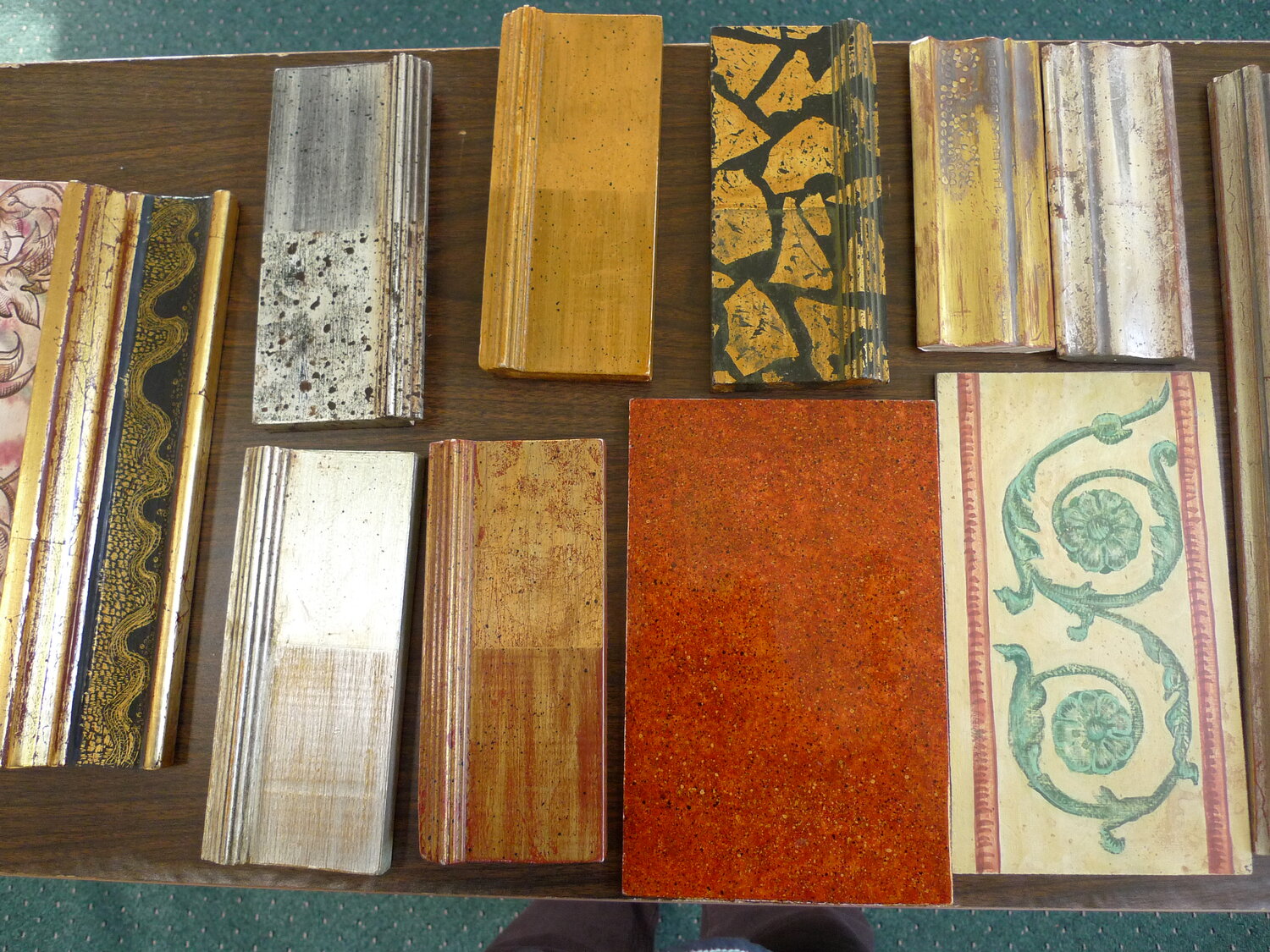 Join us in exploring the practice of the ancient art of gilding ~ the technique of applying thin leaves of pounded metal to a prepared surface. Umbria and Tuscany will afford us inspirational examples of the finest in gilding arts, which you will view in person on our museum excursions. You will become well versed in identifying these time-honored techniques while also taking advantage back in our studio, of newer materials, and exciting contemporary applications. This workshop is of interest to painters, book artists, woodworkers, surface designers and those interested in mixed-media applications.
In the first week, students will create a series of sample boards using a variety of techniques on prepared hardboard, paper and wood. Beginning with the importance of ground preparation, students will discover the fundamentals of water-based mordant gilding with Dutch metal, aluminum, copper leaf as well as 23-karat gold leaf.
Traditional Renaissance surface embellishment processes shall be explored ~ sgrafitto “to scratch through”; granito, a technique for creating background texture and patterns; and pastiglia, a form of low relief which creates a raised surface. We will also cover antiquing and distressing – as well as non- traditional surface applications with gouache paint.
A selection of templates featuring ornamental designs as well as ornamental initials will be available for easy transfer to a variety of ground surfaces ~ no drawing skills needed. However, please feel free to bring your design ideas and other inspirational materials for your individual projects during the second week.
The 2-week workshop will be rounded out with trips to Florence and Deruta.
Participants will be housed in the remarkably well-preserved Umbrian hill town of Monte Castello di Vibio. Your workshop package is all-inclusive, providing welcome and departure services and airport transfer from the Rome Fiumicino, Leonardo Da Vinci Airport (FCO). Aboard our comfortable private bus, single occupancy accommodations with shared bath (a wide range of upgrades with private bath are available), 3 meals per day Monday-Thursday, Prosecco brunch and dinner on Saturday and Sunday (no meals are served on Friday, our excursion day. Your workshop includes one excursion per week and many additional options are available on weekends for an additional fee. Of course, 24/7 access to facilities and 24/7 bi-lingual support are provided.
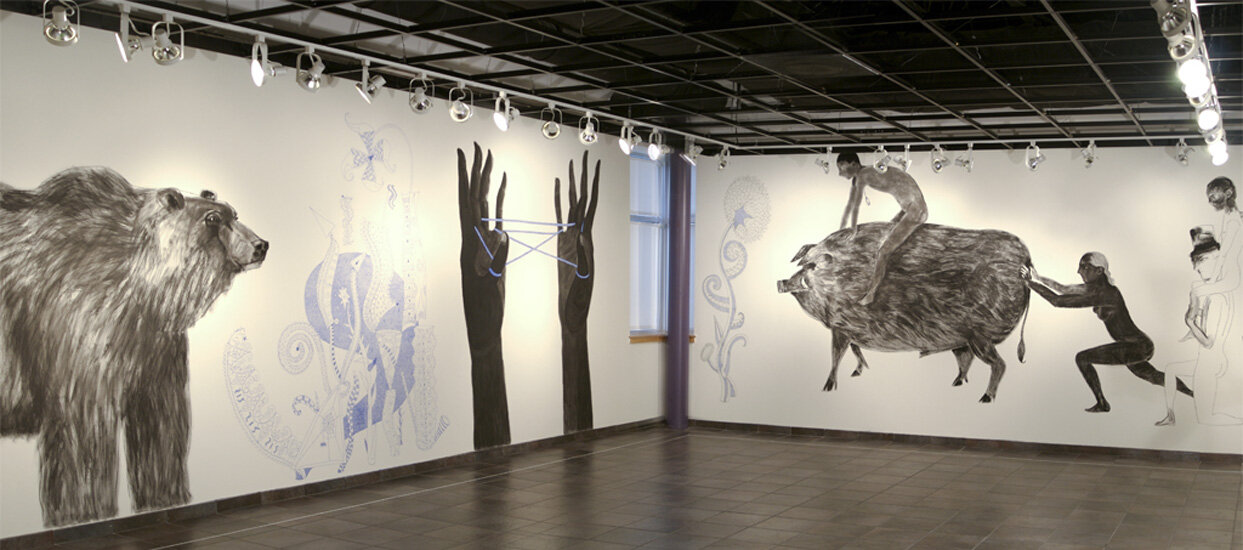 Acclaimed Painter and Illustrator Cornel Rubino will lead a 2-week workshop at the International Center for the Arts, on the creation of monumental works of visual art.
Develop an ease in working large - explore how scale alters the way we view our world by drawing directly from life to re-translate nature and rethink the human condition.
Art, like spoken language, has a vocabulary all its own. With drawing, you will be exposed to elements of thisvocabulary, which serves as the raw material for all visual information. This workshop explores and utilizes drawing to explore the figure in narrative and poetic (non- narrative) ways.
You will be drawing vertically in studio on heavy weight Rives or Fabriano paper no smaller than 7 ft. from live models, fleshy and ideal, as well as lyrical and moody objects of your choice from nature. A variety of wet and dry media will be explored and developed as well as the skills needed to tackle large scale drawings translated from your smaller sketches and ideas. You will experience drawing the figure as it empowers and informs your work, carefully raiding the mines of visual desire.
Drawing on a large scale offers a freedom that is exciting and liberating. You will have the opportunity to create and make the kind of marks that only working on a large-scale surface allows you. We will be working on heavy-duty paper so you will have the opportunity to draw wet with inks or water based paints or dry with pencils, pastels or charcoals. Or mix materials together. The sky’s the limit.
You will work on at least 3-4 large drawings depending on time constraints. We will have individual and group discussions about the work in progress and develop our skills in constructive criticism, working at understanding the significance and psychological importance of line, value, form and composition in the process of image making.
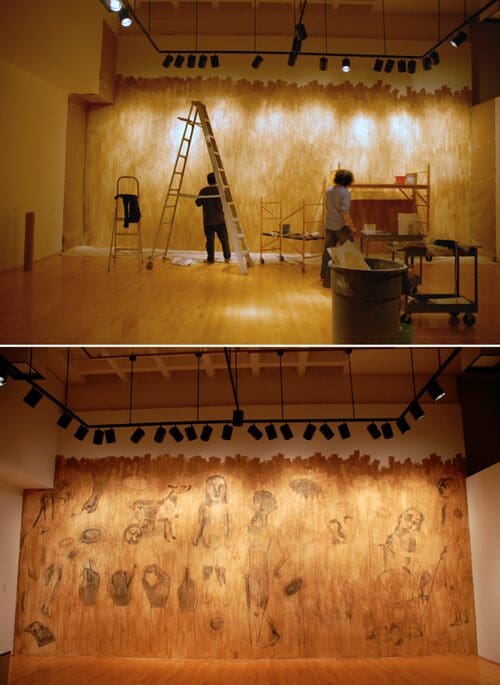 Along with trips to Florence and Perugia, we will draw on the history of Monte Castello as a gathering place for artists in a variety of mediums and scholars in disciplines across the humanities. Painters, sculptors, musicians and chefs will also be in residence at ICA, providing optional lectures or demonstrations and joining retreat participants for communal meals on the terrace. There is a strong opportunity for cross-pollination of ideas and unexpected inspiration for those who seek it.
Participants will be housed in the remarkably well-preserved Umbrian hill town of Monte Castello di Vibio. Your workshop package is all-inclusive, providing welcome and departure services and airport transfer from the Rome Fiumicino, Leonardo Da Vinci Airport (FCO). Aboard our comfortable private bus, single occupancy accommodations with shared bath (a wide range of upgrades with private bath are available), 3 meals per day Monday-Thursday, Prosecco brunch and dinner on Saturday and Sunday (no meals are served on Friday, our excursion day. Your workshop includes one excursion per week and many additional options are available on weekends for an additional fee. Of course, 24/7 access to facilities and 24/7 bi-lingual support are provided.
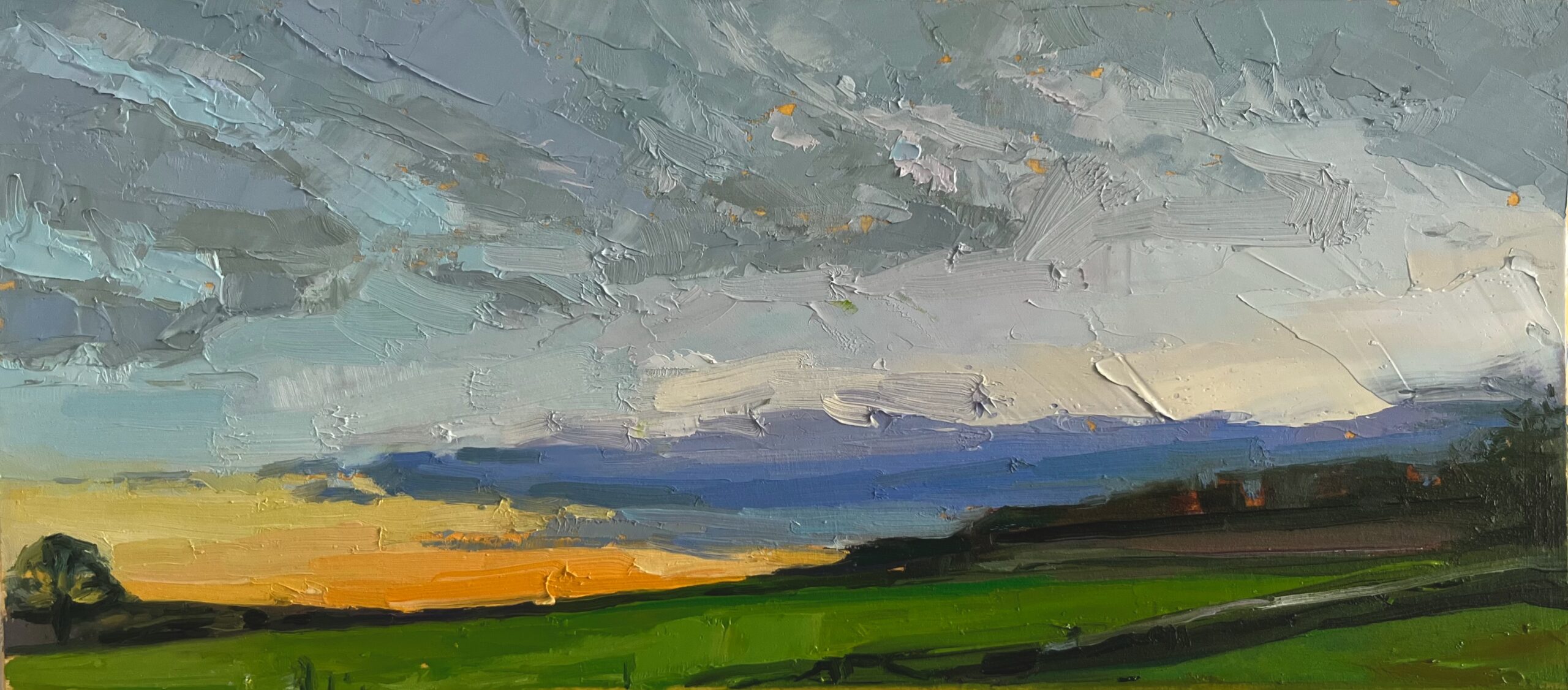 Situated in one of the most beautiful regions of Italy, the idyllic medieval hill town of Monte Castello di Vibio, provides both amazingly picturesque vistas as well as unique challenges for the painter. Majestic mountains stairstep their way into the distance, as their deep green forested hillsides fade to blue gray. The famed, Tiber River, winds like a giant serpent through the valley on its path to Rome, and farm fields and meadows become ribbons on hillsides.
In describing this environment, one cannot help but wax poetic about the opportunities that it provides for the landscape painter. Itis a place both steeped in history, yet constantly changing. Gates open to panoramas that locals refer to as Porta Montanna (“Door to the Mountains”) and the south-facing, Porta Maggio (“Door of May”). To the southwest, where mountain ridges collide above the village of Doglio, the Bocca della Stregna (the Witches Mouth) sometimes reveals the source of its name as the moaning wind circles through its crevices. Castles in the distance appear and disappear in the morning fog as swallows dart in and out of a vista called simply, il Mare (the sea). Far off in the distance to the east lie the mysterious Sibillini Mountains, home of the famed Sybill and the mountain towns of Norcia and the breathtaking valley of Castelluccio, where wildflowers carpet the ground and wolves still howl at night. It is a timeless landscape where past and present meet in the eyes of those lucky enough to experience it. This workshop and your immersion in the surroundings will provide unforgettable experiences. This non-touristed location will allow you to enjoy this small town and its authentic ambiance.
Participants will be housed in the remarkably well-preserved Umbrian hill town of Monte Castello di Vibio. Your workshop package is all-inclusive, providing welcome and departure services and airport transfer from the Rome Fiumicino, Leonardo Da Vinci Airport (FCO). Aboard our comfortable private bus, single occupancy accommodations with shared bath (a wide range of upgrades with private bath are available), 3 meals per day Monday-Thursday, Prosecco brunch and dinner on Saturday and Sunday (no meals are served on Friday, our excursion day. Your workshop includes one excursion per week and many additional options are available on weekends for an additional fee. Of course, 24/7 access to facilities and 24/7 bi-lingual support are provided.
The immersive two-week workshop will cover the essential aspects of outdoor landscape painting: choosing a motif, working quickly and directly, controlling value and color to create compelling harmonies, and thinking intentionally about form.
We will meet together four days a week, with weekends allowing time for independent painting time and Friday’s reserved for excursions. The first week will include ample instruction and support from the instructor. The second week students will be guided as they approach the landscape with more confidence and clarity. Painting sessions will be scheduled generally: 9am-1pm and 4pm-7pm Monday-Thursday. Included in the workshop are two local excursions: Assisi to see the unforgettable Giotto frescos and to Perugia to the national museum.
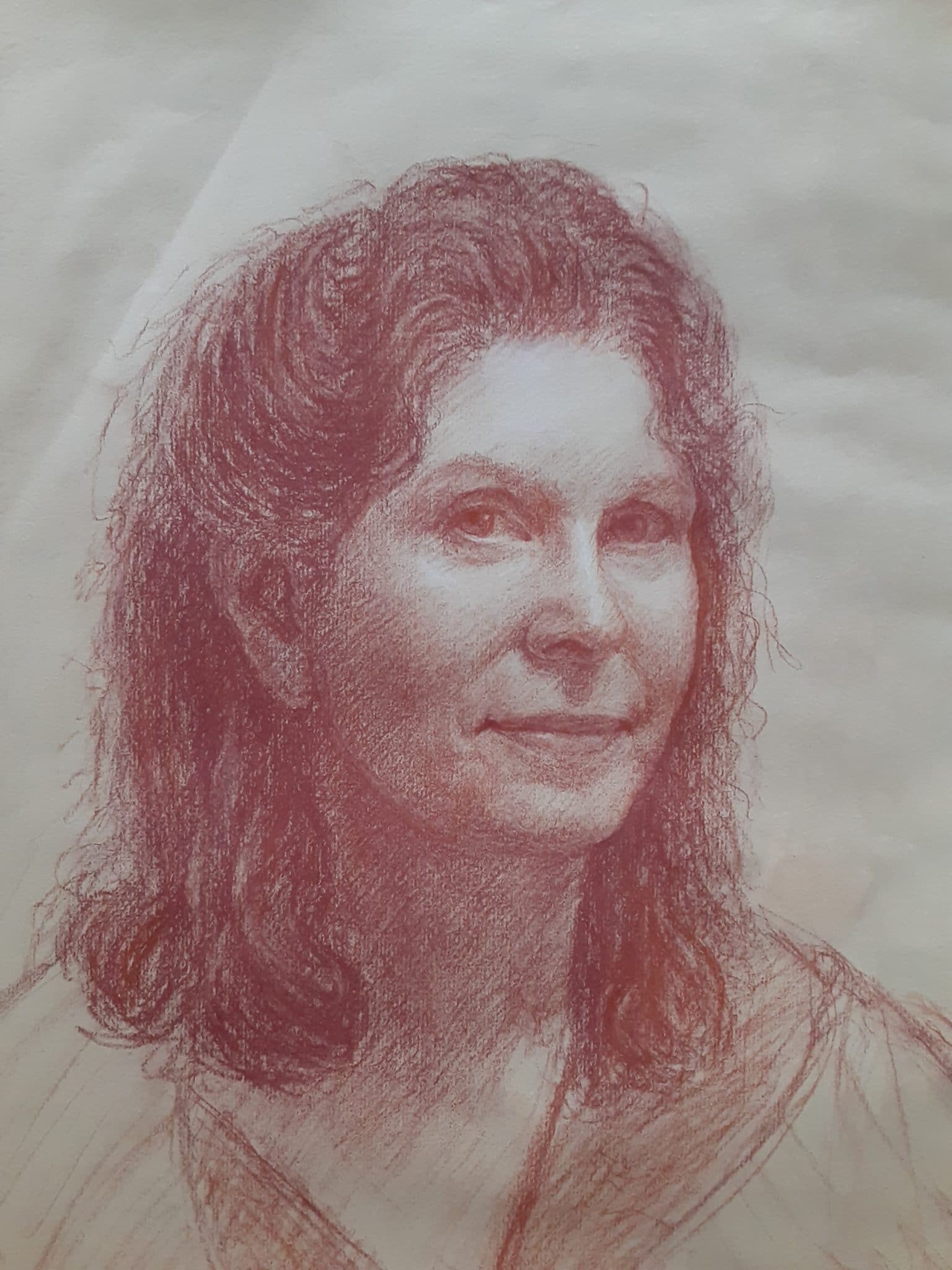 Fueled by a new interest in the individual, the birth of the Renaissance in Florence in the 15th century brought a rebirth of the long dormant art of Portraiture. What better place to study the practice and history of Portraiture than in Monte Castello di Vibio, just a stone’s throw from that extraordinary city?
In this two-week workshop, students will be immersed in the Art of the Portrait. Working daily from the live model, they will study the structure of the head, beginning with seeing the skull as it presents itself in each individual. Through demonstrations, slide presentations, and one on one critiques as they work, they will learn to identify the shapes and planes specific to an individual model and to understand the principles of traditional design inherent in each portrait.
This Portraiture workshop is perfect for anyone wanting to learn to draw or paint portraits or to improve in their already existing portrait practice. Since so much teaching happens one-on-one, both beginners and more seasoned artists will benefit greatly from the intensive experience of studying and drawing/painting daily for two weeks. The small class size (limit of 10) will ensure ample instruction for each student.
Students are welcome to draw or paint, depending upon their level of experience.
Class time will be supplemented with two field trips to world class museums in Florence and Rome. These excursions will serve to deepen students’ understanding of the skills and concepts they’re learning. In addition, they’ll come to appreciate the history of Portraiture itself and its place in the overall history of art.
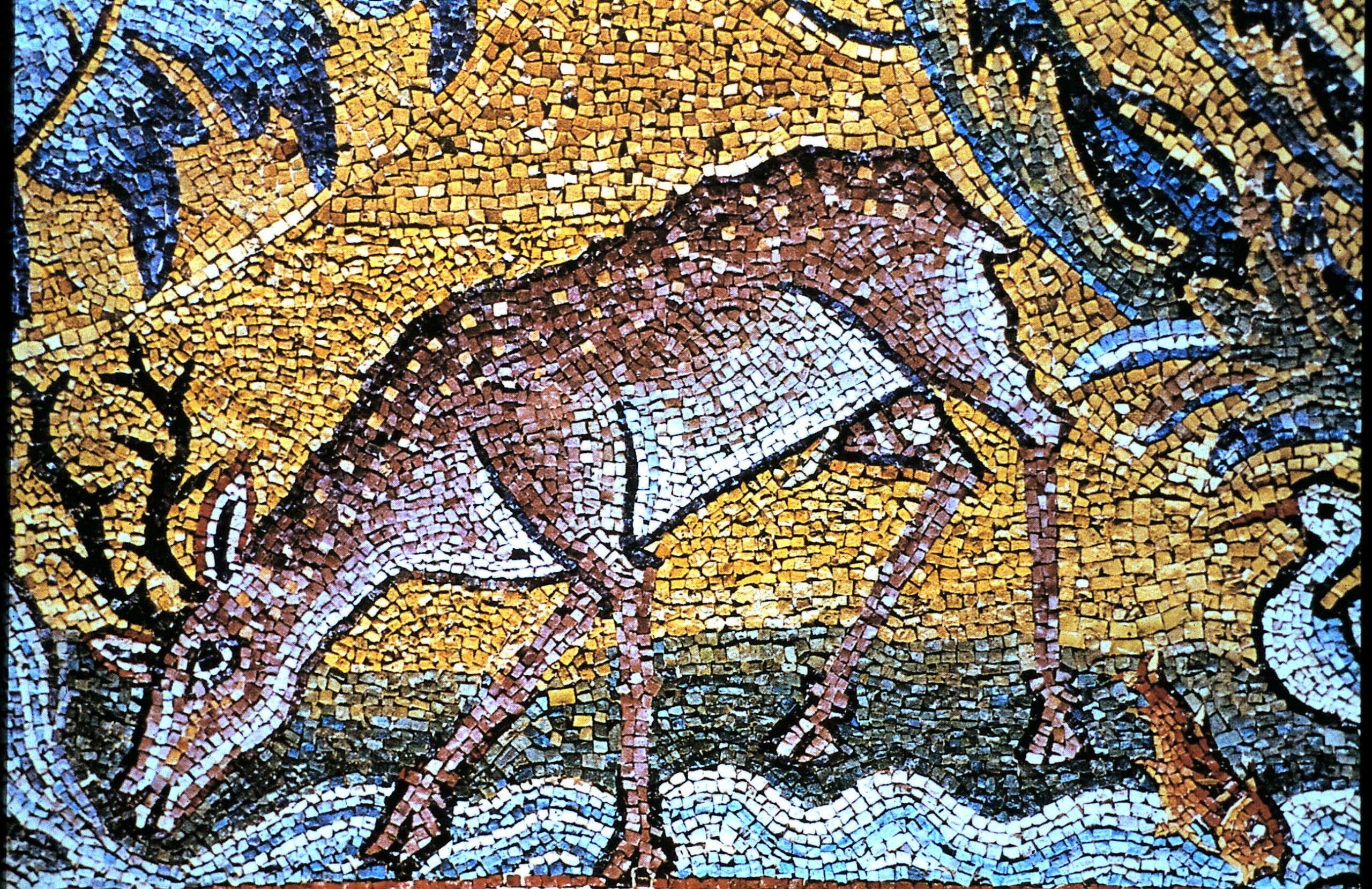 Learn to create mosaics—the most enduring form of pictorial art with a master of the medium – in a country renowned for some of the most spectacular examples of mosaic art.
In this hands-on course, Rick Shelley will demonstrate the methods of mosaic production. Students will shape stone, glass, and ceramic into tesserae for their projects. Experiment with glues and cements to adhere tesserae onto the wooden panels provided. One class will concentrate on working with the beautiful and traditional practice of gold leafing glass. Using this simple, but remarkable technique, color of extraordinary depth is possible. A truly remarkable medium! Students will be encouraged to design and execute several small mosaics. The focus will be on form, outlines, shadows, and highlights. Simple images, letters, or symbols are ideal subjects.
The International Center for the Arts provides the perfect atmosphere to experience the mosaic arts. Surrounded by the Italian countryside, the studio at Monte Castello di Vibio is an oasis in which to work and learn. The course combines intensive instruction with excursions to nearby mosaic treasures. Roman mosaics, Byzantine mosaics, and contemporary mosaics will be studied for inspiration – and experienced in person! Our goal is to enjoy and create beautiful mosaics while being immersed in this wondrous experience.
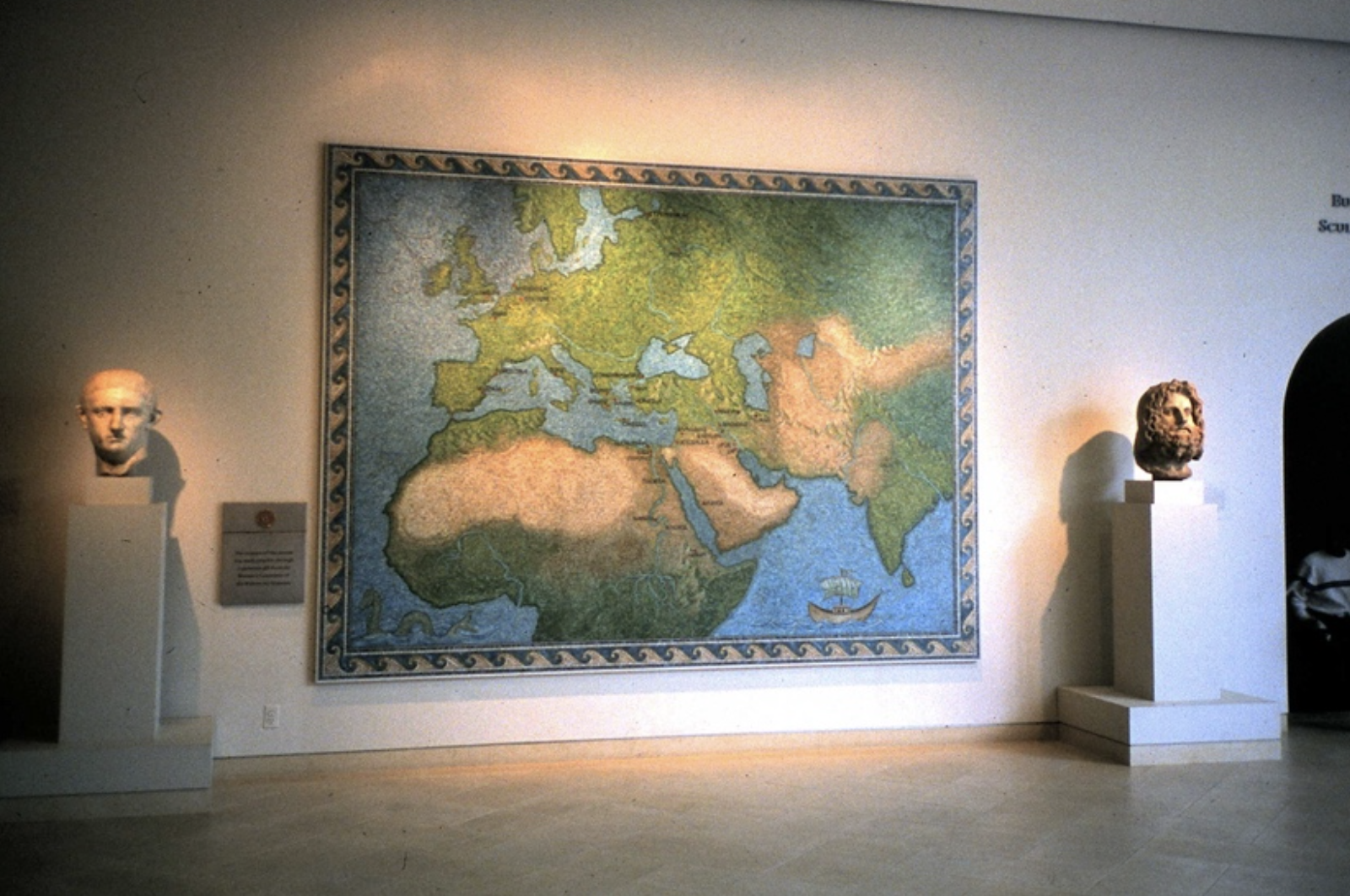 All the while, participants will be housed in the remarkably well-preserved Umbrian hill town of Monte Castello di Vibio. Your workshop package is all-inclusive, providing welcome and departure services and airport transfer from the Rome Fiumicino, Leonardo Da Vinci Airport (FCO). Aboard our comfortable private bus, single occupancy accommodations with shared bath (a wide range of upgrades with private bath are available), 3 meals per day Monday-Thursday, Prosecco brunch and dinner on Saturday and Sunday (no meals are served on Friday, our excursion day. Your workshop includes one excursion per week and many additional options are available on weekends for an additional fee. Of course, 24/7 access to facilities and 24/7 bi-lingual support are provided. All supplies are included. The course will include visits to Florence and Rome and while in Rome will visit the Vatican Museums.Finally, as an additional excursion, we will visit Orvieto’s splendid medieval cathedral to see the exterior mosaics and interior frescos.
Our Mosaics in Italy with Rick Shelley workshop is a rare opportunity to study with a master of the medium in a country renowned for some of its greatest examples. All the while, participants will enjoy a rare immersion in traditional culture, enjoy incredible views made possible by our mountaintop location, delight in gourmet and traditional food prepared fresh by expert chefs from fresh, locally sourced ingredients all accompanied by excellent local wine (or optional selections from our wonderful Wine List, for an additional fee). It is a rare experience, available to only 10 participants.
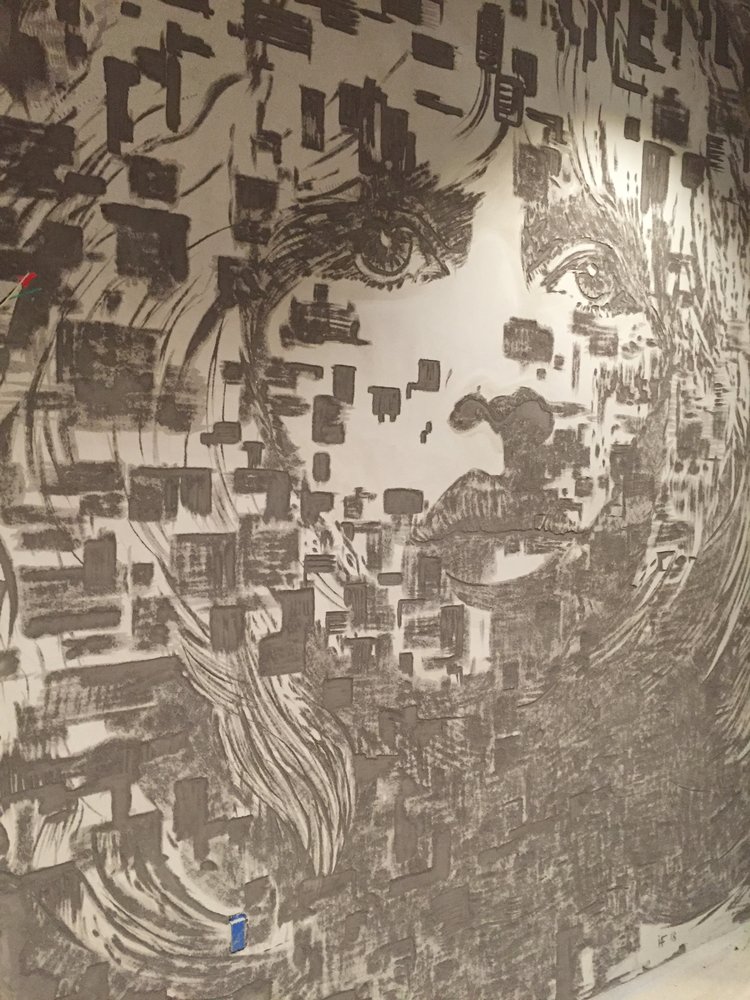
In a workshop led by one of the world-renowned masters of the traditional medium of fresco - iLia Anossov, instructs participants in the basic concepts and techniques of the medium. The course will focus on classic fresco techniques while studying the details of both wall and panel preparation and sgraffito techniques.
Here in Italy, a nation perhaps most famous for this art form, participants will have the added benefit of excursions to cities that are home to the world’s greatest examples of fresco in the company of a master of the medium! Excursions to Florence, will visit the works of artists of the Florentine Renaissance, including: Masaccio, Fra Angelico, Botticelli, and many more!
In the second week of the course, our Rome excursion will allow the unforgettable experience of viewing the Sistine Chapel ceiling by Michelangelo as well as other works that adorn the Vatican.
In addition, students will further their understanding of the perspective, value range principals, and the verdaccio underpainting and its consequent effect on the painting process.
In the course of the two-week workshop, students will create one small-scale work, individually exploring the sgraffito technique and one group “fresco bodega” project, an eight by four-foot, wall fresco in the buon fresco technique, which will be adorned with classic sgraffito elements. Students will explore classic techniques of buon fresco, sgraffito, preparatory stages and final wall painting stage.
All the while, participants will be housed in the remarkably well-preserved Umbrian hill town of Monte Castello di Vibio. Your workshop package is all-inclusive, providing welcome and departure services and airport transfer from the Rome Fiumicino, Leonardo Da Vinci Airport (FCO). Aboard our comfortable private bus, single occupancy accommodations with shared bath (a wide range of upgrades with private bath are available), 3 meals per day Monday-Thursday, Prosecco brunch and dinner on Saturday and Sunday (no meals are served on Friday, our excursion day. Your workshop includes one excursion per week and many additional options are available on weekends for an additional fee. Of course, 24/7 access to facilities and 24/7 bi-lingual support are provided. All supplies are included.
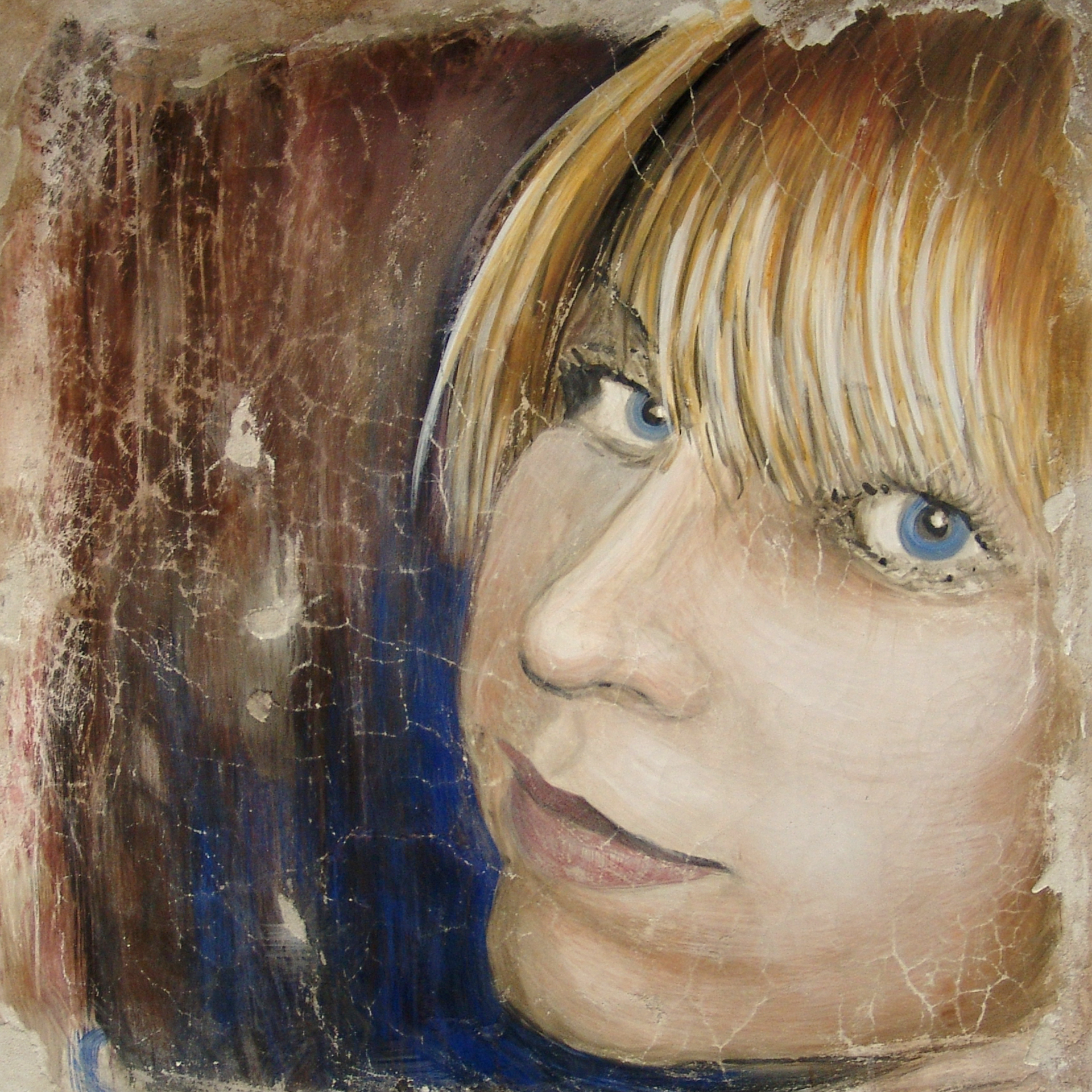 Our Fresco Workshop with iLia Anossov is a rare opportunity for study with a renowned master of the medium in a country renowned for it. All the while, participants will enjoy a rare immersion in traditional culture, enjoy incredible views made possible by our mountaintop location, delight in gourmet and traditional food prepared fresh by expert chefs from fresh, locally sourced ingredients all accompanied by excellent local wine (or optional selections from our wonderful Wine List, for an additional fee). It is a rare experience, available to only 10 participants.
All materials for the course – including a set of fresco brushes – are included. Also included is Fresco School Membership and a 5-volume video tutorial on Fresco painting by the master!
August 4 - August 25, 2019
August 4 - August 25, 2019
August 4 - August 25, 2019
In this two week workshop, painter Richard Hart will explore with participants the creation of collaged works that employ a variety of techniques on canvas, linen and other textiles, including figurative painted elements drawn from the natural beauty of Monte Castello di Vibio and surrounds; the use of fabric dyes and water based paints; the use of cyanotype printing and photosensitive inks; as well as the incorporation of off-the-shelf printed textiles.
We will embrace chance and experimentation as we follow curiosity and intuition into unknown creative territory. Once each participant has created a small inventory of textiles and painted elements, we will begin sewing pieces together to create at least one 60 cm x 80 cm collage, which will then be critiqued and hung for exhibit at the end of the session.
This workshop will encourage participants to experiment and move beyond their creative comfort zones. We will actively pursue joy in new modes of mark-making, unexpected color combinations and happy accidents. And once our raw material has been made, we will combine elements with great care (or reckless abandon!) paying attention to considerations including composition, balance, color relationships, scale and juxtaposition.
All this while absorbing the incredible environment and landscape of Monte Castello di Vibio and Umbria, whose eternal richness continues to inspire artists, writers and thinkers worldwide. The workshop will include two Friday trips where we will view millennia of artistic expression in the forms of painting, drawing and architecture (not to mention, fashion).
For more information, contact us.
Throughout its history, printmaking has been used to tell stories, whether in partnership with a written text or through images that stand alone. In this course you will draw inspiration from narrative traditions in Italian art and from a personally significant myth, poem, or story. Printmakers and graphic storytellers Ursula West Minervini and Jonathan Poliszuk will guide you in creating of a series of prints that explore a text of your choosing. Friday trips to Rome and to the Fabriano Museum of Paper and Watermark will inspire us and deepen our understanding of illustrative imagery and printmaking in the history of Italian art.
We will study two printmaking techniques in which bright marks are pulled from a dark ground: Reductive Monotype and Woodcut. You will work in monotype to explore broadly and develop your ideas, choose one or more images to develop more purposefully in woodcut, and then combine the techniques to create expressive, colorful images.
Monotypes are unique prints. In reductive monotype a plate is coated with a layer of printing ink and light tones are scraped, dabbed, or brushed away to create a luminous, gestural image, which is printed by hand or with a press. The process is superficially similar to drawing or painting, but the image undergoes a transformation in the transfer of ink from a prepared plate onto printing paper. Working in monotype invites exploration, risk-taking, and an openness to surprise and discovery.
Woodcut is perhaps the oldest form of printmaking, and is inextricably linked with the history of books and illustration. The surface of a woodblock is inked and printed after carving away all but the intended design. The carving process is meditative and purposeful, and many identical or varying impressions can be produced from a single carved block. The technique lends itself to bold, graphic expression, but is also capable of producing subtle textures and intricate detail.
In our first week, you will begin by working rapidly through a series of reductive monotypes, boldly exploring multiple aspects of your chosen text. Through this exploration, you will arrive at themes and compositions that you wish to work with more purposefully, and undertake the design and carving of one or more woodcuts.
In the second week Ursula and Jonathon will guide you through the nuances of the printing process. You will create editions, explore layered color printing, and combine techniques in prints that meld the graphic impact of woodcut with the expressive fluidity of monotype. The class will culminate in a group show in which students will present their new body of work.
For more information, contact us.
Amy Weiskopf and Xico Greenwald will co-teach a two-week summer still life painting workshop open to artists of all levels, from beginner to advanced. Instruction will be tailored to individual students within the group. Participants will be able to work from classroom still life arrangements put together by the instructors and also have the option of assembling their own still life arrangements in a private studio space. Still life objects can be obtained during trips to local Umbrian produce stands. This session will include evening art lectures, group discussions, and day-trips to visit Museo Morandi and nearby early renaissance masterworks by Piero della Francesca. Students can also take advantage of unstructured time to explore the Umbrian countryside.
For more information, contact us.
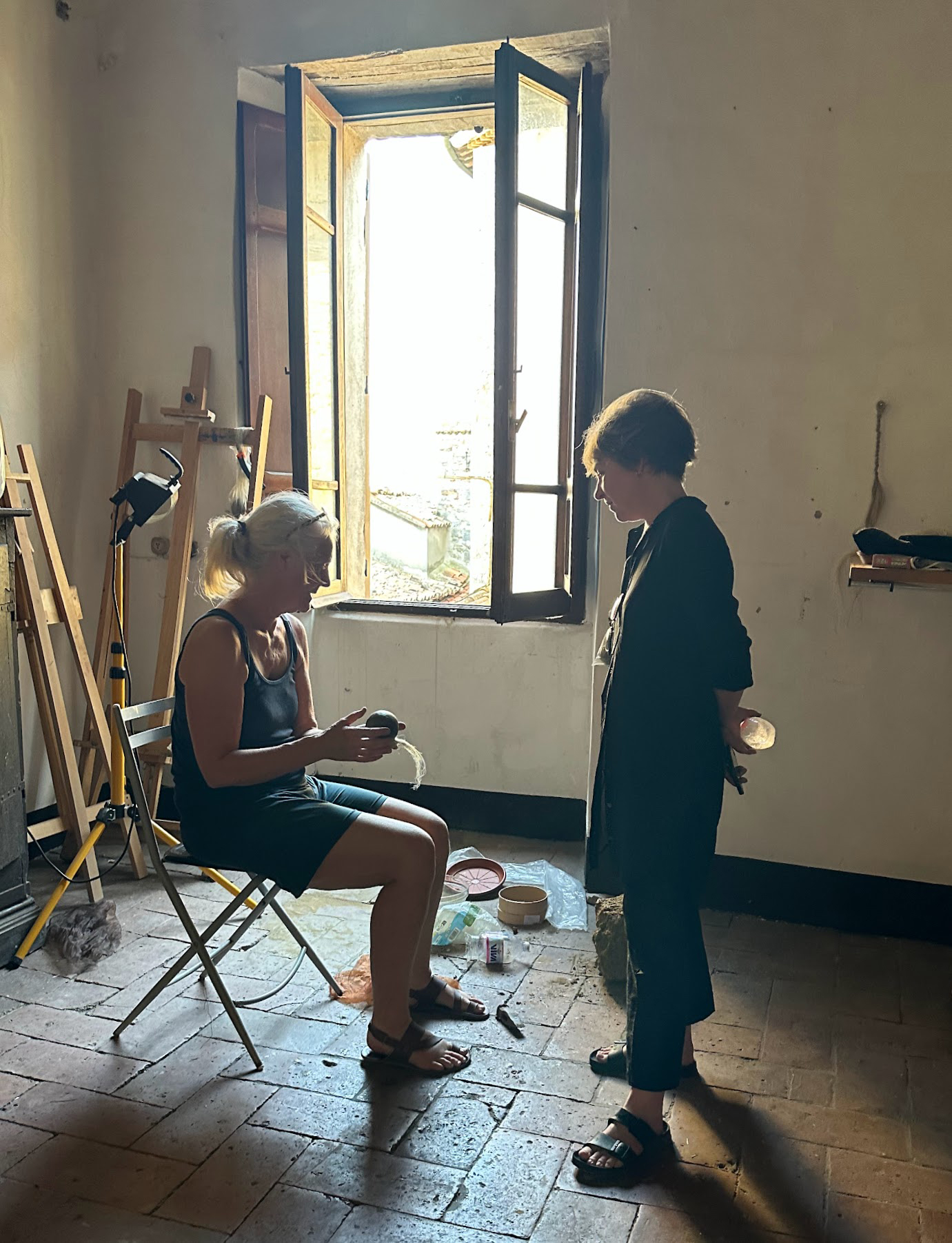 .
.